
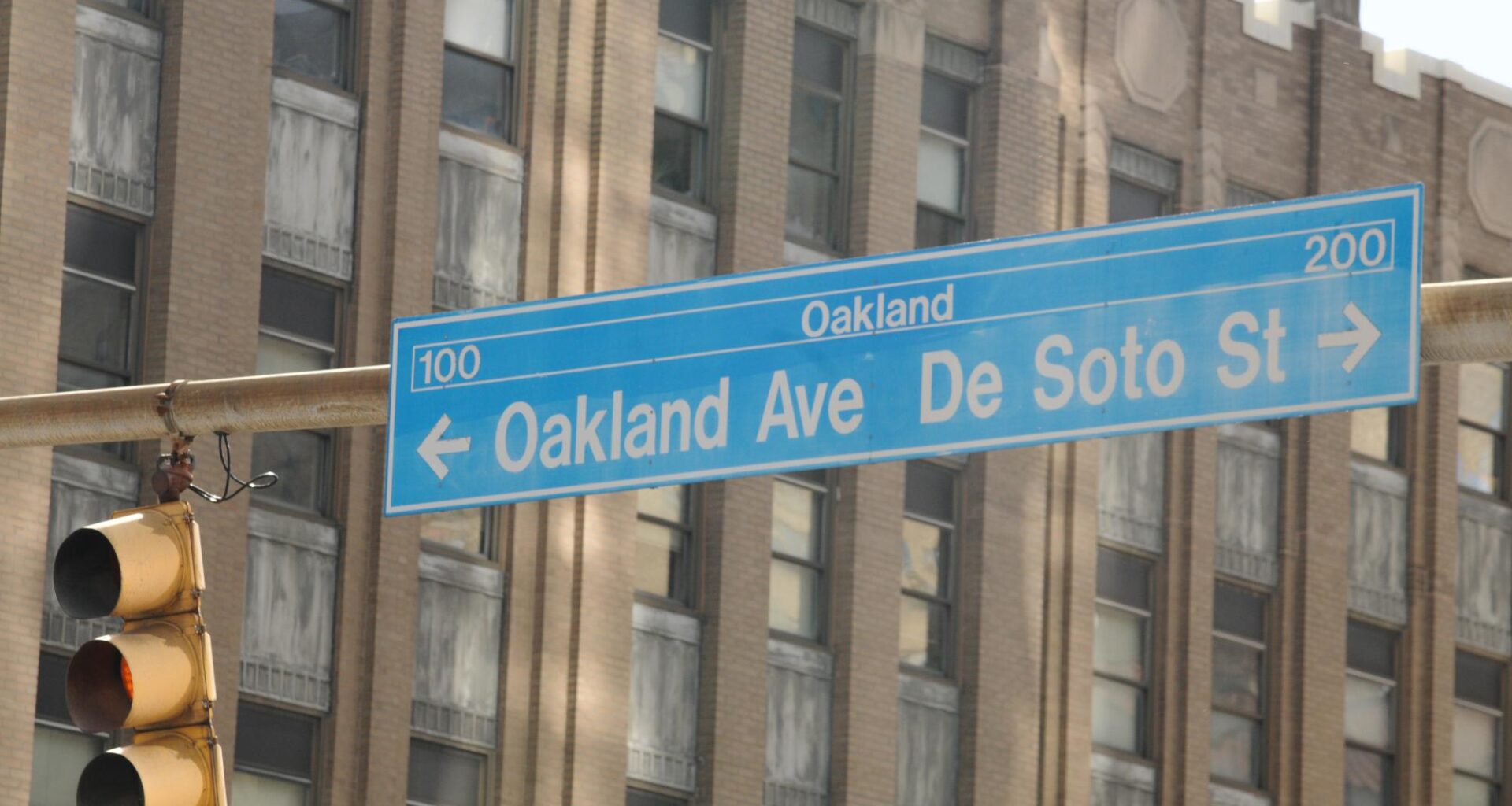
Recent changes made on De Soto and Terrace Streets aim to redesign the streets and improve safety for their users.
The University is collaborating with the City government, UPMC and the Pitt community to redesign Terrace and De Soto Streets and spread awareness of road safety rules in an attempt to improve pedestrian safety on Pitt’s upper campus.
In April 2025, the City announced the decision to adopt Vision Zero, an international strategy implemented by many European and American cities to eliminate traffic fatalities and improve pedestrian safety. The plan emphasizes the need for a multidisciplinary approach to proactively planning road safety by bringing together perspectives of traffic planners, engineers, policy makers and public health professionals.
One of the major aspects of Pittsburgh’s implementation of Vision Zero is the Terrace and De Soto project, designed to improve pedestrian safety on the De Soto corridor that stretches from De Soto to Terrace Street. According to University spokesperson Jared Stonesifer, there have been many changes to the area since the beginning of the semester.
“The City of Pittsburgh installed new traffic calming measures around Terrace and De Soto Streets. New signage was installed, and roadways were painted to enforce parking. Curb cuts and flexible delineators were added by the City to help divide traffic and mark off parking and bike lanes,” Stonesifer said.
Updates to traffic light and crosswalk patterns were made for pedestrians, according to Stonesifer. The area has suffered three pedestrian deaths related to car accidents in the past two years.
“The City also removed the third crosswalk on Terrace Street near Scaife Hall to increase pedestrian safety in this block of Terrace Street,” Stonesifer said. “The traffic light at the intersection of Terrace/Darragh has been upgraded with increased lumens to make it brighter, and ‘No Turn on Red’ signage is now displayed in all directions.”
Ashlyn Weniger, a first-year biology major, says despite the campus Rec Center opening near the corridor on O’Hara street, as well as some construction closures right next to De Soto, the roads feel safe when she frequents the Recreation and Wellness Center.
“I go to the Rec Center every day except for Fridays. I feel pretty safe, but with some of the sidewalks shut down, it makes it kind of hard,” Weniger said.
Elizabeth Iwasyk, a senior pharmacy major often on upper campus, believes the changes implemented have been effective at improving pedestrian safety.
“I think the new designs have been effective. I feel safer now than how it used to be,” Iwasyk said.
The UPMC construction on Terrace and De Soto Streets has been an inconvenience, according to Iwasyk.
“Construction is definitely a problem,” Iwasyk said. “It makes it very confusing for people to walk, and with the sidewalks shut down, people don’t really know where to go.”
Tao Sheng, a first-year student in the medical school who frequently crosses Terrace Street, believes that despite the effectiveness of the new design changes — such as new traffic calming measures, new signage on the streets and newly painted roadways — there are issues that remain.
“I’m not completely satisfied,” Sheng said. “I think the changes help a little bit, but I think the main problem is most cars don’t feel the need to slow down around this area, and it’s also not that well known that you have to yield to all pedestrians in the area.”
Despite the strides made in improving safety in the corridor, Iwasyk agrees there is more to be done.
“Pedestrian safety here is still a moderate concern. It’s better than it was, but there’s still potential for improvement,” Iywasyk said.
While the University doesn’t own De Soto and Terrace Streets, it is collaborating with the City of Pittsburgh Department of Mobility and Infrastructure and nearby UPMC on improving pedestrian and road safety in the areas. Their partnership includes events such as the Vision Zero Summit co-hosted by BikePGH and the City in October.
Eric Boerer, advocacy director for BikePGH, emphasized the need for improving road designs to ensure safe streets in Oakland.
“All humans make mistakes, so we need to design our streets so that the chance of someone getting maimed or killed because of that mistake is reduced,” Boerer said.
In November, Pitt received the gold level, the second-highest level a university can receive, for the Bicycle Friendly University award by the League of American Bicyclists, a national organization with the goal of creating safer roads and stronger communities for bicyclists, for making biking a core part of campus life.
Boerer believes Oakland is a walkable and bikeable campus, but road safety can be difficult to navigate for those unfamiliar with the area.
“Oakland has a lot of people walking and biking, and a lot of new people who come in from other cities and countries, so it’s even more important that this area has safe, clear infrastructure for everyone who gets around,” Boerer said.
Stonesifer said the University Police’s Community Programs Unit hosts a quarterly pedestrian safety meeting for University leaders and stakeholders as a chance to address areas of concern, share accident statistics updates and look for opportunities for improvement. To send safety tips and reminders to the Pitt community, the University also developed a “Stay Street Smart” social media campaign.