
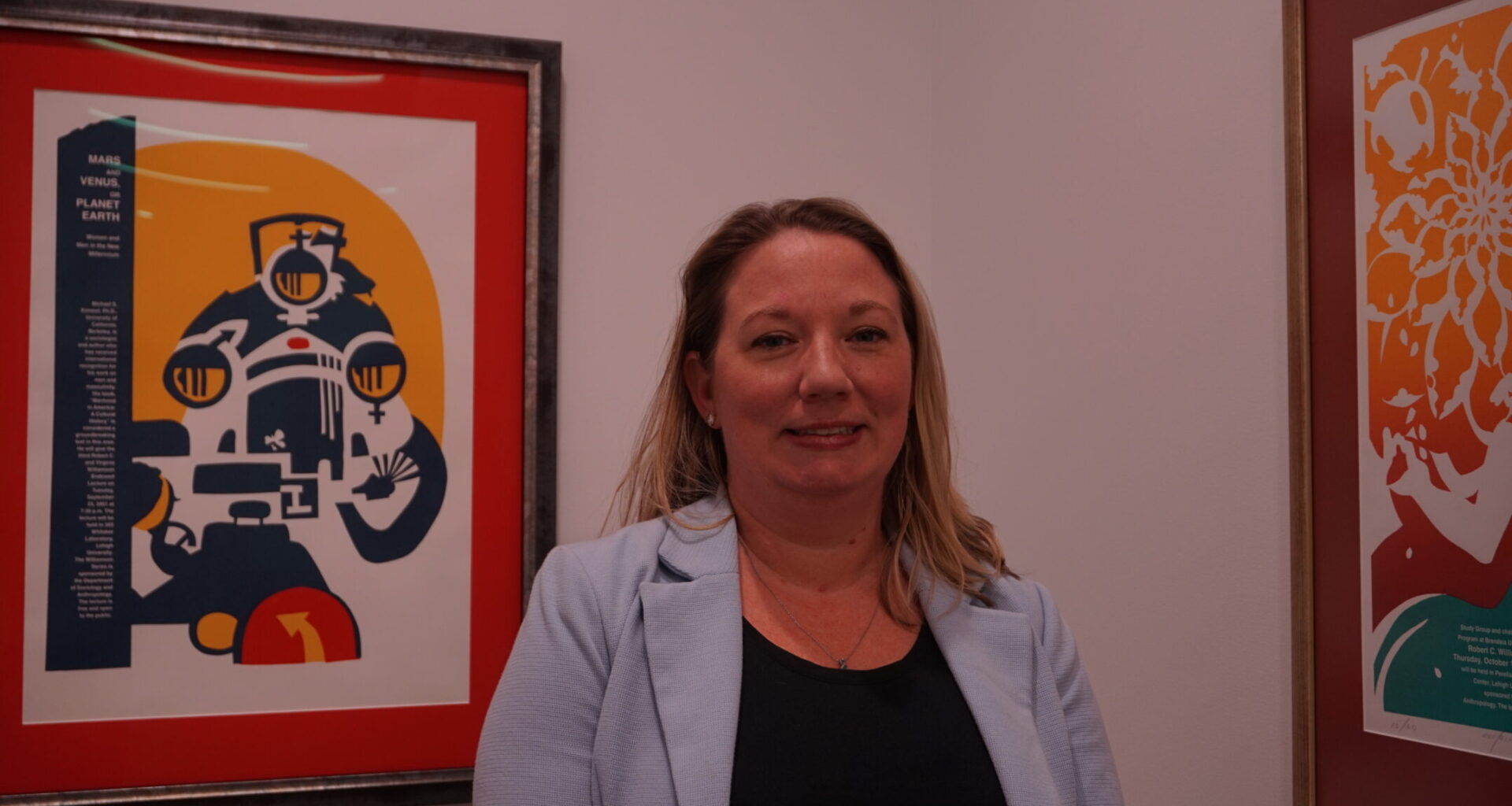
When Kasey Diserens Morgan picked up a shovel on her first dig in sixth grade, she didn’t expect it to uncover her life’s passion.
What began as curiosity grew into a career that’s taken her from ancient ruins in Mexico to classrooms. Now, Diserens Morgan — or the self-referred “Indiana Jones” for her adventurous energy and hands-on experience — is a visiting assistant professor of archaeology and anthropology.
Diserens Morgan earned a bachelor’s degree in archaeology and Spanish from Cornell University and a master’s degree in historic preservation from the University of Pennsylvania.
Before earning her Ph.D., she worked in marketing in New York City, but she soon realized her path lay outside the corporate world because she felt she wasn’t making a difference or doing something she was passionate about.
She returned to school and after taking classes on heritage, ethics and anthropology, rediscovered her passion for the field. Around that time, her adviser invited her to join a project in Mexico. With her background in historic preservation, archaeology and Spanish, she was a perfect fit.
The project was based in Tihosuco, Quintana Roo — a communal town, or “ejido,” with a complex colonial history. Diserens Morgan’s team studied the town’s architecture and worked closely with the “Museo de la Guerra de Castas” or The Museum of the Caste War.
Diserens Morgan said the group’s research centered on the history of an indigenous rebellion. She said the Mexican government often promotes a simplified image of the Mayan world, while many Mayan communities feel their heritage is being used without benefiting them.
The project expanded to include archival oral histories, old photographs and efforts in language revitalization. Diserens Morgan said her main goal was to focus on collaboration and ethics in archaeology and anthropology — both of which require patience and trust within the community.
Diserens Morgan said she hopes to continue returning to Tihosuco each year and eventually begin an ethnographic study. She said the most impactful part of the project is seeing how far the team has come, with the group also working to create a museum that can be run by people in the community.
Through the project, Diserens Morgan realized she wanted to use what she learned to educate others about archaeology and the communities she studied.
She said she enjoys the research and teaching side of her work, especially the collaboration they both require.
By bringing that same energy and knowledge to her three courses at Lehigh, she emphasizes ethics and collaboration in archaeology and anthropology.
Matthew Schafer, ‘27, a student in her introduction to archaeology class, said Diserens Morgan brings helpful experience to her teaching.
“It’s a lecture-style class, but she’s still very engaging,” Shafer said. “It never feels like what she’s teaching is artificial, and I appreciate that, because it keeps you engaged.”
Schafer also said critical thinking was one of the greatest skills he’s gained from the course — a topic Diserens Morgan encourages students to apply when studying anthropology and history.
Lydia Gatnik, ‘27, another student, said Diserens Morgan keeps class discussions engaging, and she’s the epitome of a professor who loves what they’re teaching.
“You think that you’re going to be digging stuff up, or looking at Indiana Jones types (of) stuff, which it’s really not like that at all,” Gatnik said. “It’s a lot more than that, and it’s really interesting.”
Diserens Morgan’s classes blend the scientific and humanistic sides of archaeology, tackling misconceptions about examining archeological hoaxes, including fake excavations.
She said she first and foremost considers herself an anthropologist and then an archaeologist. Understanding why people are the way they are, she said, is critical.
That idea is something she hopes to bring to each class she teaches.
“I feel like I’m using my knowledge for something bigger than me and learning at the same time,” Diserens Morgan said. “I’m getting better at it every day.”