
A rezoning proposal tied to Fayetteville Public Schools’ long–term plan for a new Ramay Jr. High campus was left on the first reading
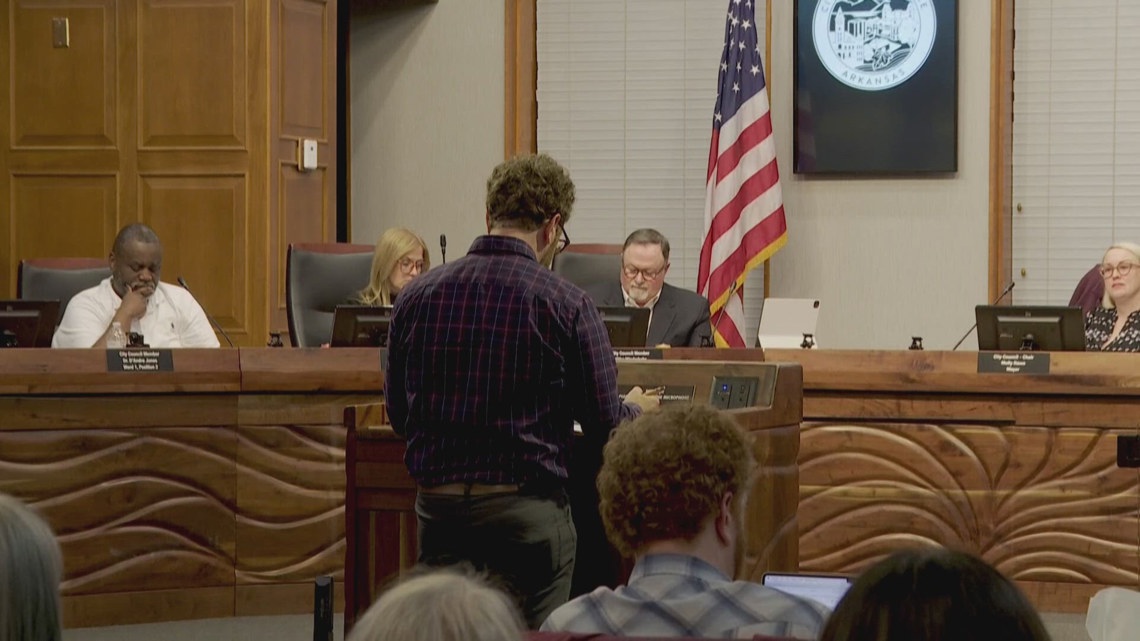
FAYETTEVILLE, Ark. — After hours of public comment and debate Tuesday night, the Fayetteville City Council decided to leave a rezoning proposal for a new location of Ramay Junior High School on the first reading.
The proposed rezone is part of the district’s larger effort to modernize and realign its feeder pattern. School leaders say the change is necessary to support long-term growth and improve how students move through the district.
The district says the proposed location also aligns with city goals for walkability and infill development and would keep the junior high close to neighborhood families.
School officials also emphasized steps they say would protect the natural environment on the site.
“Right now we’re sitting at over 30% of the site that we estimate will be untouched, and then we’ll be adding back a lot of additional plantings for those areas affected,” said Superintendent Dr. John Mulford.
Dr. Mulford said the location was chosen strategically to keep schools accessible for families and balanced across the district.
“Our board has been very thoughtful on where they place the school, to where it not only meets our current needs, but we expect it will meet the needs for the future,” Mulford said.
But several residents raised concerns about loss of tree canopy, slope stability, traffic, and stormwater impacts.
“The site is on a steep hill slope. Some of the steepest parts are from 15 degrees of slope to 20 or 25 it’s the complete outcrop of the Fayetteville shale formation. And shale is very brittle and unstable,” said Dot Neeley, President of the Fayetteville Natural Heritage Association. “For the long term, it’s not the best idea to try to do large-scale development on it, on a steep hillside that’s all Fayetteville shale.”
The project has undergone nearly a year of public engagement, including a community forum attended by roughly 50 residents. Even so, councilmembers said they still had more questions they wanted addressed before taking a final vote.
Public comment was split with those for and against the rezone and lasted hours.
“I understand a lot of the environmental concerns. No one wants to clear trees unnecessarily, but this rezoning is a holistic and sustainable opportunity for our district’s future,” one commenter said. “The most recognized as a sustainable choice is not always the one that spares the most trees in the short term, but rather the one that dramatically reduces environmental impact over decades of use by minimizing urban sprawling.”
The rezoning request will now come back at the next council meeting on the second reading, city officials said.