
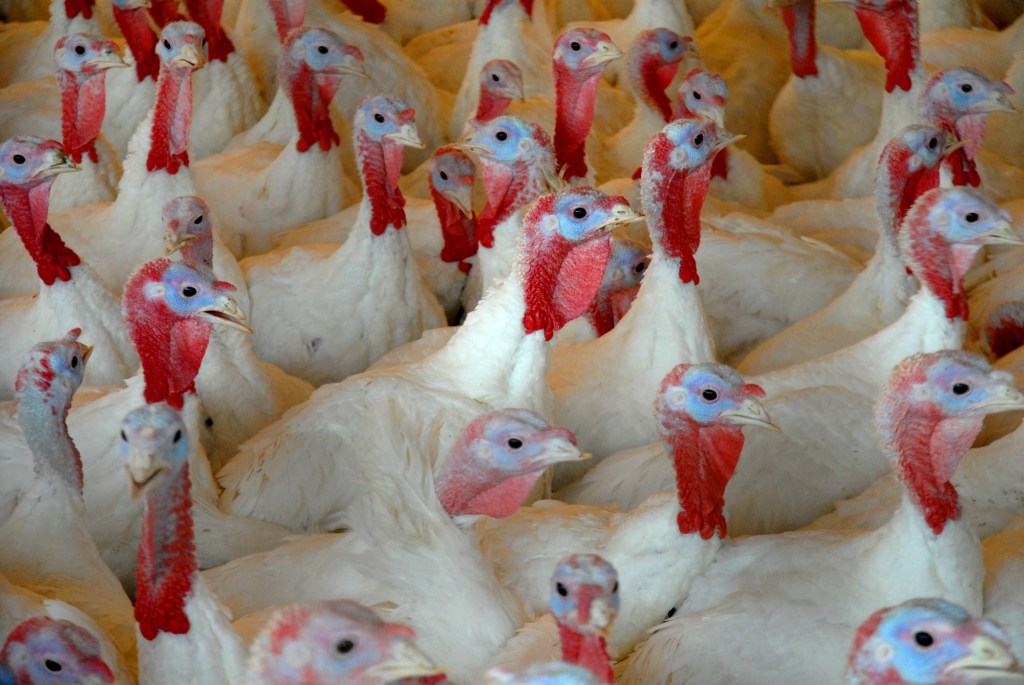
Like every November, Jaindl Farms in North Whitehall Township is gearing up for the holiday season.
The iconic Lehigh Valley turkey farm, which has been going for five generations, has been adjusting to changing consumer tastes, though the meal continues to be centered around the bird. Overall, the farm produces 840,000 turkeys annually, going through 2,000 tons of feed during peak growing season.
Customers range from individuals to organic poultry producer Bell and Evans and grocery store chains such as Whole Foods Markets and Wegmans.
Luke Jaindl said he expects sales to be up around 8%-10% this season, as the company is offering different options for their customers. Aside from visiting the farm’s retail store on Coffeetown Road and picking up a turkey, there is a digital preordering option along with add-ons to complete the meal, including a box of fixings.
“I like looking at what we’re selling, mostly whole body turkeys, in the 12-to-14-pound size range,” Jaindl said. “We do see an increase of 5% of a smaller turkey that’s easier to cook. We feel that’s less of a hassle from the consumer perspective.”
Jaindl Farms is predicting a good holiday season, though the poultry industry as a whole has been in flux for reasons ranging from economic factors to disease challenges.
In a report, the American Farm Bureau Federation said consumers should brace for higher prices, though there shouldn’t be a shortage of turkeys.
Poultry farmers are battling a combination of diseases including highly pathogenic avian influenza, which has affected more than 18 million turkeys since 2022, as well as avian metapneumovirus. The Farm Bureau said that while detections of HPAI slowed during warmer summer months, fall waterfowl migration and cooler temperatures have led to detections across the upper Midwest.
“It’s important to remember prices are still 32% lower than just three years ago,” AFBF economist Bernt Nelson wrote. “Diseases such as HPAI and AMPV are devastating flocks. Meanwhile, poultry farmers also grapple with the broader economic challenges impacting the agricultural economy. These production challenges shouldn’t have any impact on consumers’ ability to get turkey, but they may translate to higher retail prices this holiday season.”
A September outlook report from the U.S. Department of Agriculture estimated that wholesale prices for frozen turkeys will be $1.32 per pound this year, a 40% increase from 2024’s average of 94 cents per pound.
Nationally, farmers will produce 195 million turkeys this year, down from 200 million in 2024, the USDA said.
The Farm Bureau also said that over the last three decades, U.S. turkey production has steadily declined. Demand has only ticked down slightly, leading to tighter supplies and increased prices paid to farmers.
“Poultry farmers have demonstrated their resiliency in facing down challenges, but rising supply costs, trade disputes and avian illnesses have all taken their toll,” AFBF President Zippy Duvall said. “Despite that, poultry remains one of the most affordable sources of protein and you can bet turkey farmers are ensuring birds will be available for this year’s Thanksgiving dinner.”
More choices for consumers
Jaindl has been expanding its offerings to customers to keep up with tastes that expand beyond turkey.
David Jaindl said customers have responded to two relatively recent additions to buying their turkey.
The first is a preorder program, which was launched last year. Customers can select a pick-up date online with a deposit. This option allows them to have a turkey ready without having to worry about a last-minute scramble before Thanksgiving.
The newest feature is the Jaindl Thanksgiving Feast Box. It’s a complete Thanksgiving dinner that is assembled at the farm. Each box includes a whole turkey and sides, including mashed potatoes, corn, green beans, gravy, turkey jerky and pumpkin pie.
“Convenience is key and that’s trying to make it as easy as possible for the consumer,” Luke Jaindl said.
David Jaindl said customers have been buying slightly smaller turkeys in recent years.
“I used to do the sales, and 30 years ago, the average turkey that was requested by the consumer was about 15 pounds,” he said. “Today, it’s probably 3 pounds less than that.”
Luke Jaindl said the COVID pandemic had an impact on customer tastes.
“Prior to COVID, it would be larger quantities,” he said. “When COVID occurred, everyone had smaller gatherings, and I think that kind of stuck, along with the convenience factor for people; less waste and boneless and bone-in turkey with a quicker cook time and more convenience.”
Morning Call reporter Evan Jones can be reached at ejones@mcall.com.