
Influenza season may start to pick up soon in the Lehigh Valley.
Flu cases are rising in eastern Pennsylvania, and both St. Luke’s University Health Network and Lehigh Valley Health Network are seeing patients with the flu.
Across the state, cases are still relatively low, with only 1,847 confirmed by lab so far, according to the Pennsylvania Department of Health. However, this is up almost 48% from the previous week, and eastern Pennsylvania, specifically Lehigh, Northampton and Bucks counties, has some of the highest rates of confirmed cases in the state.
Dr. Tibisay Villalobos, chief of infectious diseases for LVHN’s Department of Pediatrics, said a good deal of these flu cases are among children, and a couple have been hospitalized.
“One of them was a newborn that was very severe, but I think it was very severe because of the age of the patient and that newborn went home OK,” Villalobos said.
However, she added that flu-related hospitalizations have not spiked yet.
This season is expected to be moderate, like last season, but still, Dr. Jeffrey Jahre, St. Luke’s chief emeritus of infectious diseases, said it was one of the worst seasons in recent years for the network.
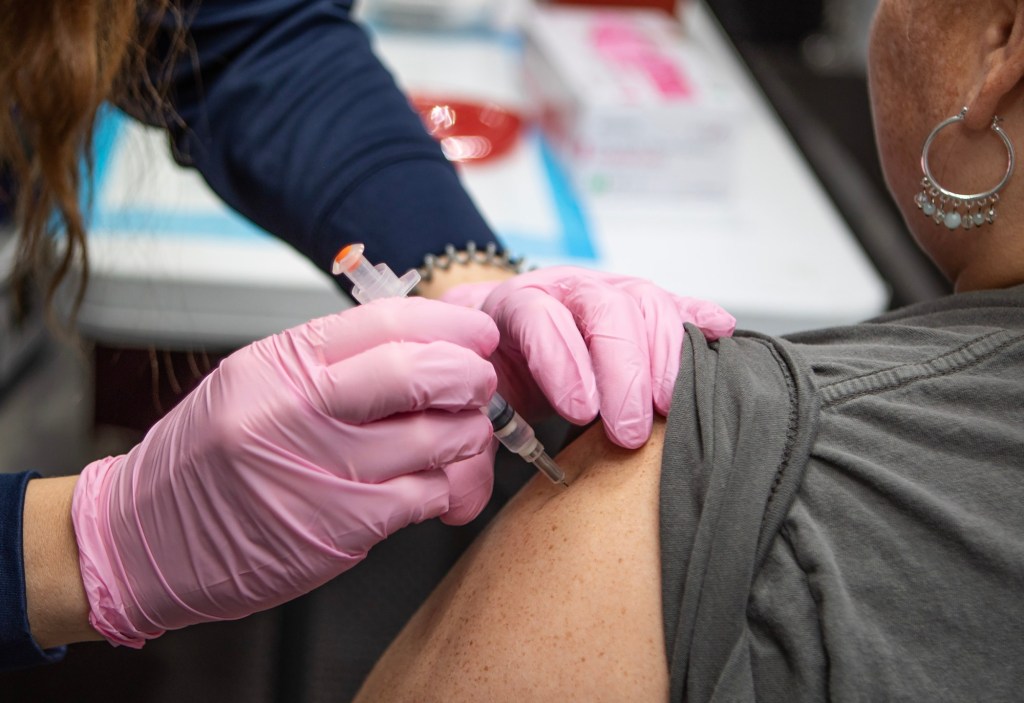
Jahre said that, except for those who have a legitimate medical reason, the flu vaccine is recommended to everyone 6 months of age and older.
Villalobos said children getting the flu shot is critical because, though the flu shot cannot always prevent infection, it prevents patients from experiencing moderate to severe infection. She said the aim is that it will prevent severe flu that puts a child in the intensive care unit. She added that children who repeatedly receive the flu vaccine have higher immunity to the flu than those who receive it sporadically.
This is a big deal because every year, otherwise healthy children get severe cases of flu, sometimes resulting in swelling of the brain or nervous system and in some cases, death. Last year, 280 children died after contracting the flu.
“Last year was the highest year in the past 10 years in the number of children that die from the flu, 90% of the children that die from influenza every year are healthy children,” Villalobos said. “The common finding in those children that happen to die from the flu is that they did not receive the vaccine.”
COVID-19 remains a concern
While flu is on the rise, COVID-19 cases also are quite high and Jahre said the infection is ever-present.
Jahre said a major concern right now is that there has been no consistency in vaccine guidance from the federal government, with the Food and Drug Administration and the Health and Human Services Administration issuing different approvals and guidance from the Advisory Committee of Immunization Practices.
The FDA has approved the COVID vaccine for people over the age of 65 who have certain conditions that put them at higher risk. However, ACIP has recommended that everyone over the age of 6 months get vaccinated after a conversation with their care provider.
“We now have different opinions and that’s created a lot of confusion. Confusion always leads to mistrust, and both confusion and mistrust eventually lead to less uptake of vaccines for people who would really benefit,” Jahre said. “This is a very unusual situation to occur with vaccinations. It’s something that almost never has occurred with almost anything in the past.”
He said that while there are people who refuse to get a vaccine no matter what, there also are people who are unsure what they should do. Conflicting information can lead to those people deciding it’s better to do nothing, even if they would be better off getting the vaccine.
Jahre added that the guidance from HHS may be outright wrong, which seems to be the standpoint of the American Academy of Pediatrics, which is suing the federal government for changing its COVID vaccine policy. Twenty other medical organizations, including the American College of Obstetricians & Gynecologists, have filed an amicus brief supporting the AAP.
Jahre said St. Luke’s is advising its patients based on different guidance than that of the government. He said pregnant women should be considered as having a high-risk condition and should be vaccinated to protect themselves, their fetus and their baby once he or she is born. He added that people ages 50-64 are at lower risk than those older than 65 of severe COVID-19, but still at much higher risk than younger people. He said just like the flu shot, the COVID-19 vaccine significantly reduces the risk of severe illness.
“Anyone who’s over the age of 6 months who wants the COVID vaccine should, unless there’s a specific contraindication, strongly consider getting it,” Jahre said.