
When news broke that an Uzbek terror-suspect was arrested in Kansas while holding a Pennsylvania-issued commercial driver’s license, the trucking world felt the shockwave immediately. The man’s name was Akhror Bozorov, and federal officials now say his case exposed a breakdown inside Pennsylvania’s CDL verification system that has been building for years. That one license triggered a federal safety review, a political firestorm, and now a direct warning from FMCSA: fix the state’s CDL program, or lose the authority to issue CDLs altogether.
This is not a routine compliance audit. This is the federal government stepping in and telling one of the nation’s largest freight states that its CDL system is no longer trustworthy. And the consequences — for training schools, carriers, insurance companies, and every driver coming up through the pipeline — could be severe.
To understand how we got here, you need the full picture. And it starts with the driver at the center of the incident.
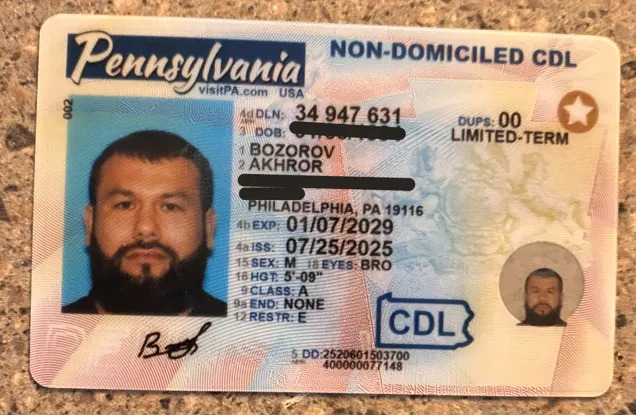
The non-domiciled Pennsylvania CDL issued to Akhror Bozorov in 2025, a document federal officials say should never have been approved under current eligibility rules. (Photo: Department of Homeland Security)
How One Driver Set Off the Federal Alarm
According to federal officials and multiple public records, Akhror Bozorov — a citizen of Uzbekistan — was arrested in Kansas as a terror-suspect. When his identity was processed, authorities discovered he held a valid Pennsylvania-issued CDL. That immediately raised two major questions:
How did he get licensed? And why did Pennsylvania’s verification process approve him?
Pennsylvania state Sen. Jarrett Coleman had already raised concerns about potential failures inside the state’s CDL system after earlier warnings, and he sent a letter to Gov. Josh Shapiro’s administration urging immediate action. Coleman’s warning was blunt: the state was showing signs of a growing CDL verification crisis.
Shapiro’s office pushed back, blaming federal data systems from the Trump administration, claiming Bozorov’s name remained in a federal immigration database used for work-permit holders. But DHS clarified that being listed in that system does not prove legal immigration status, nor does it satisfy the requirements for CDL eligibility.
In short, the documents Pennsylvania relied on should not have been enough. Bozorov never should have received a CDL under FMCSA rules. And that is the exact failure that put the state in the crosshairs.
What Federal Investigators Found Inside PennDOT
Federal reviews uncovered a series of deeper problems within Pennsylvania’s CDL program. These weren’t isolated clerical errors — investigators described systemic failures in crucial verification steps, including:
Identity authentication
Lawful presence verification
Immigration document validation
Third-party examiner oversight
Recordkeeping accuracy
Compliance with federal testing standards
FMCSA concluded that Pennsylvania approved CDL applicants when critical eligibility information wasn’t validated. In some cases, state systems accepted documentation that did not meet federal criteria. In others, examiners were allowed to conduct testing without the oversight normally required.
Commercial driver’s licenses aren’t state certificates. They are federal credentials issued through a partnership with the states. When a state cannot verify a driver’s lawful presence, identity, or eligibility, FMCSA has the responsibility to intervene — and this time, they used it.
The threat is clear: if Pennsylvania doesn’t fix the program fast, FMCSA will decertify it.
California Was the First Domino — Pennsylvania Is the Warning Shot
This isn’t happening in a vacuum. FMCSA had already pulled tens of millions in federal funding from California earlier this year after discovering widespread CDL compliance failures. California’s violations looked similar — issuing of non-domiciled CDLs to ineligible immigrants, weak monitoring of examiners, poor testing controls, delayed corrections — but the federal reaction was the same: zero tolerance.
The pattern is unmistakable. FMCSA is tightening the entire national CDL issuance system.
California lost funding. Pennsylvania now faces decertification. And federal officials have warned publicly that more states will be reviewed.
Trucking has seen regulatory waves before — ELDs, the Drug & Alcohol Clearinghouse, emissions standards — but this one hits the driver pipeline directly. That’s why the stakes are so high.
The Political Explosion: Loud Voices, Fast Reactions
Bozorov’s case didn’t stay inside industry circles. It exploded across national media.
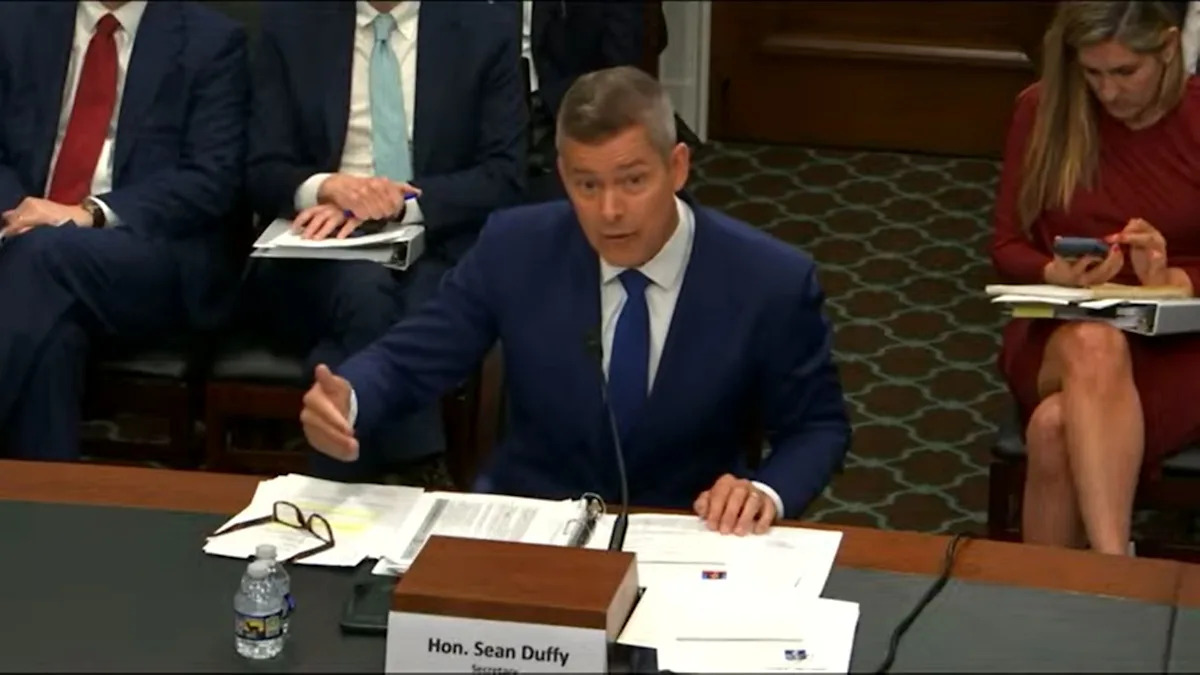
Fox News ran multiple segments suggesting Pennsylvania’s system allowed improper licensing of non-citizens. Local and national CBS outlets reported federal frustration with PennDOT’s processes. Political leaders seized the moment. Secretary Sean Duffy threatened to pull $75 million in federal funding. Pennsylvania Democrats and Republicans went back and forth publicly about who was responsible. DHS and the Shapiro administration clashed over what federal databases actually mean.
The case went from a failed license verification to a national political storyline about border control, vetting failures, and federal oversight. Once an issue reaches that level, FMCSA has to respond quickly — and decisively.
That’s exactly what is happening.
What Decertification Would Mean for Trucking
If FMCSA follows through and decertifies Pennsylvania’s CDL program, the fallout will be immediate and severe. The state would lose the authority to issue, renew, or upgrade commercial driver’s licenses. Every new driver in the pipeline would be forced into a waiting status. CDL schools would stall. Written and skills testing would freeze. Licensing timelines would explode. Carriers would lose weeks — sometimes months — of recruiting momentum.
This isn’t hypothetical. This is the exact reason FMCSA should take decertification seriously — as it disrupts an entire region’s supply of new commercial drivers.
Why FMCSA Says This Isn’t About Lawful Immigration — It’s About Verification
FMCSA has been very clear with its language. The agency is framing this as an illegal immigration issue.
The federal standard is simple:
If a state cannot prove a driver’s identity, lawful presence, and eligibility using federally approved methods, that state is out of compliance.
Bozorov’s case exposed a verification gap that had gone unnoticed too long. It didn’t matter whether he was a terror-suspect, a tourist, a student, or a long-term resident. If the federal verification system cannot confirm lawful presence, the CDL cannot legally be issued. FMCSA believes Pennsylvania failed that requirement.
That’s the heart of the case.
Final Thought
Pennsylvania didn’t end up in this situation because of one driver. Bozorov’s case simply forced the issue into the open. Behind it were years of system weaknesses, verification gaps, oversight failures, and state processes. Once federal investigators connected those dots, FMCSA had no choice but to intervene.
Decertification is rare. Threatening a state’s entire CDL authority is even rarer. But the message from Washington is clear: the era of loose CDL controls is over. States will either meet federal verification standards or lose the ability to issue America’s most important credential.
And for the trucking industry — especially the small carriers — this is a moment to pay attention. CDL oversight is entering a new phase. The rules are tightening. The spotlight is widening. And the federal government is making it clear that they’re prepared to step in anytime a state’s system allows dangerous gaps to slip through.
The fallout from this isn’t over. But one thing is certain: trucking is about to enter a new chapter in how America decides who gets behind the wheel of an 80,000-pound vehicle.
The post FMCSA Threatens to Decertify Pennsylvania’s CDL Program After Uzbek Terror-Suspect Obtains State License appeared first on FreightWaves.