
We’d be hard-pressed to think of an asset more vital to Northeast Pennsylvania’s residents, its businesses or its future growth than the Wilkes-Barre/Scranton International Airport.
It is our gateway to the nation, and the nation’s pathway to us. Over the last two decades, more than $60 million was cast into building a new, more user-friendly terminal, a parking garage and control tower, and there is more expansion on the way. Passenger trends have been strong since the pandemic ended. It is well worth the very best efforts of officials from the two counties that split its ownership to run it as a prized possession, on a unified front, with expansion and growth and safety firmly in mind.
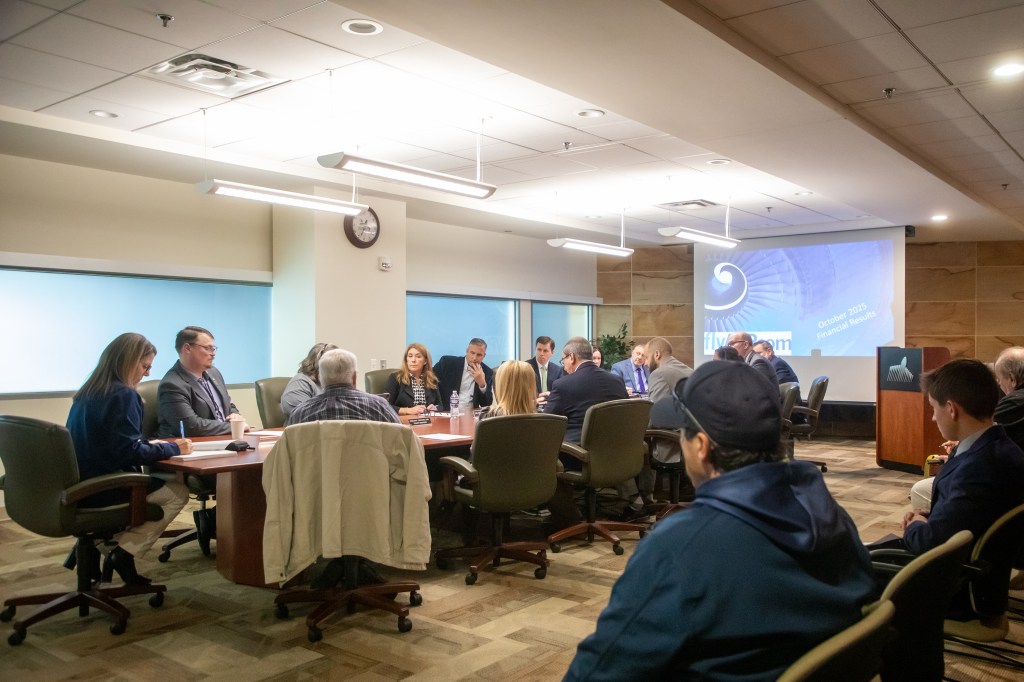
That said, it is difficult to look at Thursday’s meeting of the bi-county board that is in charge of the airport and not see the merits brought forth by both sides of a hotly contested debate.
By the time the meeting concluded, board members voted to approve a two-year agreement to pay law enforcement officers to supplement security already in place at airport. Basically, it is an extension of the Law Enforcement Officer program that once was thought so crucial to enhancing safety at airports around the country, the federal Transportation Safety Administration funded it until May 1, 2024.
Since, airports have owned the opportunity to continue employing the police officers on their own dime, or drop the program altogether. Thanks to Luzerne County stepping up to pay the lion’s share of the cash needed to fund the program — the county has paid about $12,000 a month to keep it going — along with $5,000 a month from the airport, LEO stayed in business.
Lackawanna County contributed zero.
Dealing with a well-documented budgetary deficit, Lackawanna County Commissioner Bill Gaughan’s assertion that the LEO program is a “fully optional, fully local and fully unfunded add-on” given the federal government’s defunding of the program is hardly ludicrous on its face. But the overwhelming majority of the board was correct in its vote to require Lackawanna County to contribute its share to the program.
Governance of the airport works best for all area residents who, in varying forms, pay for its upkeep and improvements when it is shared between both Lackawanna and Luzerne Counties. In fact, continued support of the airport through funds provided by the Federal Aviation Administration practically mandates a formal partnership agreement between the counties signed by the end of the year.
Gaughan’s assertion that even top officials running day-to-day operations at the airport don’t see the need to extend the program — he pointed out the $500,000 the airport spends on its armed security service, as well as armed agents employed at the facility by TSA as reasons why — is well-taken. But calling the LEO program “expensive security theater” is wrong on several counts.
For starters, the cost hardly seems prohibitive when considering the service. Under the proposed agreement, the airport would cover half the program’s cost over the next two years, while each county kicks in the other 25%. That amounts to a couple grand a month for the counties.
When you’re pinching pennies as Lackawanna County is, even a few thousand dollars isn’t a small contribution. But the point is, the county should treat the airport like a priority.
Treating the airport like a priority means making it the best, and safest, it can be for an airport its size that serves the amount of customers it does.
“I will never ever apologize for putting the safety of the residents of Luzerne County first, and I will never apologize for considering the safety and the well-being of the citizens of Lackawanna County,” Luzerne County Manager Romilda Crocamo said. “I will never, ever apologize for putting the safety and security of the individuals who use this airport first. We want this airport to be the best it can possibly be, and what we will have now is.”
It makes sense for both the Luzerne County Council and the Lackawanna County Commissioners to approve the agreement, and for Lackawanna to embrace its fiduciary role as co-owner of the facility. That gives county residents a say in a major regional asset, and the other co-owners in Luzerne County peace of mind knowing that its continued improvement isn’t theirs alone to foster.