
By Jack Tomczuk
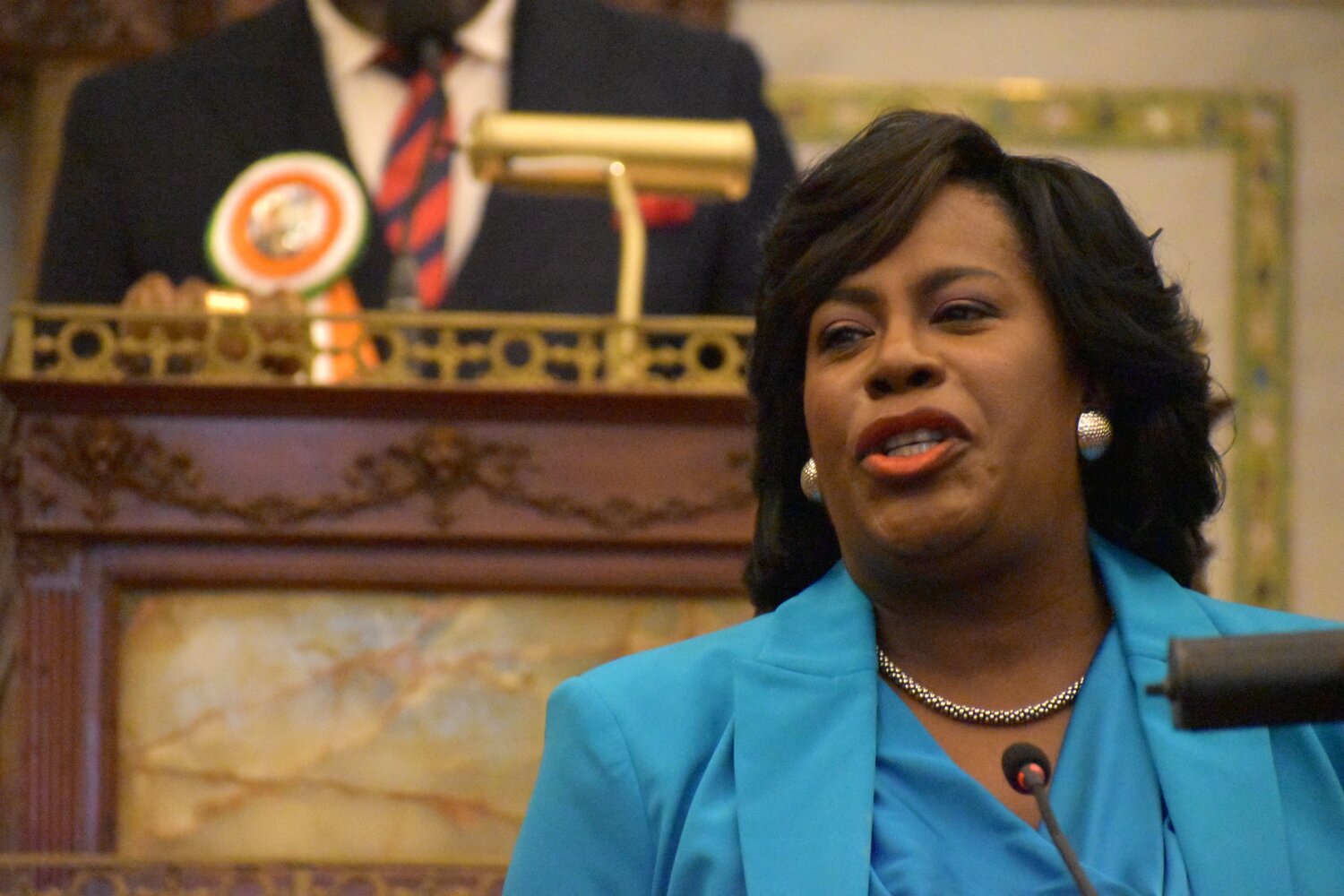
Mayor Cherelle Parker wants to double the length of a real estate tax abatement for certain development projects, as part of her effort to preserve or build 30,000 units of affordable housing over four years.
Her administration is drafting legislation that would offer a full tax exemption for 20 years when a company converts an office building, vacant school, factory or former government building into a residential property.
The benefit would even be available if a developer determines that the existing structure needs to be demolished to make way for the housing, officials said.
Previous state law limited such abatements to 10-year terms; however, language to expand the benefit for commercial, industrial and governmental building conversions was included in the budget and fiscal code legislation recently adopted in Harrisburg.
“This is not a blanket benefit for billionaires,” Parker said at a City Hall news conference Friday alongside state lawmakers. “Somebody somewhere somehow is going to say, ‘Here they go again thinking about how to line the pockets of billionaires.’”
She referred to the tax break as a “surgical tool that we will execute with missile-like precision to extract exactly what we desire out of it” – namely, the reuse of struggling office buildings and other properties.
The impetus for the change came earlier this year, the mayor said, when her deputies informed her that commercial properties in Philadelphia experienced a $1 billion reduction in assessed value. Parker said the drop is resulting in a $9.7 million annual combined tax revenue loss for the city and school district.
Data from the Center City District shows that fewer than 70% of those who worked in downtown offices prior to the COVID-19 pandemic have returned to their cubicles. About 20% of Center City office space is vacant, according to the organization.
Parker compared her administration’s proposed benefit to the 10-year tax abate that went into effect in 2000, credited by some with sparking a downtown revival.
City Council adjusted the abatement several years ago – effectively halving it for new residential construction projects – amid concerns that the program was pulling tax revenue from city services and schools.
Although the state gave Philadelphia authority to implement a limited 20-year tax abatement, the details still need to be approved by Council and signed by the mayor. Parker said her team is preparing a bill and plans to present it to lawmakers in January.
Implementing the tax incentive, Parker said, is a component of the Housing Opportunities Made Easy, or H.O.M.E., initiative, an ambitious program that has dominated the mayor’s second year in office.
Council has yet to pass a spending plan for the initiative’s first year, delaying the issuing of $400 million in municipal bonds.
During a hearing on Nov. 12, Rob Dubow, Parker’s finance director, said the city would not be able to take out the loan until early next year unless lawmakers approved a budget last week. At that meeting, several lawmakers expressed concern with the administration’s proposal to raise income eligibility guidelines for housing assistance.
A subsequent committee hearing was postponed, and Council’s calendar has two more regular sessions scheduled this year, though the body’s leadership could always arrange for a special meeting.
“We continue to have essential conversations with Council President (Kenyatta) Johnson,” Parker said Friday. “Do I think we’ll get to ‘yes’? Absolutely. Do you want me to give you an absolute date and time? Can’t do that right now, but I can tell you that I believe we are well on our way to getting to ‘yes.’”