
MILWAUKEE — A new group called the Milwaukee Reading Coalition is working to boost early literacy citywide. The goal is to ensure every student in the city — whether at a public, private or charter school — reads at grade level by the end of third grade.
It comes after last year’s results from the nation’s most respected testing program, which showed a major need for improvement.
The National Assessment of Educational Progress, commonly known as NAEP, tests every two years in public, private and charter schools across the country. In 2024, the average score for fourth-grade reading in Milwaukee was 179. That was significantly lower than the average score of 208 for students in large cities.
What You Need To Know
The Milwaukee Reading Coalition consists of city leaders, educators and community members who share a common goal: to improve early literacy across the city
The group comes after last year’s NAEP scores revealed a need for major improvement in reading. In 2024, the average score for fourth-grade reading in Milwaukee was 179, which is 29 points below the average large city score
The coalition will work to secure public and private funding to provide teacher training on the “Science of Reading” for all kindergarten through third-grade teachers
The Science of Reading is now the approach being used state and nationwide. Before this, the dominant method was “balanced literacy,” which put more focus on kids guessing words using context clues and pictures
The Milwaukee Reading Coalition is made up of local civic and business leaders, educators, community members and dozens of organizations. Using public and private funds and donations, the coalition is looking to provide teacher training for all kindergarten through third-grade teachers and principals.
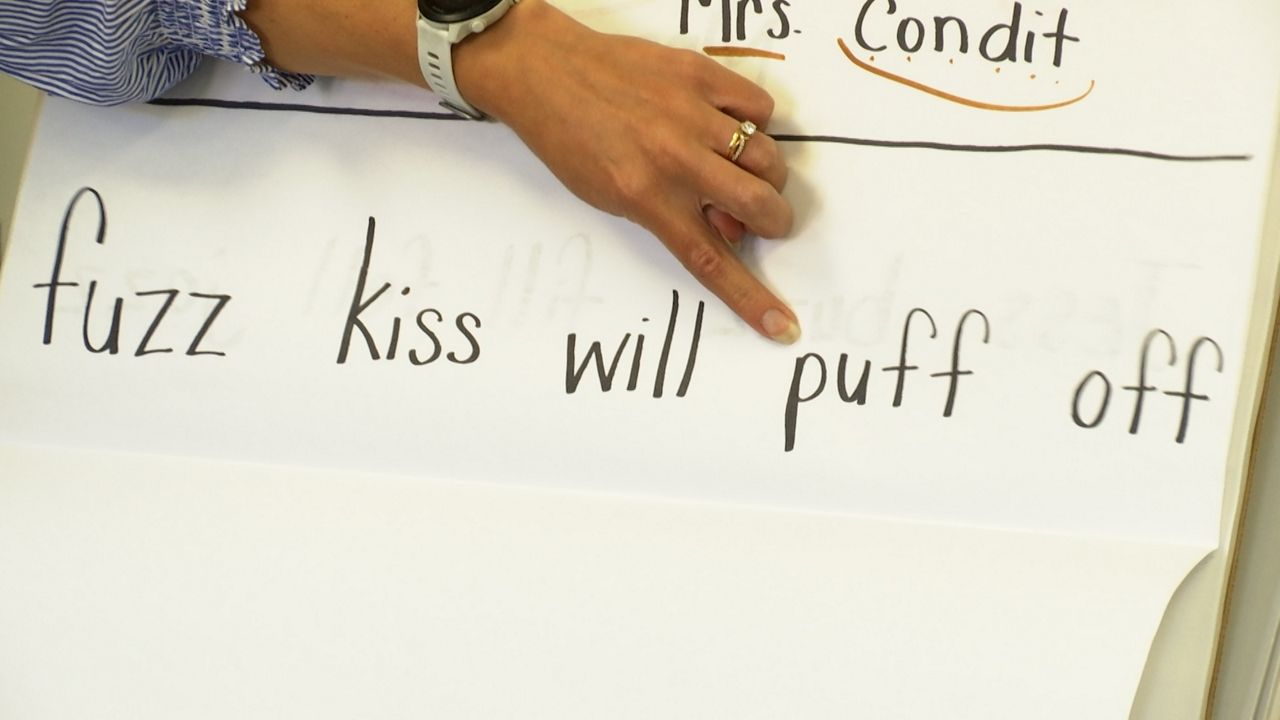
Jessica Condit, a first-grade teacher at the United Community Center’s Bruce-Guadalupe Community School, has gone through the training.
“I say the words, you saw the sounds,” she said to her class. “In learning letters and sounds, we’re starting to put them together and blend them into words. They’re thriving on it. They like the routines. It’s making it fun for them.”
The training she went through follows a method called “the science of reading.” It puts a bigger focus on phonics to connect letters with the sounds they make. The Science of Reading is now the approach being used state and nationwide. Before this, the dominant method was “balanced literacy,” which put more focus on kids guessing words using context clues and pictures.
“We know how the brain develops language, and our brains are not wired for written print. The previous method, which was more about immersing kids in books to get them to read, was debunked,” said Condit.
Former Milwaukee Public Schools (MPS) Superintendent Howard Fuller is co-chairing the Milwaukee Reading Coalition with former MPS school board member Mark Sain, and the President and CEO of Herb Kohl Philanthropies, JoAnne Anton.
“The hope is that once teachers are trained in the science of reading, it’s going to be a significant boost to our children learning to read,” said Fuller, who considers literacy one of the most powerful tools to reduce socio-economic disparities. “Our kids can’t read. We need to put aside our differences and unite around a strategy to improve reading in the City of Milwaukee.”