
In a divided vote and over the objections of residents, Archbald Borough Council on Monday night approved a zoning ordinance that defined data centers, designated where they can be built across four “data center overlays” through town and established conditions for their approval.
The vote was the second attempt for a decision on the zoning ordinance, after a motion to vote failed to receive a second on Oct. 3, following significant opposition from residents who urged the borough to place additional restrictions on any future data centers.
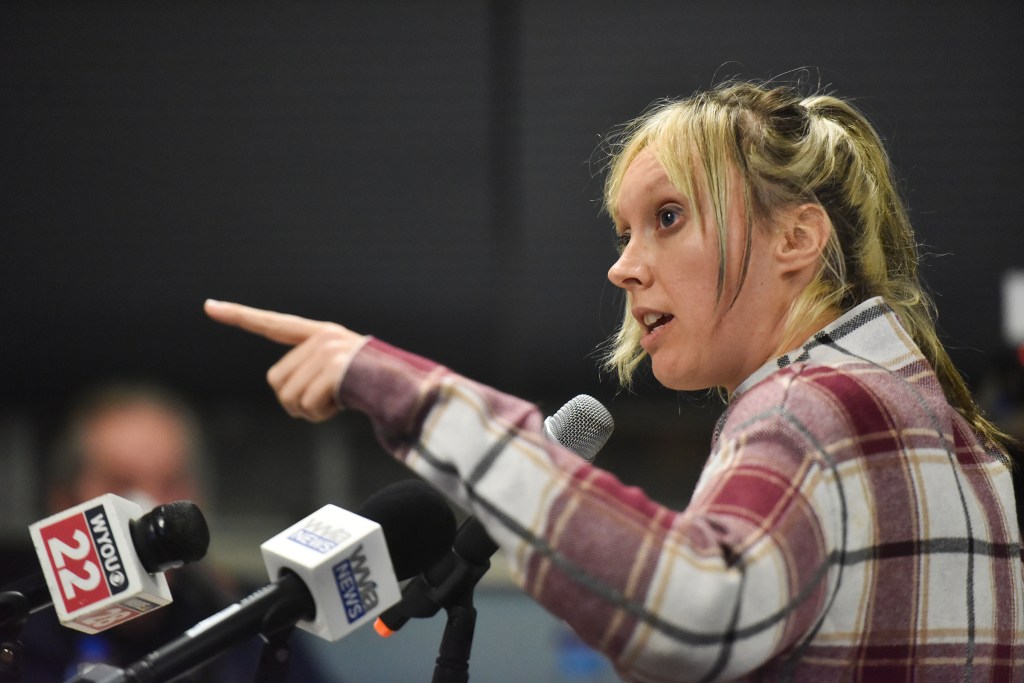
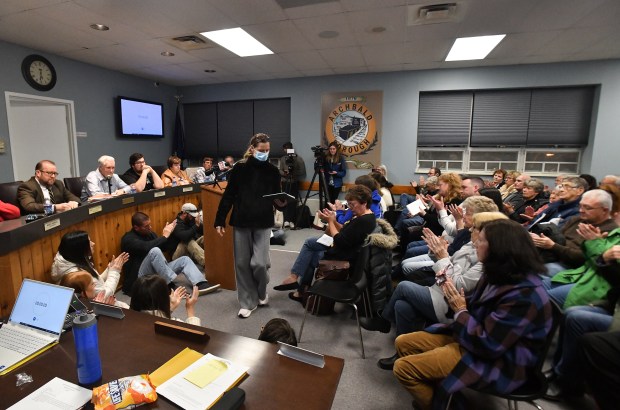
During Monday’s meeting, residents flooded into council chambers, sat on the floor and even stood in the hallway. More than a dozen residents made their way to the podium asking and sometimes begging council to vote against the zoning ordinance, which they said would fail to protect them and their families from pollution, noise and enjoyment of their properties.
Council’s decision comes as developers propose to build five data center campuses in the borough, totaling 43 buildings along Eynon Jermyn Road, Business Route 6 and Route 247. The new restrictions apply to future data center applications, but existing applications retain their legacy zoning, including four projects proposed along the Eynon Jermyn Road.
Eynon resident Carolyn Mizanty said her family had lived in Archbald for generations and she had always planned on staying, but would consider moving if the borough allowed an influx of data centers into the area without proper regulation.
She pointed out that the borough had not even considered amendments proposed by residents that included additional safeguards relative to data centers.
“You are destroying our lives,” she said. “You are destroying our entire community.”
Michael Pilch said although there might be come short-term benefits during the construction of data centers, there were no real long-term benefits.
He voiced concerns about electricity, water use, environmental impact, and noise should the data centers become reality.
He pointed out that should the zoning ordinance pass without further amendment, there would be rules about noise, but with many periods when those rules would be temporarily suspended, including during periods of maintenance.
“It will be like living on a airport runway,” he said.
Many other residents came to the podium with similar concerns for over an hour, with none voicing support of the zoning ordinance.
Still, soon after the council members began verbally casting their votes, it became apparent the zoning ordinance would pass.
The motion was made to pass the ordinance, “an Ordinance Amending the Borough of Archbald’s current Zoning Ordinance and current Zoning Map to create a Data Center overlay district, amend the current Zoning Ordinance to include definitions pertaining to Data Centers and to establish criteria and standards for allowing Data Centers as conditional uses only in the DataCenter overlay zoning district.”
Council members Dave Moran, Maria Andreoli, Francis X. Burke and Richard Guman voted “yes.” Council members Erin Owen and Laura Lewis voted against the ordinance. John Shnipes III abstained, citing a conflict of interest.
Borough residents listen to the meeting concerning data centers at the Archbald Borough Building in Archbald Monday, November 24, 2025. (SEAN MCKEAG / STAFF PHOTOGRAPHER)
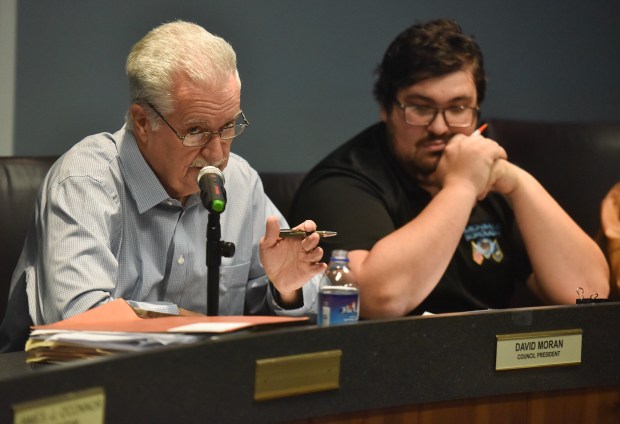
Council President David Moran speaks during the community meeting at the Archbald Borough Building in Archbald Monday, November 24, 2025. (SEAN MCKEAG / STAFF PHOTOGRAPHER)
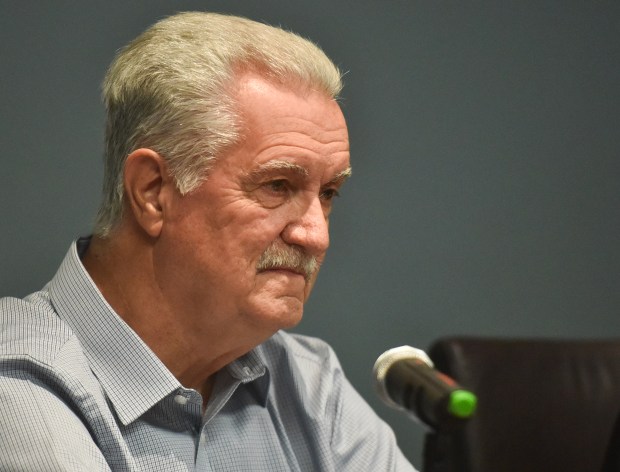
Council President David Moran listens to public comment during the community meeting at the Archbald Borough Building in Archbald Monday, November 24, 2025. (SEAN MCKEAG / STAFF PHOTOGRAPHER)
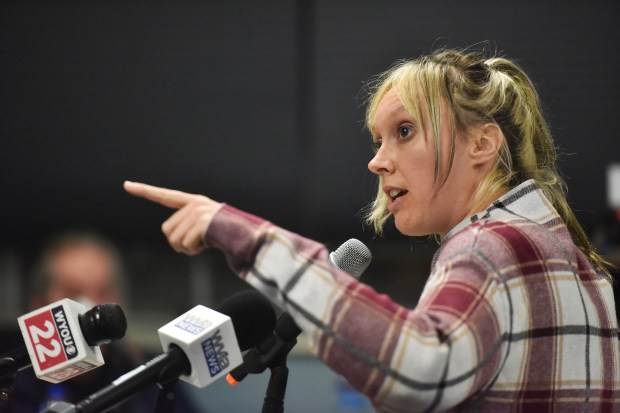
Kayleigh Cornell, co-founder of the Archbald Neighborhood Association, speaks during the community meeting at the Archbald Borough Building Monday, November 24, 2025. (SEAN MCKEAG / STAFF PHOTOGRAPHER)
Borough resident Carolyn Mizanty concludes her comments at the podium during the data center meeting at the Archbald Borough Building in Archbald Monday, November 24, 2025. (SEAN MCKEAG / STAFF PHOTOGRAPHER)
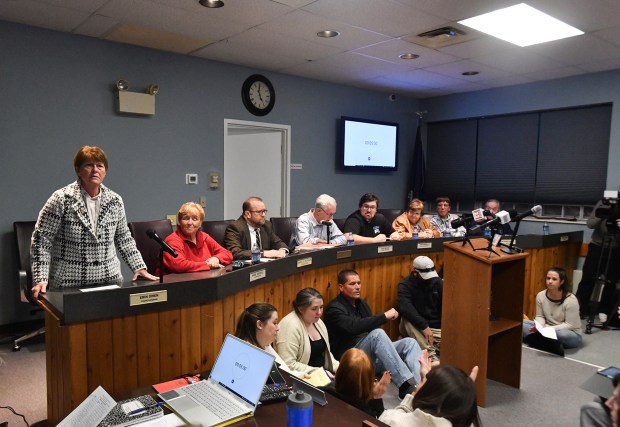
Council member Erin Owen makes a motion to adjourn the meeting at the Archbald Borough Building in Archbald Monday, November 24, 2025. (SEAN MCKEAG / STAFF PHOTOGRAPHER)
Show Caption
1 of 6
Borough residents listen to the meeting concerning data centers at the Archbald Borough Building in Archbald Monday, November 24, 2025. (SEAN MCKEAG / STAFF PHOTOGRAPHER)
Expand
Residents doing research
Christina Farrell, an attorney, said there were people in her family and in the audience who came from a variety of different backgrounds, careers and interests.
When so many different kind of people agree on something, she said, it usually has a credible foundation. She hoped the council would listen to their residents, who offered information in addition to their concerns.
“These people have done their research,” she said.
She asked that the borough council vote “no” and go back to the drawing board.
Many residents, she said, weren’t completely opposed to the construction of data centers, but hoped that they could be limited to one area.
Kathleen Mancia asked why the current zoning ordinance, passed in 2023, didn’t adequately address data center regulation.
Mancia, like many of those coming to the podium, asked why suggested amendments to the zoning ordinance by residents weren’t taken into consideration by the council.
Surprised, not surprised
Following the vote, Kayleigh Cornell said she felt a bit defeated, but that the fight wasn’t over.
Earlier in the evening, Cornell said a council member had provided misinformation about the zoning ordinance, including that, once passed, it could be easily changed.
The reality, she said, that once a zoning ordinance is passed, developers could build data centers under its regulations.
The better option, she said, is for the borough council to draft and advertise an amended zoning ordinance, which would mean data center developers would be subject to its amendments, should it pass.
“Protection could start tomorrow,” she said. “In the time it takes to draft and advertise.”
Cornell said lawyers were involved in fighting the decision and she was hopeful residents could overturn the council decision.
Archbald’s now-amended zoning ordinance, which council adopted in March 2023, principally permitted data centers in large sections of the town without any additional safeguards, including allowing them in its general commercial, commercial/light industrial, light industrial and general industrial zoning districts. The zoning amendment adopted Monday night removes data centers as permitted uses and now restricts them as conditional uses in four overlay districts, requiring developers to attend a public hearing and adhere to conditions established by the town before council considers approving their requests.
Lackawanna County communities have increasingly used overlay districts to legislate data centers rather than through rezoning. Overlays allow data centers in designated areas while retaining the underlying zoning district, meaning if developers do not build data centers, the land’s original zoning restrictions still apply.
About the ordinance
Archbald’s four data center overlays are:
• Hundreds of acres along Business Route 6 and Route 247, which are zoned for conservation and medium/high-density residential uses. This is the site of the proposed Wildcat Ridge AI Data Center.
• The wooded area immediately north of the Archbald Pothole State Park and Staback Park along Business Route 6 and the Eynon Jermyn Road. This is Archbald I LLC’s 18-building data center campus.
• Industrial land along Power Boulevard and in the Valley View Business Park.
• A narrow L-shaped band on the outskirts of Stavola Silverbrook Land LLC’s mining land along the Casey Highway near Aylesworth Park and the Jefferson Twp. border.
Notably, while the ordinance restricts data centers in some parts of town, it allows the proposed Wildcat Ridge AI Data Center Campus to move forward with the conditional use process to build 14 three-story-tall data centers across nearly 400 mountainside acres along Business Route 6 and Route 247, or Wildcat Road. Previously the developer needed zoning relief because the land was zoned for resource conservation and medium/high density residential uses. Wildcat Ridge was Archbald’s first data center proposal when the firm approached council during a January work session to pitch a 17.2-million-square-foot data center campus costing an estimated $2.1 billion.
To allow data centers, a property must be at least 120 acres; located close to a high-voltage power transmission line or facility capable of transmitting 230 kilovolts or more; and have direct access to an arterial or collector street, according to the ordinance. Data centers are restricted to 90 feet tall, though they could exceed that as a conditional use for water and cooling towers.
The data center overlay districts prohibit the use of nuclear-, coal- and oil-powered generation for full-time electrical generators; emergency and backup generators could use diesel fuel, according to the ordinance.
Data centers are also restricted to be at least 300 feet from residential areas, and they are required to conduct a sound study approved by the borough’s professional acoustical expert, with a preliminary study as well as an “as-built” study nine months after the data center received its certificate of occupancy and at full occupancy; an as-built sound study could also be required afterward at the borough’s request, according to the ordinance. Data centers have to use public water and sewer facilities, and if a data center uses nonpublic water sources, it must conduct a water feasibility study.
Other requirements include architectural design guidelines, buffer requirements and berm requirements to minimize visual impacts, sound restrictions and requirements to abide by environmental regulators.
Staff writer Frank Lesnefsky contributed to this report