
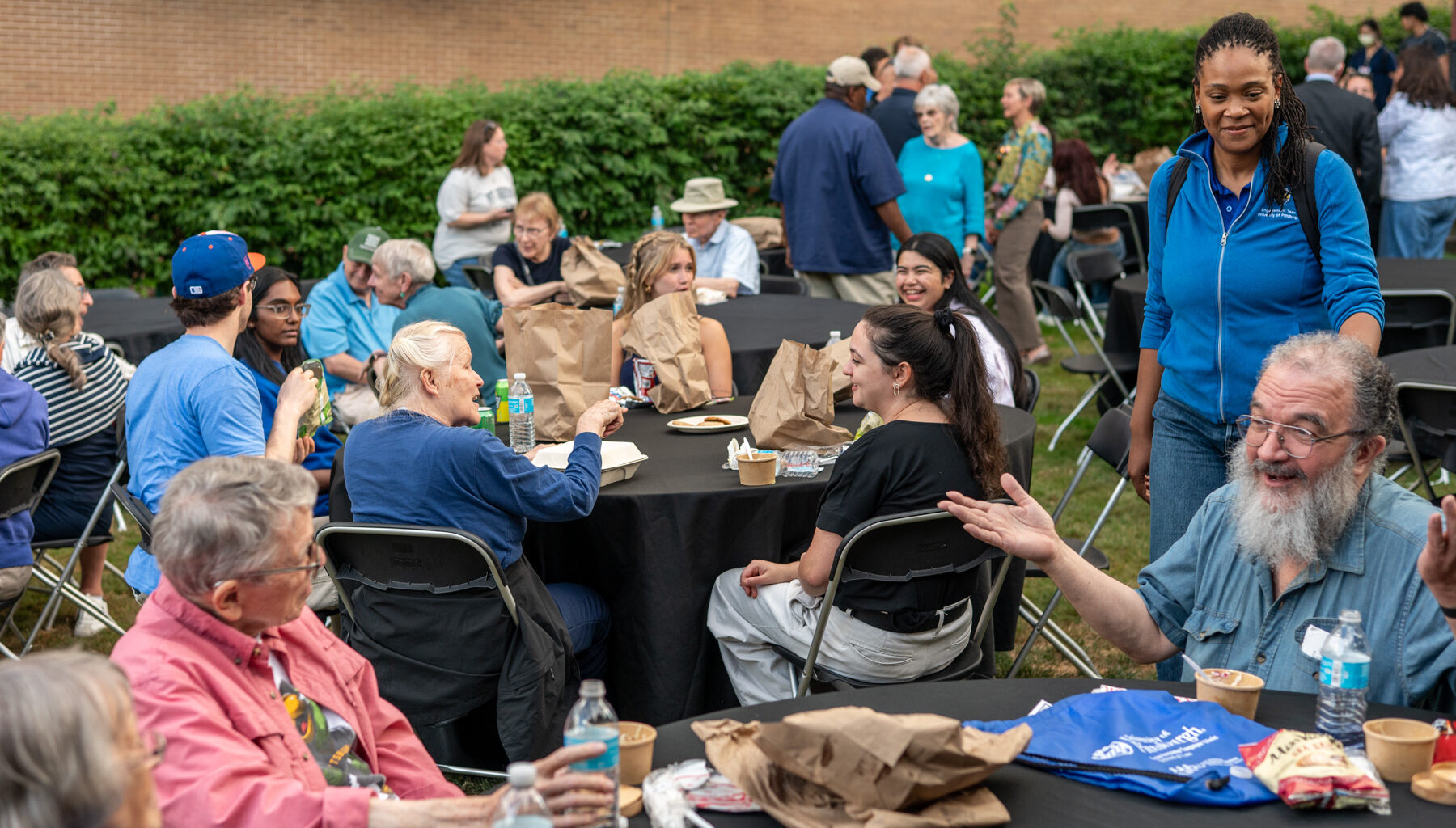
Editor’s note: This story was first published in a Pittsburgh’s Public Source neighborhood zine. Look for our printed zines now in Brookline, Carrick, Overbrook and Oakland.
At every corner in Oakland, Roxane Stewart’s past whispers out at her. In these moments, the 79-year-old said she almost feels like she’s existing in two timelines — one where she’s “an old lady” and one where she’s a child.
“I’m doing everything simultaneously,” she said. “It’s a great thing.”
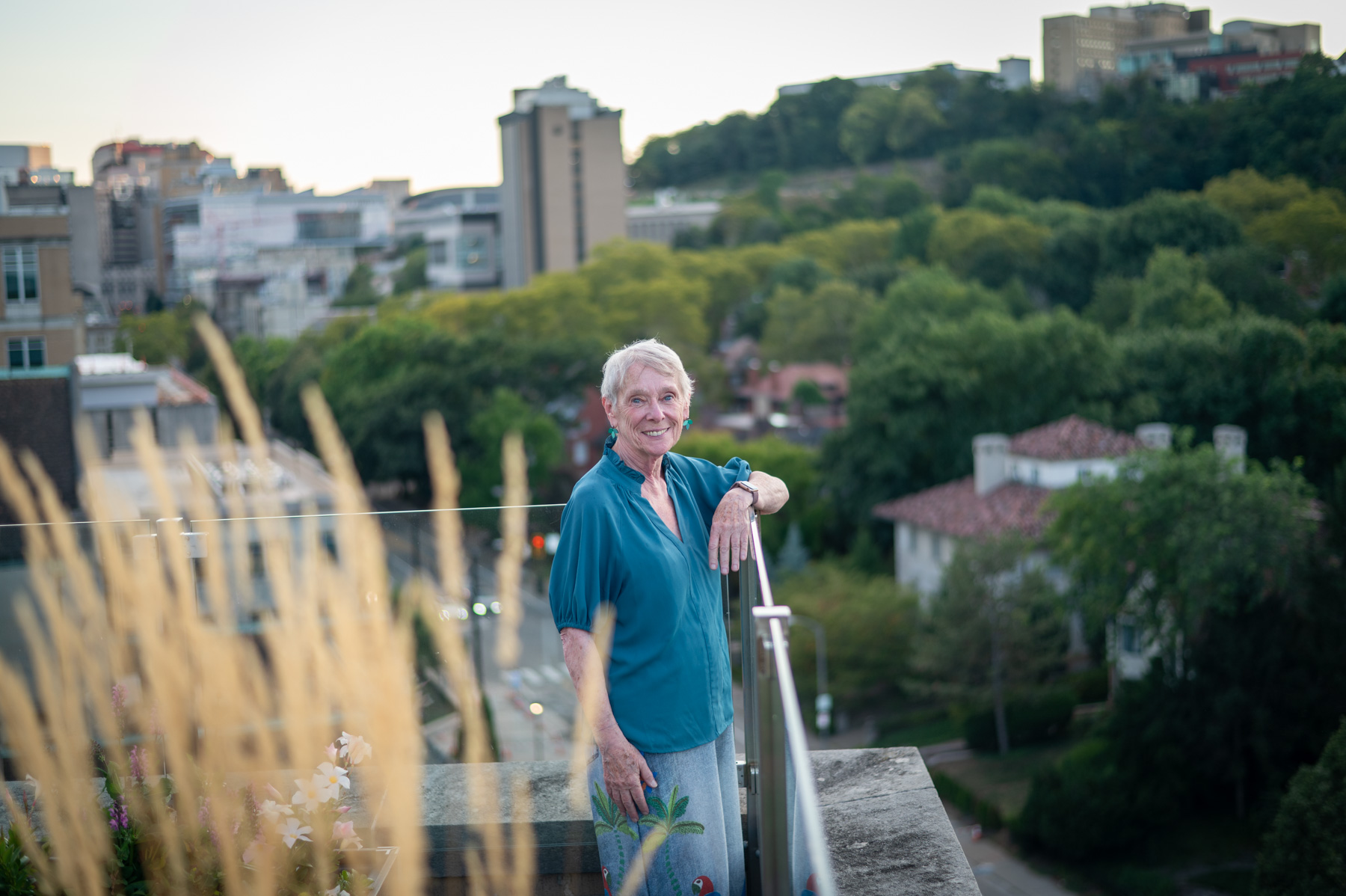 Roxane Stewart, 79, stands for a portrait on the roof deck of her North Oakland apartment building on Sept. 2. (Photo by Stephanie Strasburg/Pittsburgh’s Public Source)
After a long stint in the suburbs, Stewart returned in 2020 to the neighborhood where she spent her adolescence. It wasn’t an ideal time for a move, she admitted. But there was something about coming back to her “old stomping grounds” of Oakland that gave Stewart a sense of belonging. “I feel like I’m supposed to be here,” she said.
She lives a block away from the Cathedral of Learning, and despite the construction, traffic and hordes of students present throughout most of the year, she’s content. And she’s far from the only long-term resident who feels this way. Though they live in an ever-evolving neighborhood — one where the demand for student housing has pushed some longtimers out — these residents have sought to plant deep roots.
‘You can find it all here’
Take Carol Comans, for example. The Oakland resident of more than 60 years is well aware the neighborhood is a largely transient community, but she’d rather embrace, not fight, this reality. And besides, she doesn’t see students as the only ones who have ushered in change.
Comans and five generations of her family have resided on Robinson Street in West Oakland. She owns her home and the one across from her, where some family members live. On her street alone, she said racial demographics have fluctuated widely since the late ‘60s — bouncing between predominantly white and predominantly Black at times. She believes her family was among the first families of color to move into the area.
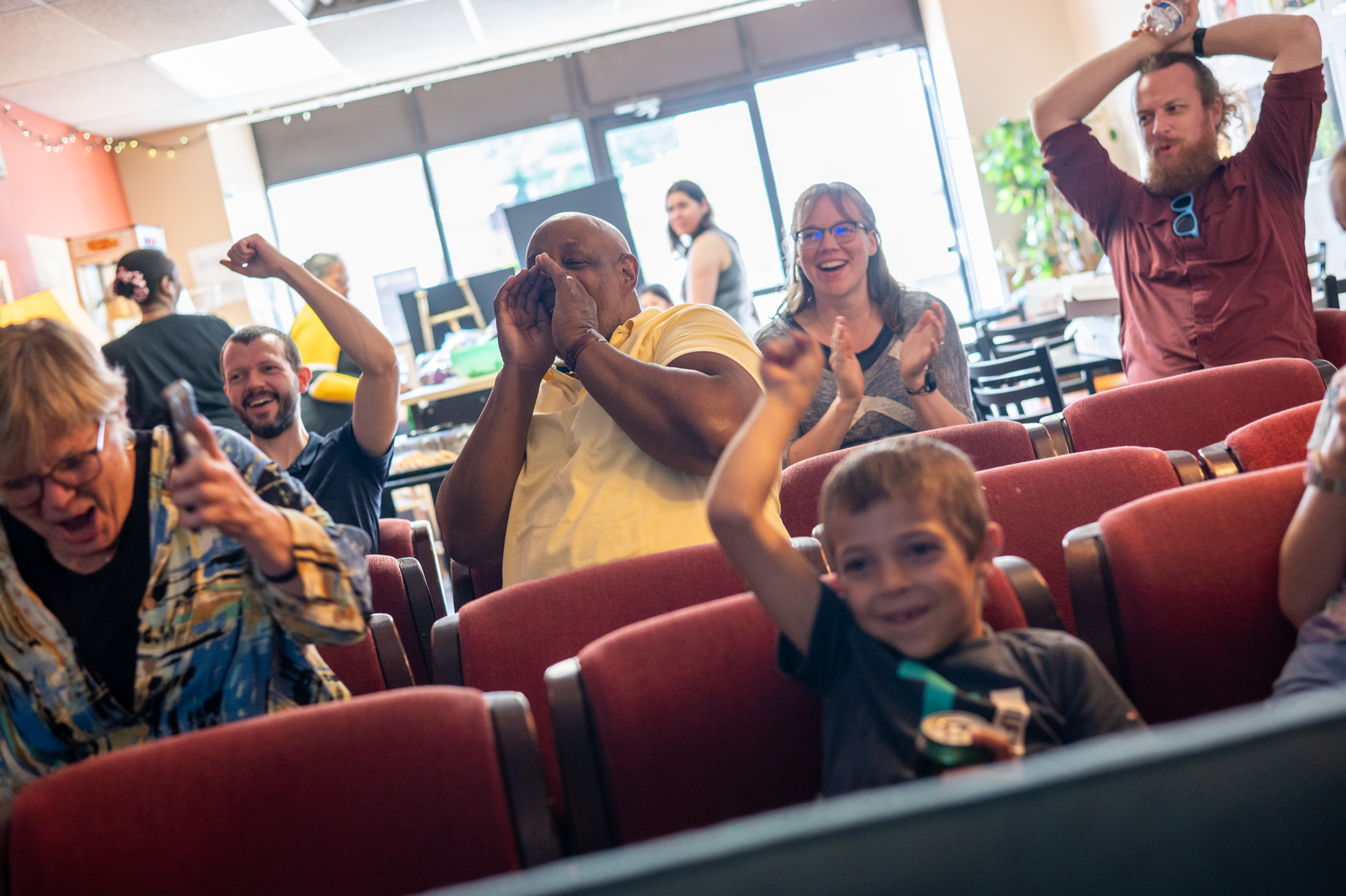 Neighbors celebrate a touchdown at a Steelers game watch party hosted by The Corner, a community organization and event space, on Sept. 21, in West Oakland. (Photo by Stephanie Strasburg/Pittsburgh’s Public Source)
Today, it’s more diverse than ever, with Comans describing living in West Oakland as providing a “continuous opportunity to fellowship with people from all over the world.”
It’s one of the reasons she considers the neighborhood a great place to live — the other being the close-knit nature of its permanent residents. While the number of those has dwindled, the people who remain look out for each other, she said.
At a mid-August West Oakland Block Club meeting — the first with Comans as its new leader — other residents backed this sentiment. They spoke of solidarity and showing up for one another. Lisa Ely, who’s lived in West Oakland for over 50 years, said other neighborhoods in Pittsburgh are nice, but it’s hard for her to imagine living anywhere else.
Oakland by the numbers
Population: 23,331
Under age 18: 4%
Age 65 or over: 8%
Under poverty line: 57%
Housing units vacant: 20%
Occupied housing units that are rented: 78%
Includes Central, North, South and West Oakland. Source: University Center for Social and Urban Research at Pitt 2025 analysis of Census ACS.
“I know that I can find housing wherever I would like to, but at this age, do I want to know a whole new group of neighbors?” she said. “I don’t know that I want to.”
For some longtime residents, it’s the convenience of Oakland that keeps them in place.
“Whatever you want, you can find it here. Cultural. Historic. Modern. Educational. Religious. You can find it all here,” said 80-year-old North Oakland resident Kathy Gallagher.
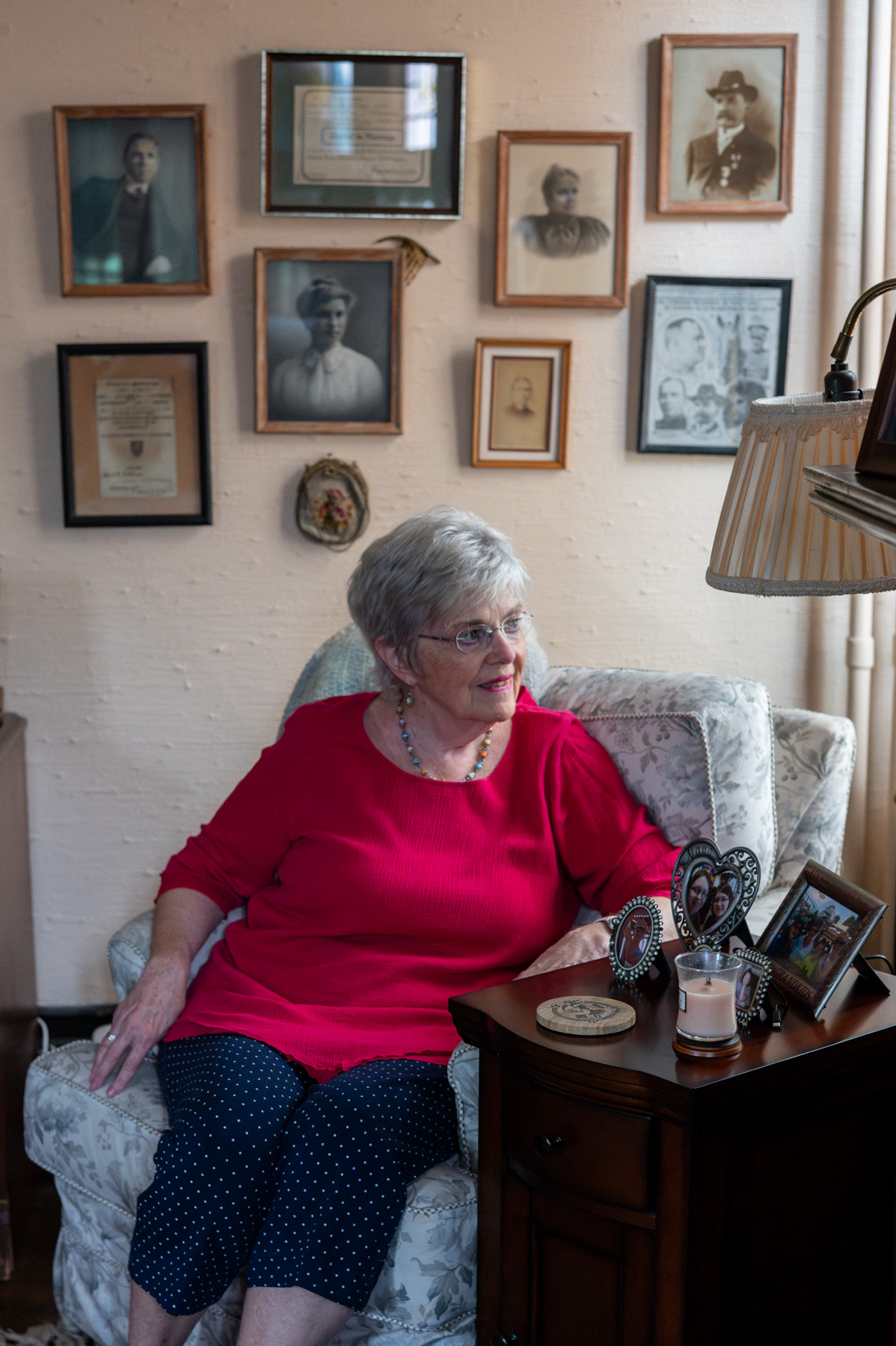 Kathy Gallagher, 80, president of Bellefield Area Citizens Association, sits beneath family photos on Sept. 4, at home in North Oakland. (Photo by Stephanie Strasburg/Pittsburgh’s Public Source)
Gallagher has no plans to relocate. Aside from the neighborhood amenities, her house holds deep significance. It’s where she was born, and it’s listed on the National Register of Historic Places.
Her house is also the site of the annual North Oakland block party, an event thrown by the University of Pittsburgh in various parts of the neighborhood to encourage positive interaction between students and residents. Every year at the block party, Gallagher said, “we have students that come and say, ‘Wow, we didn’t know regular people lived around here.’”
To her, it’s paramount to create and maintain a good relationship with students while also nurturing a “cooperative spirit” among residents. She said students don’t diminish her experience living in Oakland, despite it always being a “challenge to make sure they behave.” She finds them interesting and believes there are many rewards to being in the same vicinity as those much younger than her.
“The fabric of the neighborhood has changed dramatically, but that doesn’t necessarily mean it’s bad,” she said.
Residents concerned about housing affordability
If there is one thing Gallagher would change about the neighborhood, she would like there to be more affordable housing for non-student residents.
“I think about that a lot,” she said.
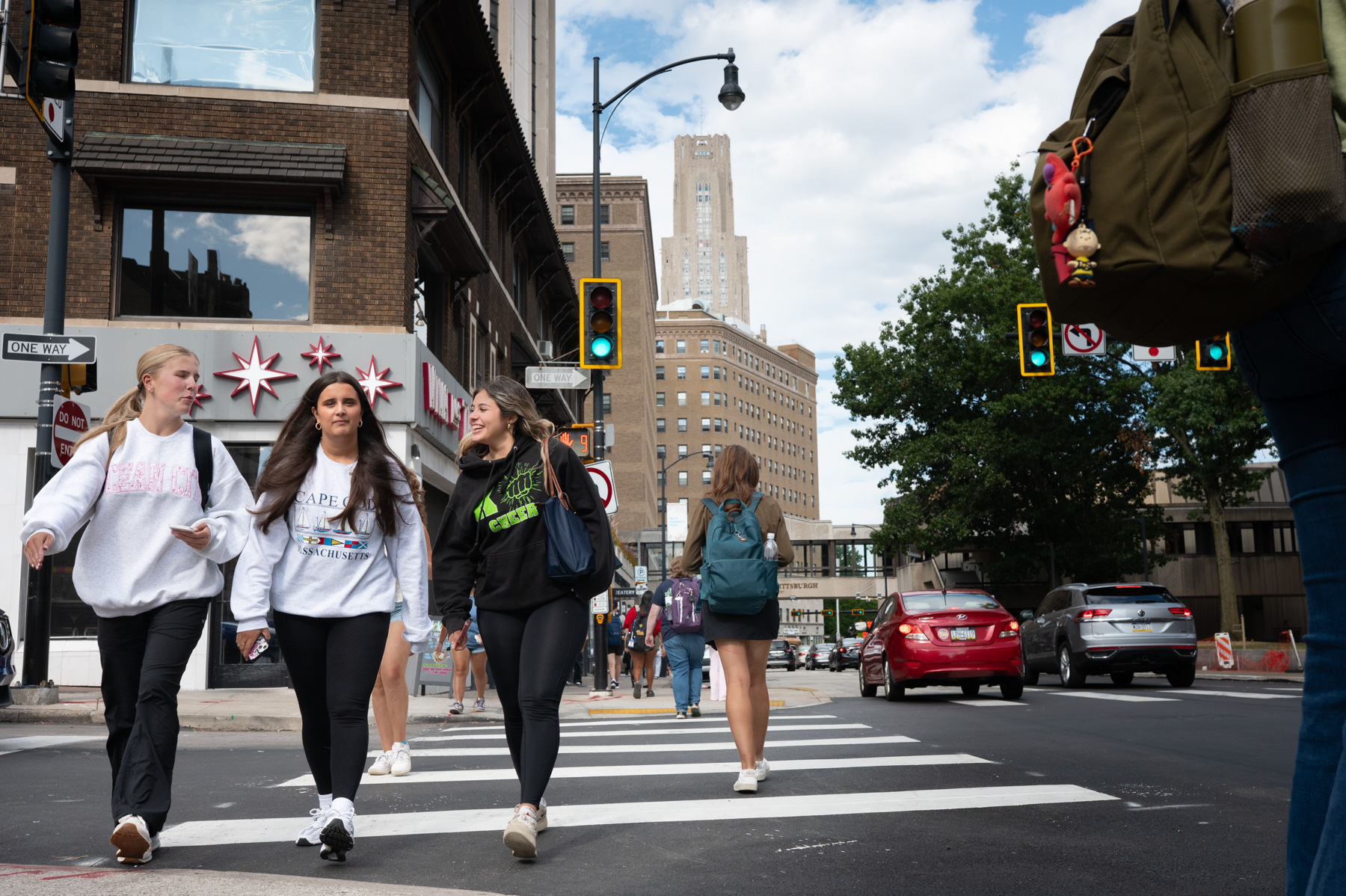 People walk along Forbes Avenue on Aug. 4, where North Oakland meets West and Central Oakland. (Photo by Stephanie Strasburg/Pittsburgh’s Public Source)
Some residents, like Gallagher, have found themselves being the only “owner-occupied” home on their block. They question whether an average family could even afford to live in Oakland today, as a renter or homeowner.
The demand for undergraduate student housing in Oakland has made the market values of neighborhood homes “too high for most people interested in purchasing,” according to the City of Pittsburgh.
Matt and Candice Gormley consider themselves lucky to have been able to buy a home in the neighborhood about six years ago. The couple has three children and intentionally sought to live in Oakland due to its diversity and proximity to Carnegie Mellon University, where Matt works.
They enjoy raising their kids there and have connected with the older, longtime residents in their immediate area. They want others to be able to have the same experience, but they said it’s hard for prospective homebuyers to compete with developers.
“If you’re a lower-middle-class family in this neighborhood, often you don’t want to spend the same amount for rent that three, four or maybe, illegally, more college students would be willing to spend to rent the same house,” Matt said.
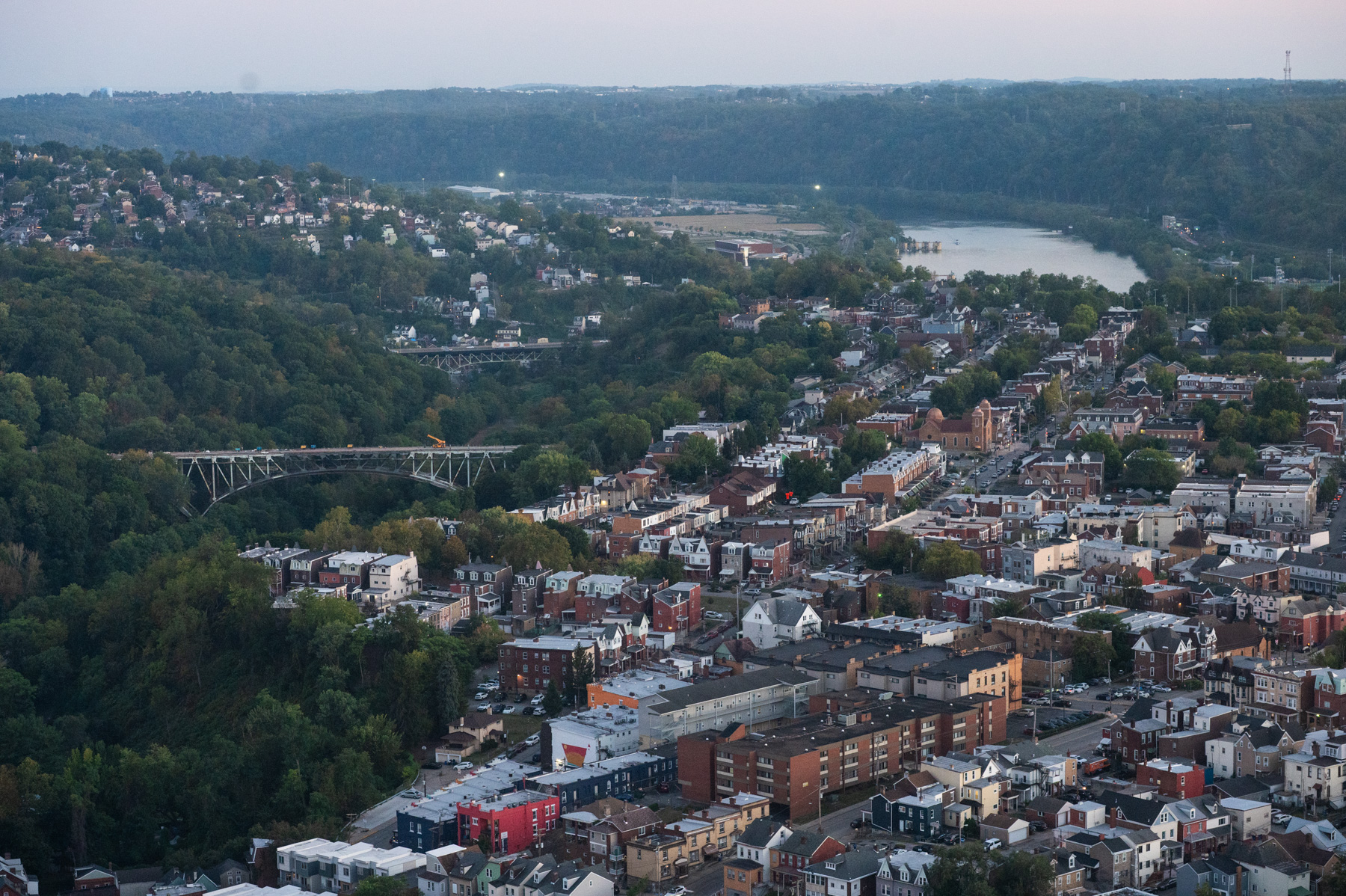 The homes of South Oakland stretch toward the Monongahela River on Sept. 18. (Photo by Stephanie Strasburg/Pittsburgh’s Public Source)
Part of living in Oakland for many permanent residents involves a combination of realizing and acknowledging the downsides of being settled there and, in equal measure, appreciating the neighborhood as is.
This is why Comans invited some students, city officials and other community organizations to the August block club meeting. They didn’t show, but she’s not going to stop trying.
Why?
“Because community doesn’t just stop on your street,” she said. “It’s those areas around you.”
Sophia Levin contributed reporting to this piece.
Maddy Franklin reports on higher ed for Pittsburgh’s Public Source, in partnership with Open Campus, and can be reached at madison@publicsource.org.
This story was fact-checked by Emma Folts.
RELATED STORIES
Keep stories like this coming with a MATCHED gift.
Have you learned something new today? Consider supporting our work with a donation. Until Dec. 31, our generous local match pool supporters will match your new monthly donation 12 times or double your one-time gift.
We take pride in serving our community by delivering accurate, timely, and impactful journalism without paywalls, but with rising costs for the resources needed to produce our top-quality journalism, every reader contribution matters. It takes a lot of resources to produce this work, from compensating our staff, to the technology that brings it to you, to fact-checking every line, and much more.
Your donation to our nonprofit newsroom helps ensure that everyone in Allegheny County can stay informed about the decisions and events that impact their lives. Thank you for your support!
Republish This Story

Republish our articles for free, online or in print, under a Creative Commons license.