
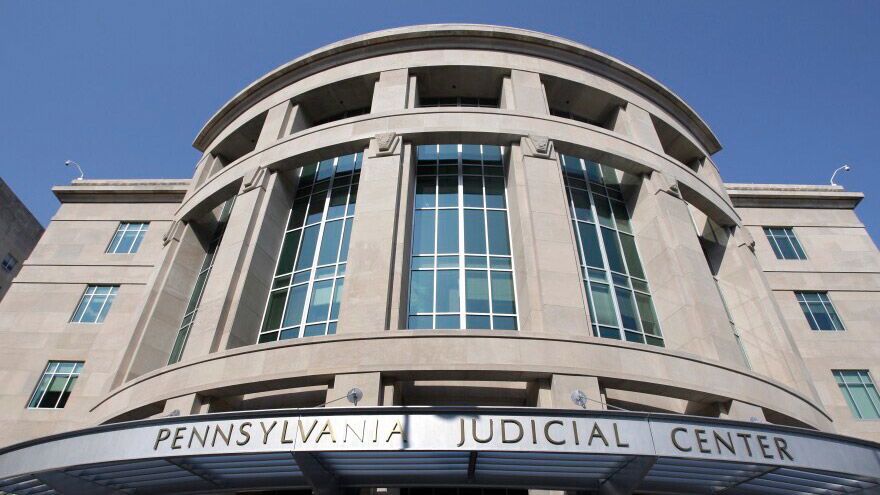
Pennsylvania’s Supreme Court has taken up a long-running dispute over whether so-called “skill games” should be classified as gambling devices, hearing arguments from state officials and the industry as regulators and casinos push for tighter oversight.
The case reached the state’s highest court after appeals by the attorney general’s office and the Department of Revenue. The machines, found widely in gas stations and convenience stores, are not currently defined as gambling because they include a second stage that allows players to win back money.
Arguing for manufacturer Pace-O-Matic, attorney Matthew Haverstick told the court the second stage enables players “to win back 105% of the player’s stake with the chance to win every time.” The attorney general’s office countered that the presence of a skill element does not exempt the devices from gambling rules. “It is not enough for that component of the game to be considered predominant,” said Susan Affronti, representing the office.
Casinos say the machines operate outside the state’s regulatory framework and avoid requirements such as safety protections and the 54% tax levied on slot machine revenue.
Pete Shelly, a lobbyist for Parx Casino, told Casino Reports the industry “has delivered billions and billions of tax revenues, and you can’t just allow people to come in and plug in a bunch of machines, flaunt the rules, pay no taxes, and claim no responsibility for any of the problems associated with their machines, including crimes from one end of the state to the other.”
Concerns over public safety have intensified. In a separate case earlier this month, a Philadelphia jury held Pace-O-Matic liable in the 2020 murder of a store clerk after a customer lost thousands of dollars on an unregulated machine and attempted to rob the store. Jurors found the company lacked proper safeguards, including ticket redemption systems designed to keep clerks from handling large amounts of cash.
Testimony in that case also highlighted routine disputes over winnings. Pace-O-Matic compliance officer Brian Langan said, “Often and still the stores would come up with ways to not pay someone who [won] a game,” recounting situations where players were told: “‘Yes, I won $500. Please pay me.’ [Then] ‘Sorry. We don’t have the money here. The manager is not here, you’ll have to wait until tomorrow or maybe Wednesday when the operator brings more money.’”
Shelly contrasted that with casino operations, saying: “You cannot go around and find $14,000 [at a casino] sitting in a cigar box. It just doesn’t work that way. It’s night and day.” He added, “It’s one of the safest places to be.”
The legal fight follows a 2023 Commonwealth Court ruling that machines made by Banilla Games were not gambling devices, a decision the Supreme Court declined to review in 2024. Langan said of Pace-O-Matic’s systems: “So the loophole that has been talked about in this court case, it’s not a loophole. It’s the law. And [founder Michael Pace] was smart enough to design a machine to be in accordance with the law.”
Pennsylvania has an estimated 70,000 skill-game machines, nearly three times the roughly 25,000 regulated slots in casinos. Regulated machines retain 7.7 cents per dollar on average, compared with 25 cents for unregulated devices. Casinos generated about $1.2 billion in gaming taxes over the past year.
Lawmakers failed to agree on a plan to tax skill games in the most recent state budget. Pace-O-Matic says about 80% of its revenue goes to small businesses hosting the machines, while some legislators argue the devices support local jobs and economic activity.
Shelly said the existing disparity cannot continue. “[Skill games] have no provisions to prevent or mitigate underage gaming or problem gambling. They pay no gaming taxes. It just is inherently unfair. It’s just not gonna work,” he stated.