
🎭 NEW! Pittsburgh Theatre Newsletter
I will admit: I groaned a bit when I saw Les Miserables making its return to the Benedum. It felt like a been there, done that type of show, the sort which lives in memes and impersonations and a stagnant, almost robotic presentation. “Haven’t we, as a culture, had enough of this one?” I thought. As it turns out, my cynicism was premature: Les Mis may be getting old, but like Valjean, there is power in it yet. Its race is not yet run, as the packed house at the Benedum, screaming like a rock concert, will attest.
🎭 NEW! Pittsburgh Theatre Newsletter
Victor Hugo‘s famous work of historical fiction/morality tale is complex, with a cast of hundreds of characters and extras (played with extensive doubling by a still large ensemble), but the plot’s central thread is famous enough at this point: Jean Valjean (Nick Cartell, a Les Mis journeyman) stole a loaf of bread to feed his starving family. For this crime, he was sentenced to decades in jail under the watchful eye of proto-Objectivist policeman Javert (Nick Rehberger). When Valjean breaks parole and is persuaded to turn his life around, he reinvents himself as a force for good, swearing to always act as a minister of God among men. Unfortunately, Javert’s fixed and legalistic morality binds him to track down Valjean and return him to prison, no matter the cost to either man. Mix in some romance and the social unease of post-Revolutionary France, and you have the epic to end all epics.
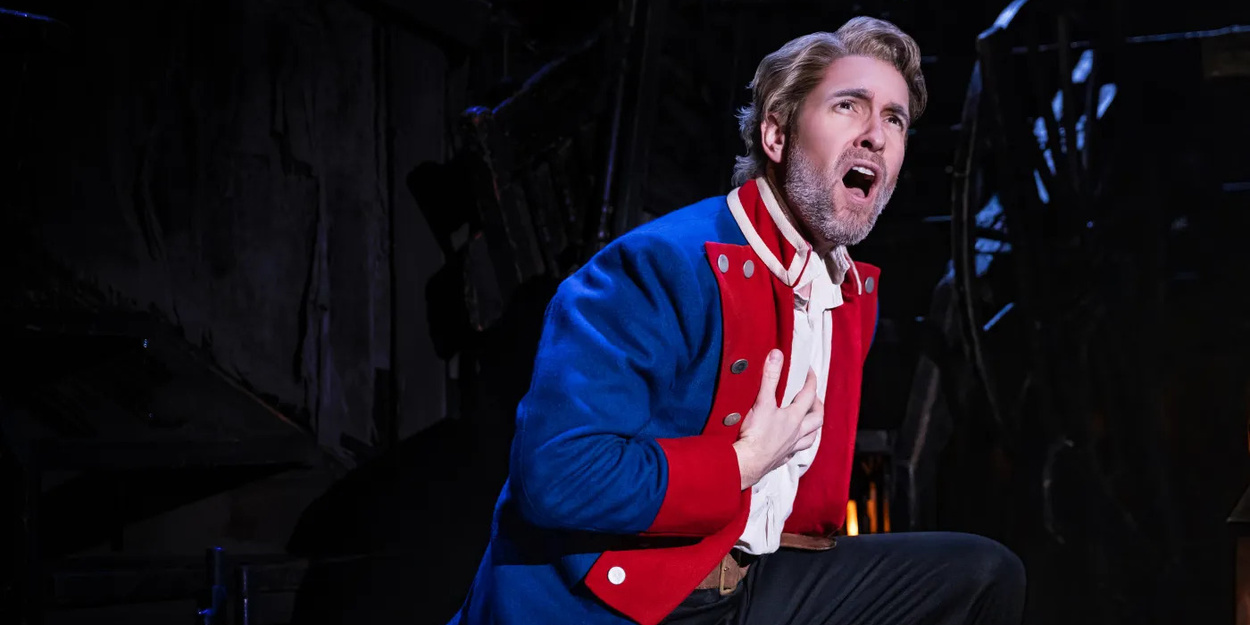
This current Cameron Mackintosh production, directed by Laurence Connor and James Powell, is more overtly tied to realism (or at least away from expresisonism) than the legendary original: the makeup and wigs are more realistic than exaggerated, there’s no turntable, and the stylized movement like the famous “march/rock in place” is mostly gone. In its place, we get a series of more representational set pieces, and the somewhat controversial “Victor Hugo aesthetic” from lighting designer Paule Constable and set/image designer Matt Kinley. This look keeps the stage intentionally dim and vague, using subtle lighting and haze to create the chiaroscuro effect of vintage oil painting. This is amplified by the projections which make much of the set design, pulled from the paintings of Victor Hugo himself. I found the look of the piece ambitious and even daring, though audience members with weaker eyes may well have found some of the scenes impenetrable.
Nick Cartell has more than earned his flowers as Valjean, with over 1500 performances in the role. His tenor is strong, and not as perpetually mannered as many Valjeans who feel the need to adopt the “Valjean character voice” that began with Colm Wilkinson and Gary Morris. His tenor is so strong and pure that some notes which have traditionally just been shouts or screams actually pop as melodic pieces for the first time; I can’t remember the last time I heard a Valjean sing “took my FLIGHT” straight. Opposite him, Nick Rehberger‘s Javert is solid, stolid and deeply moving, with an operatic basso profundo that balances Cartell’s more contemporary tenor. Lindsay Heather Pearce‘s Fantine is well-sung, with a similar gentle warmth to Alexa Lopez‘s Cosette; both are somewhat thankless roles when compared to the scene-stealing tragedy of Jaedynn Latter’s Eponine (that’s what more stage time and a big death in Act 2 will do for you).
The one moment at which “expect the unexpected” finally comes into play is the arrival of the Thenardiers. This production is not an “English accents staging,” and so instead of Dickensian cockneys, the comic villains are played with broad bridge-and-tunnel New York/New Jersey affectations. Thenardier is a role in which a certain amount of mischief, even improvisation, is usually condoned, and Matt Crowle‘s unusually spry Thenardier crams his role welcomely with schtick and gags of all kinds. I couldn’t help but notice that his Thenardier voice not only sounds like Nathan Lane, but like 1990s Nathan Lane; close your eyes during “Master of the House” or “Waltz of Treachery” and you might find yourself picturing Timon.
There’s no denying that after almost five decades, Les Mis is a war horse. Everyone’s seen it, and everyone’s probably done it in high school at this point. Its ubiquity both in touring and in professional or amateur stagings has made it less of an event, and more of a chestnut. But if that’s the case, why do crowds keep lining up? Why was the house packed, with a roar of applause and screams for every big moment? Maybe the piece is speaking to the social malaise of our time, just as it did to the Reagan/Thatcher era and the post-Revolutionary France of Hugo’s own novel. Maybe the questions of a morality based on love versus a morality based on legalism are more relevant than ever. Or maybe… could it be… is Les Mis just a really good show that doesn’t need to justify its own existence anymore? Who knows? Who cares? Who am I? 24601.
Reader Reviews