
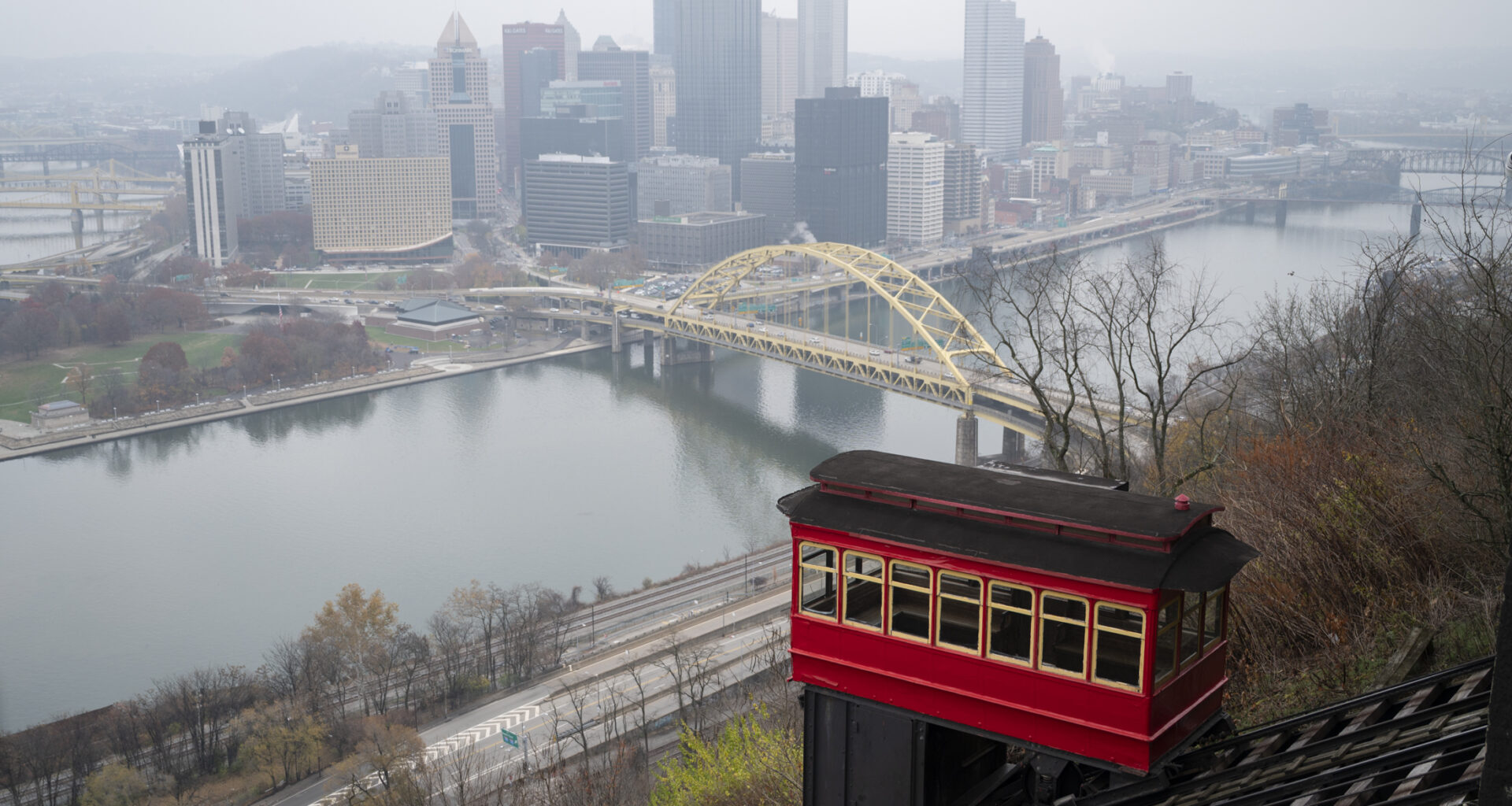
In the 1800s, before cars became a common occurrence on Steel City streets, if you were a Mount Washington or Duquesne Heights resident with somewhere to be, you had a 45-minute hike ahead of you. Enter: The Duquesne Incline, the result of years of manual labor. The incline opened on May 17, 1877 and shortened the trip to a mere 10 minutes.
These days, the incline serves as a tourist attraction, but, back when Mount Washington was known as Coal Hill, Tom Reinheimer, office manager of the Duquesne Incline, tells Pittsburgh City Paper that in its early years, the contraption was a lifeline for the working-class community.
“People in Mount Washington and Duquesne needed this piece of transportation to get down to the bottom to catch a trolley car across the river into work,” Reinheimer said. “So the people up here really had a strong desire to keep it running.”
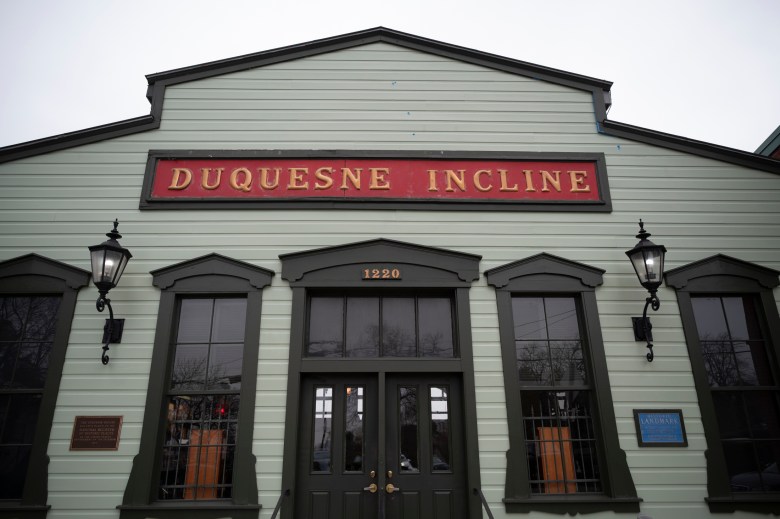 The Duquesne Incline upper station Credit: Mars Johnson / CP
Currently, the Duquesne and Monongahela Inclines are the only two operating inclines in Pittsburgh, but Reinheimer notes that there was a time when the Steel City was home to over a dozen inclines, which were used to transport coal and people. In fact, it was the inclines scattered throughout the region that brought Samuel Diescher, the Duquesne Incline’s Hungarian-born designer, across the ocean.
Raised in Hungary and educated in Germany as a civil engineer, Diescher fell in love with cable cars, but he found that Germany and Switzerland weren’t lacking in the technology he felt drawn to. That’s why Diescher journeyed to Cincinnati, where he’d supervise the construction of his first-ever incline. Later, he came to Pittsburgh and worked with John Enders, who built the Monongahela Incline with the assistance of his daughter Caroline Enders, whom Diescher married.
While Diescher’s claim to fame might be the Duquesne Incline, in addition to inclines throughout the U.S., Reinheimer points out that Diescher also constructed the hoisting equipment used to make the first-ever Ferris Wheel, another Pittsburgh invention.
At an elevation of 30 degrees with an 800-foot-long track, Reinheimer says, the incline’s two five-ton cars are built to hold 18 passengers each. Beneath the station, which houses a museum on the Duquesne Incline’s history, visitors can see the machinery that keeps things running. In its original incarnation, the incline was powered by a steam engine until electrical equipment was installed by the George Westinghouse Company in 1932.
Through the years, Reinheimer tells Pittsburgh City Paper, while the Duquesne Incline’s system has seen its share of refurbishment and repair, some of the original equipment, such as the drive gear and hoisting and safety cables responsible for taking the cable cars up and down the track, have withstood the test of time.
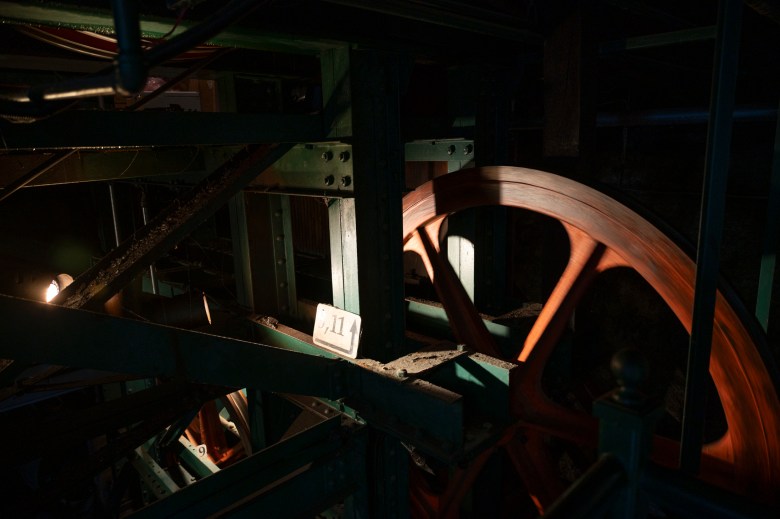 The inner workings of the Duqesne Incline Credit: Mars Johnson / CP
“The engineers made this hoisting equipment out of cast iron, and so, pretty much as long as we keep everything painted and lubricated — and there’s a guy lubricating it as we speak — it should outlast everybody on the planet,” Reinheimer says.
Although the cables haven’t cracked under pressure in the Duquesne Incline’s 148-year history, there was a time when the Incline’s future didn’t seem so certain. In 1962, automobiles became more widely available, the incline needed repairs, ridership was down, and the Duquesne Incline closed its doors when the Duquesne Inclined Plane Company decided that keeping it running wasn’t worth the cost. Longtime residents, however, disagreed with that assessment and ensured it reopened by 1963.
“A group of concerned people who live up here in Mount Washington and Duquesne Heights got together, and they raised $19,000 [and] they made the necessary repairs,” Reinheimer says. ”It reopened six or seven months later in July of the next year.”
There have been hiccups over the years, such as in 2019 when the Duquesne Incline’s cars stopped for 30 minutes midway through a trip due to a mechanical failure in its circuit board. Still, with its diesel generator, the Duquesne Incline is meant to keep running even in the event of power outages. If a repair needs to be made, according to Reinheimer, the workers try to ensure it happens when there are no passengers.
“It’s nothing that, generally, we can’t fix in a few minutes or an hour or something like that,” Reinheimer says. “If it’s something major, we do that overnight, so we’re not going to do that during the day while people are here.”
Reinheimer recalls that there were times in Pittsburgh’s history when, even when it was broad daylight due to the smoke and smog, it would’ve been impossible for an Incline passenger to see the view captured in postcards and on film. Yet, as the city drifted away from using coal and clean air legislation began clearing the air in the 1940s, less smoke cleared the way for the Duquesne Incline to become a tourist attraction that currently sees an estimated 482,000 passengers per year.
“[At] the end of June, July, and August, it’s mostly tourist groups, family groups, [and] people who come to ball games,” Reinheimer says. “Then it starts with the bus groups, again in the fall, and usually senior groups. They like to tour different cities and see things. We get most of our business now on tourism as opposed to transportation.”
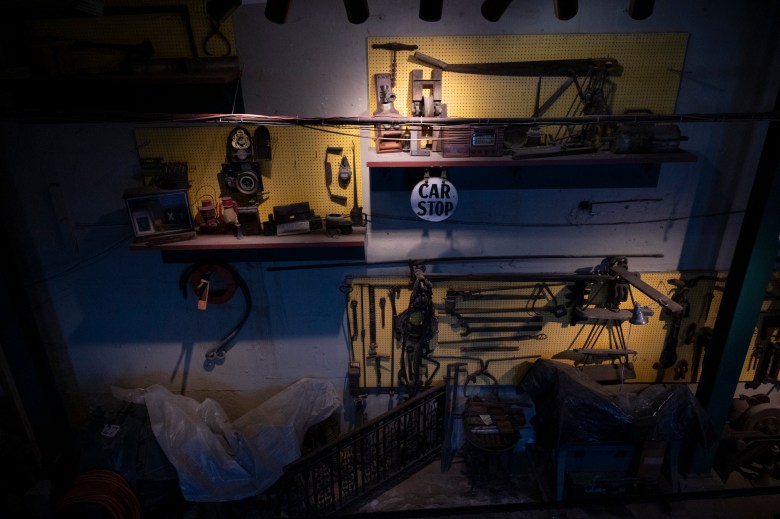 The inner workings of the Duqesne Incline Credit: Mars Johnson / CP
There was a time when school groups frequented the Duquesne Incline for field trips to learn about Pittsburgh history and the physics at play during the cable car trips up and down the tracks. However, Reinheimer says, after the pandemic, many of the teachers who’d worked the field trips into their curricula had retired.
For those still visiting, part of what makes the view available to all passengers is the fact that the Duquesne incline is actually a level car put on a triangle, meaning that whatever seat a person chooses goes around the perimeter of the car, so everybody has the same view. This is attributed to the cable cars having been designed with people in mind, as opposed to coal.
From a $.05 fare in 1877 to the present-day $2.50, the Duquesne Incline has seen many chapters of the City of Bridges’ story. Nearly 150 years into its run, the Duquesne Incline serves as a historical landmark and tourist attraction with a view that’s been admired in films such as Flashdance, The Next Three Days, and Lady Beware. When thinking of what keeps visitors coming back year after year, Reinheimer believes that transplants and tourists are eager to be in a place where history and Pittsburgh’s beauty collide.
“Not only did you get to ride a piece of history up there, but when you get to the top, you get a great view,” Reinheimer says.
This article appears in Nov. 26-Dec. 2.
RELATED