
To this day, George Matysik, executive director of Share Food Program, can’t bite into a South Indian dosa without remembering a daily act of kindness that mattered to him when he was a young man, a paycheck away from poverty.
When he would arrive for his 6 a.m. shift as a housekeeper at the University of Pennsylvania’s engineering school building, the engineering school’s librarian would hand him a homemade dosa, a thin crepe redolent with the warm smells of curry and potatoes.
“My stomach was growling by then,” he said, sitting in a warehouse full of food ready to be packed for the nearly three million people who rely on the Philadelphia nonprofit for food.
“The moment of her handing me that dosa, I felt like I was going to be OK,” he said. Matysik, who graduated from Mercy Career and Technical High School across the street and down the block from Share’s main warehouses near Henry, Hunting Park, and Allegheny Avenues, went on to earn a degree in urban studies from Penn.
“I felt supported,” he said. Now, Matysik leads an organization that supports people who are missing meals and are worried about getting their next ones.
Look, Matysik said, society has many problems, and most are difficult to solve. Homelessness is complicated. Addiction grips its victims in its relentless stranglehold. “They don’t have simple solutions,” he said.
“But with hunger, it is simple. It’s getting food to the people who need it,” he said, like the dosa that began his day of washing floors and cleaning toilets at Penn.
“It’s frustrating to me that in the richest country in the world, a food program like Share has to exist at all,” Matysik said. “Food is a human right, and hunger is solvable. We have the resources in this country to eliminate food insecurity, and we can do it in Philadelphia if organizations like Share can get the resources.”
But it’s daunting.
Since the start of President Donald Trump’s second term in office in January, Share’s funding from the federal government has been cut by $8.5 million, or about 20% of the nonprofit’s annual expenses.
Also, the cost of the food Share buys wholesale by the pallet has risen. The increase in food costs will come as no surprise to grocery shoppers around the nation, Matysik said. “We can all see our receipts.”
Even as Share’s resources are being depleted, demand for the food it provides is increasing. Share distributes food to nearly 400 community partners — religious groups, food pantries, neighborhood organizations — and all of them are telling Share that more and more people are coming for food.
Community partners report that the number of new families or individuals registering to receive food has increased 12-fold. For example, in the past, a community partner might register five new families or individuals a week. But in late October and early November, with the government shutdown and the delay in government SNAP food benefits, that number might have risen to 60.
And more people than ever are coming to receive food. Organizations that served 100 people or families on their food distribution days were seeing 150 in line, Matysik explained.
“It’s making it more and more challenging for families to get the resources they need,” he said.
Patricia Edwards understands. When Edwards, a retired security guard, opened her refrigerator on Veterans Day in mid-November, she saw one box of powdered milk. That was it.
Supplemental Nutrition Assistance Program benefits had provided barely enough in the past, but with all the back-and-forth during the shutdown, her benefits weren’t available. “I’m looking at a bare cabinet and a bare refrigerator,” she said.
The only reason Edwards had anything to eat leading up to Veterans Day was that a neighbor stopped by with some prepackaged meals.
“I didn’t know what to do. I didn’t know where to go,” she said, “but a neighbor told me about this.”
So, on that cold November day, Edwards walked a few blocks from her home in Germantown to the Canaan Baptist Church’s Family Life Center, hoping she could get some groceries at its weekly food pantry. “I need some food in the house,” she said.
She wound up with a box of food from Share and two bags of groceries filled with tuna, noodles, cereal, and vegetables.
“It’s a blessing,” she said.
Of course, those blessings cost money.
Share pays $12,000 to $14,000 a month for electricity to keep its warehouses running. Each tractor-trailer-sized truckload of food costs $40,000. Each industrial-sized freezer costs $800,000, and Share bought three of them in the last two years.
Three years ago, Share expanded into two warehouses, one in Ridley Park in Delaware County and the other near Lansdale in Montgomery County, the better to serve people in Philly’s surrounding communities.
Share needs money for forklifts, for payroll, for trucks. Funding pays for food, of course, but it’s also necessary to bankroll the infrastructure required to move not just boxes of food, but tons of it, to the people who need it. Share pays drivers to deliver food to homebound seniors. Even that’s a cost.
Share also has government contracts to provide school meals to 300,000 kids per day in public and charter schools in 70 districts, including Philadelphia’s public schools.
It’s a source of revenue, “but we lose money on it,” Matysik said.
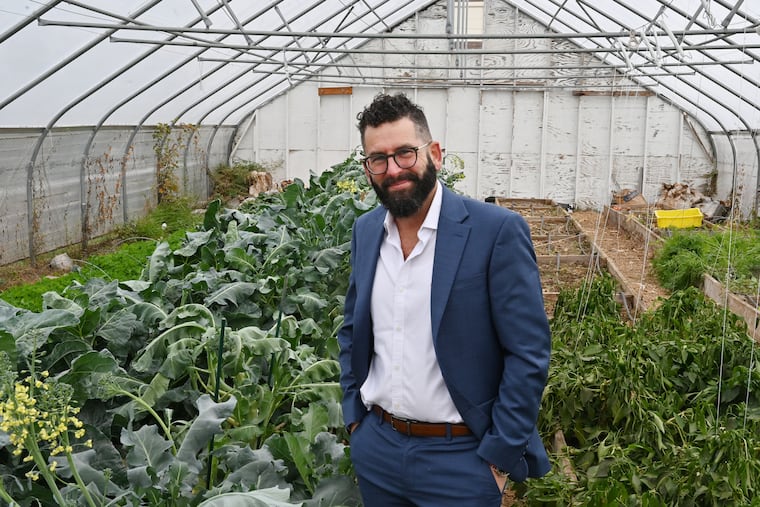
Beyond that, Share runs gardens and greenhouses, which serve both as food sources and educational laboratories for young people.
Years ago, Matysik was one of those young people crossing the street from his high school to pack boxes as a Share volunteer.
These days, his work at Share involves budgeting and fundraising — balancing demand against resources.
“I’ve never been more disappointed in the American government,” he said, “And yet, I’m inspired every day by the American people stepping up to support organizations like ours.”
This article is part of a series about Philly Gives — a community fund to support nonprofits through end-of-year giving. To learn more about Philly Gives, including how to donate, visit phillygives.org.
About Share Food Program
Mission: Share Food Program leads the fight against food insecurity in the Philadelphia region by serving an expansive, quality partner network of community-based organizations and school districts engaged in food distribution, education, and advocacy.
People served: 2,901,243 in 2024
Annual spending: $42 million, including $25 million distribution of in-kind donations and $6 million to purchase food.
Point of pride: In 2024, Share Food Program supported nearly 400 food pantry partners across the region, provided more than 6,500 30-pound senior food boxes each month, ensured over 300,000 children had access to nutritious food every day through its National School Lunch Program, and rescued and redistributed nearly six million pounds of surplus food. Altogether, Share distributed 32,214,873 pounds of food.
You can help: Volunteer your time packing boxes, rescuing food, or make calls from home to help coordinate senior deliveries.
Support: phillygives.org
What your Share donation can do
$25 supports seeds for produce growth and upkeep at Share Food Program’s Nice Roots Farm.
$50 feeds a school-age child for a week.
$100 fuels Share’s ability to transport millions of pounds of emergency food relief a month.
$250 nourishes a family of four for a week.
$500 enables Share to deliver 30-pound boxes of healthy food to thousands of older adults each month.