
By Jack Tomczuk
City Council on Tuesday advanced a first-year budget for Mayor Cherelle Parker’s $800 million housing plan, significantly altering her original proposal to give a higher priority to low-income Philadelphians.
The Housing Opportunities Made Easy, or H.O.M.E., program is Parker’s effort to create or preserve 30,000 units of affordable housing over four years, and it is perhaps the signature initiative of her second year in office.
Since unveiling the plan in March, she has stressed the importance of opening up programs for lower-middle- and middle-class families.
But housing advocates and a significant contingent of Council members have pushed to devote more of the funding to those most in need. The spending plan that received preliminary approval Tuesday codifies a commitment reflecting that desire.
Income guidelines adjusted
While allowing the Parker administration to expand income eligibility, the budget stipulates that 90% of the money dedicated to some programs, such as Basic Systems Repair and Adaptive Modifications, must go to households earning less than 60% area median income – about $71,640 a year for a family of four.
Parker’s plan incorporated raising eligibility for BSRP and the Adaptive Modifications Program from 60% AMI to 100% and 80%, respectively.
AMI is calculated on a regional basis and is significantly higher than the average earnings of a Philadelphia household, due to wealthier families in the suburban counties.
It is not clear whether Parker will sign off on Council’s amended budget. During a Nov. 12 hearing, her top housing officials told lawmakers that they were not willing to incorporate provisions mandating that more money flow to those with the lowest incomes.
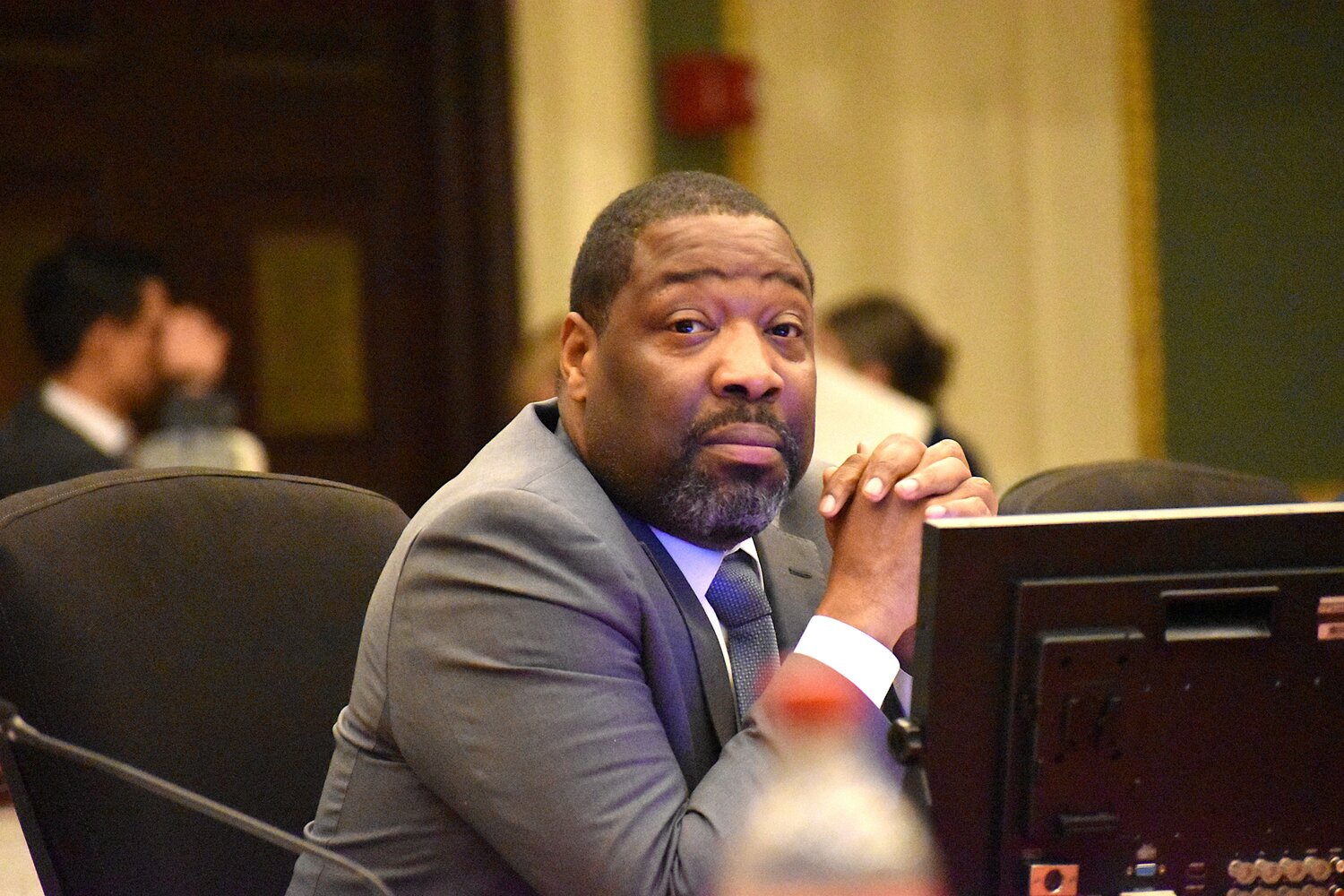
“They’re aware of it,” Council President Kenyatta Johnson said when asked if Parker had agreed to the changes, “and we decided to move forward based upon the issues and concerns of members of City Council, specifically focusing on those who are poor as it relates to the H.O.M.E. initiative.”
Parker’s office did not immediately respond to a request to comment Tuesday afternoon.
Overall, H.O.M.E.’s first-year price tag has ballooned to $277 million, up from just under $195 million in the budget that was originally introduced in late October.
Much of the increase is due to $43.5 million allocated to the Turn the Key Program, which provides newly constructed homes on publicly-owned lots for values under the market rate. It had not been included in the initial spending plan.
In addition, the line item for homeless prevention was more than doubled, growing from $3.8 million to $8.8 million, to replace a loss of federal funding through the U.S. Department of Housing and Urban Development, legislative officials said.
Council votes to move budget forward
The budget resolution was granted preliminary approval 15-0 in a voice vote of Council’s Committee of the Whole, with members Isaiah Thomas and Brian O’Neill absent.
Councilmember Curtis Jones Jr. said he voted ‘aye’ while “dragging and screaming.” He has been among the lawmakers concerned about residents who do not meet income guidelines for assistance being pushed out of Philadelphia.
“We’re gonna take an L on this one,” he remarked. “I’m voting for it, but you will not forget the middle class, not under my watch.”
A final vote on the one-year H.O.M.E. plan is expected Dec. 11, Council’s last session of the calendar year. Legislators have been mulling over the plan for weeks, delaying the Parker administration in selling bonds to pay for it.
Lawmakers in June, as part of the municipal budget process, approved the mayor’s request for borrow $800 million over four years to support the initiative.
Tuesday’s decision to move the resolution forward followed about two hours of public comment. Allies of Parker and progressive housing activists lined up to weigh in on the proposal.
One of Parker’s most powerful boosters, Ryan Boyer, leader of the Philadelphia Building and Construction Trades Council, was the first one to testify.
“We have to realize that if we don’t keep some of the middle class and working class people in the city of Philadelphia, that creates craters in our tax base,” he said. “We have to take these deliberations not as one against the other.”
“Affordability is a crisis whether you’re at the bottom or you’re just-over-broke and have a job,” Boyer continued. “We have to protect those neighborhoods. We need those Wynnefields, the Mount Airys, the Northeast.”
Others implored Council to direct resources to the most vulnerable, including the thousands of city households making less than $30,000 a year.
“Our poorest neighbors face an unbearable burden in meeting their housing needs and serious consequences if they don’t get help,” said Garrett O’Dwyer, policy director at the Philadelphia Association of Community Development Corporations. “Before we assist those for whom meeting their housing needs is a difficulty, we must help those for whom it is an impossibility.”
Keywords
H.O.M.E. program,
Mayor Cherelle Parker,
Affordable housing,
City Council