
Pittsburgh, you may have noticed, continues making “most livable” and “most affordable” lists in 2025 for our comparatively cheap housing and high quality of life. In spite of this, average rent ($1,515) and the price of a house ($229,000) have risen fast, while job and wage growth remain “sluggish.”
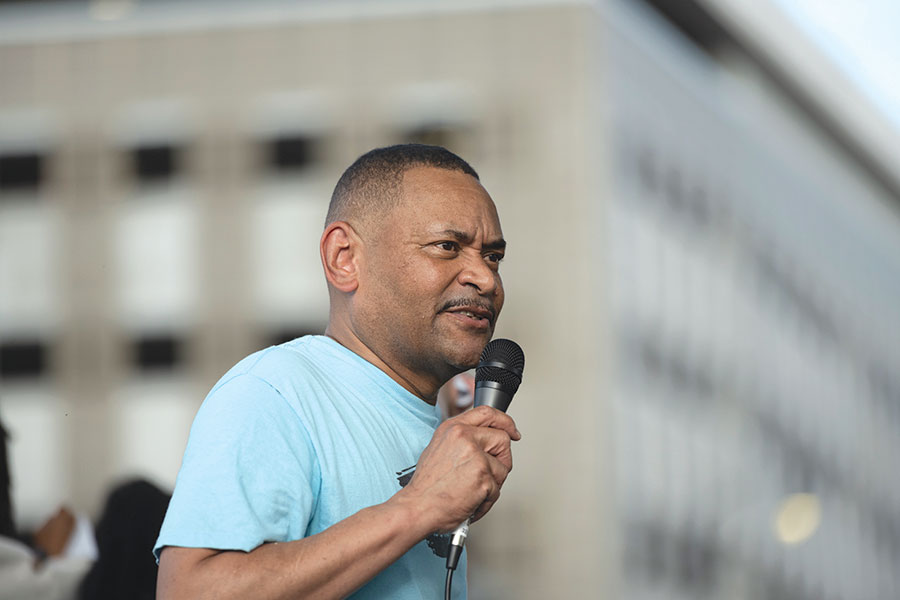
These contradictions aren’t lost on Randall Taylor. “This is the housing Hunger Games here in Pittsburgh,” he tells Pittsburgh City Paper. Over the past decade, Taylor has been one of the loudest voices calling for safeguards on affordability and a multi-pronged approach to housing justice. As Pittsburgh rebounds from decades of population loss, Taylor has continued to remind local leaders not to leave behind the city’s most vulnerable.
“I can’t really say that we’ve stemmed the tide of increasing rents and displacement,” Taylor says. “But I think that we have been successful in climbing affordable housing, [and] housing in general, to the top of the agenda in the city.”
Taylor is modest about his work and credits his collaborators at the Pittsburgh Housing Justice Table, Pittsburgh Human Rights City Alliance, and Steel City Cooperative Housing Association (SCCHA) with advancing housing justice work locally. He’s been a fixture at demonstrations calling attention to the ongoing vacancy of the Penn Plaza site, has served as a research affiliate at the University of Pittsburgh, and previously spent three terms on the Pittsburgh Board of Education. “The bottom line is, you have to work with people who are really committed to this work and really want to see this change,” he says.
When it comes to affordability, Taylor has continued to fight for the “missing middle,” inclusionary zoning, and an active government role in building housing and keeping it affordable. As president of the SCCHA, Taylor has advanced the idea of cooperative housing to the attention of elected officials. “Housing cooperatives are an excellent solution for those who may not have enough to buy a house,” he says, noting that the cooperative model could also benefit the local student population. “Once we begin to have our first housing cooperative put together, I think a lot of people are going to be demanding of city leaders that we want this form of housing in Pittsburgh.”
Taylor remains hopeful, heading into a new mayoral administration, that Pittsburgh can meet the moment with co-ops, new public housing, and a focus on transit-oriented development. He and others in the housing justice space have big plans for 2026 and beyond.
“Be on the lookout as we begin to talk about public housing in this city. And we don’t think public housing should be just for poor people,” he says. “If you really want to see some of this change, we just can’t sit back and hope … if you want to see a Pittsburgh for all, not a Pittsburgh for some, you’ve got to get involved in some kind of way.”
This article appears in The Big Winter Issue: Winter Guide/People of the Year.
RELATED