
After over a year and many hours of discussion, the Easton Planning Commission has said “no” to a million-square-foot warehouse on Wood Avenue.
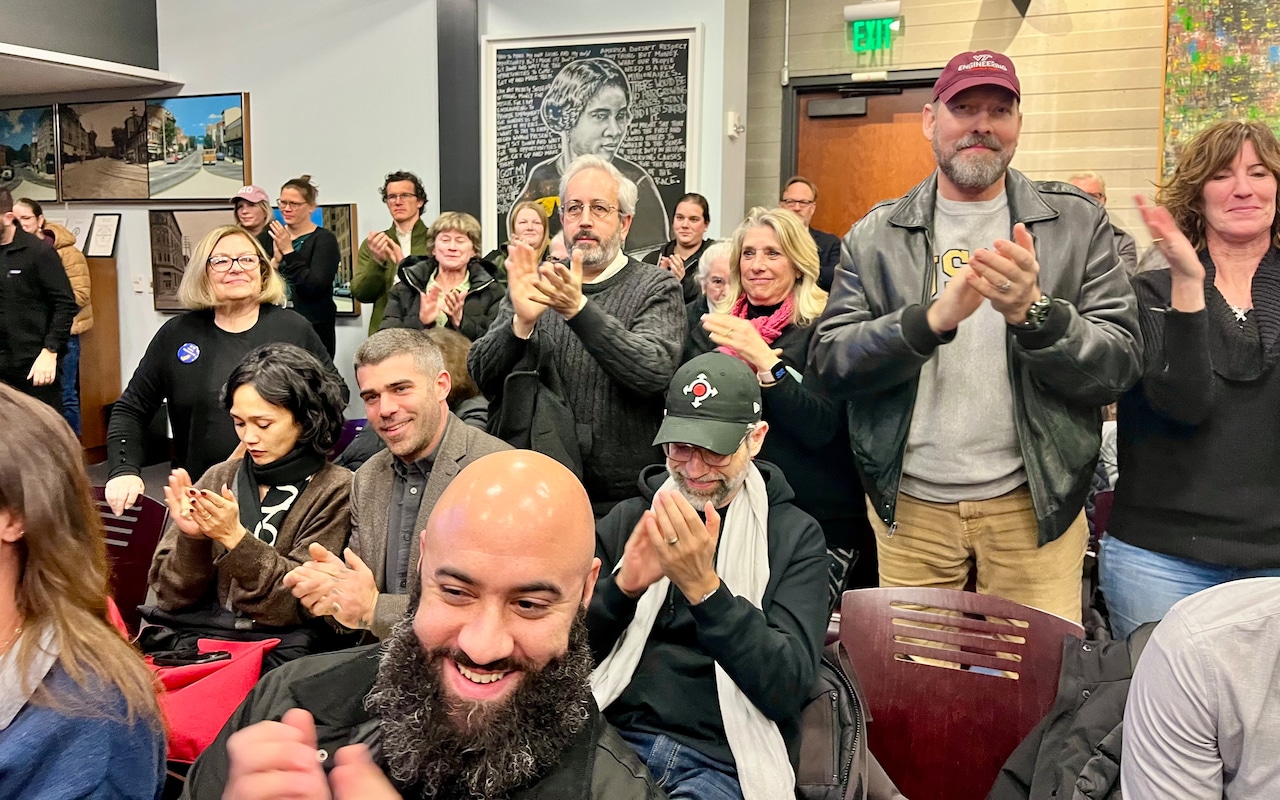
Following sighs of relief and applause, the commission received a standing ovation from nearly 50 residents on Wednesday for denying Scannell Properties’ plan to build the warehouse at 1525 Wood Avenue.
The project’s footprint is 90% in Wilson Borough and 10% in Easton, so developers needed Easton’s approval along with Wilson.
The developers first presented to the Easton Planning Commission in September 2024, but the matter was tabled.
After months of delay, the application returned to the commission in May 2025, prompting the Stop the Wood Ave Warehouse Coalition to submit extensive environmental, traffic, noise and neighborhood-impact materials. The coalition was formed in the fall of 2024 and has banded together ever since to fight against the warehouse.
The review later shifted to a courtroom-style proceeding, leading to multiple late-night sessions in which both sides presented and challenged expert witnesses.
“I’m super elated that it was rejected here,” Colleen O’Neil, the coalition’s leader, told Lehighvalleylive.com. “It’s a beautiful thing to see how well the community came together and how much we all care for each other and where we live.”
She said the coalition is prepared to keep fighting against this warehouse and others. She hopes to collaborate and share strategies with other groups fighting similar battles against warehouses.
Marc Kaplin, Scannell’s attorney, declined comment.
“To say that these proceedings have been thorough is an understatement,” Commission Chair Ken Greene told the public. “I want to thank those members of the public who have attended these meetings, regularly voiced their earnest thoughts and provided compelling evidence to confirm those thoughts, your participation is a key bedrock that makes our local government work at its best. I also want to thank the applicant for the thoroughness of their preparation, their efforts to provide local, state and federal officials with necessary documentation of process and product, and their determination to see this proposal through to a commission decision.”
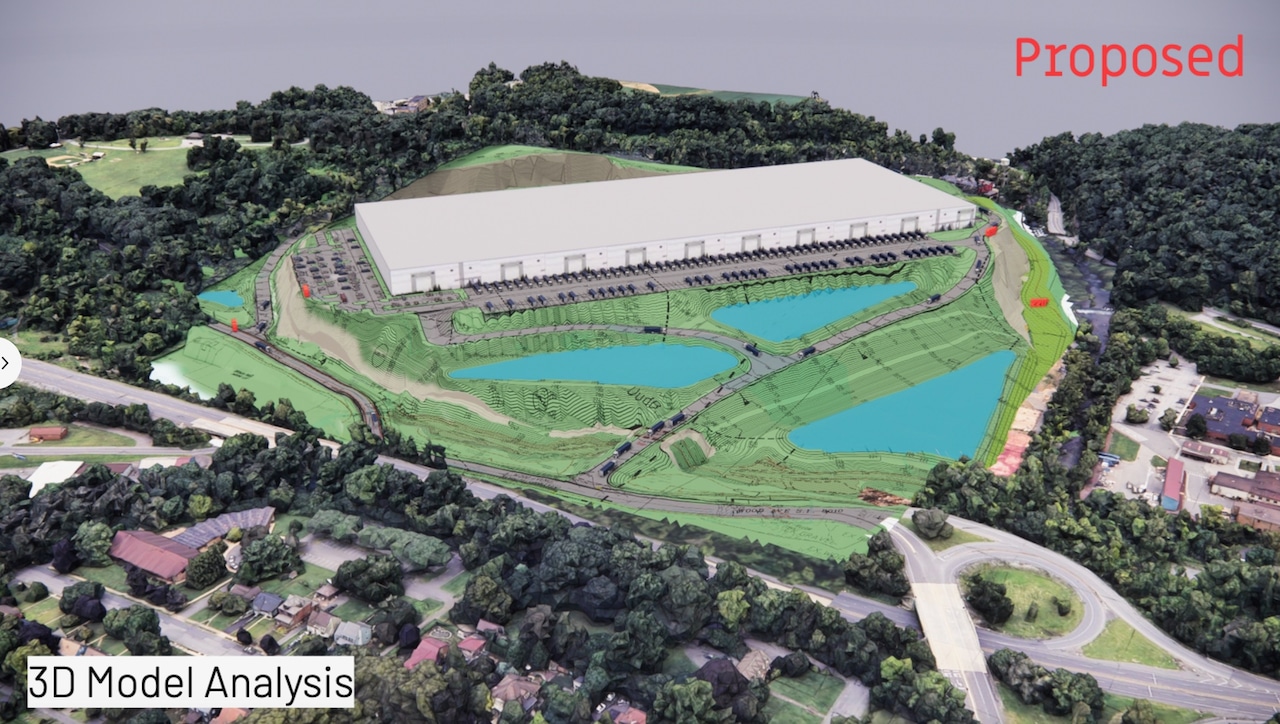 A 3D model, generated by Daniel Brown, depicts how a proposed million-square-foot warehouse would look.Courtesy of the Stop the Wood Ave Warehouse Coaltion
Five commission members — Greene, Kim Wagner, Hubert Etchison, Ron Shipman and Frank Graziano — voted to reject the project. Commissioner William Heilman was absent. Each member made their own lengthy speech citing their reasons for rejection.
Several members referenced Kaplin’s assertion that the application meets all the necessary requirements and must be approved for that reason. They disagreed with the latter.
“Just because you can doesn’t mean you should,” Graziano said. “And I think anyone who’s lived here for any amount of time, whether short or long, knows a million-square-foot warehouse has no place whatsoever on this site.”
Wagner cited broad procedural deficiencies, pointing to missing required permits, incomplete environmental and geotechnical analyses, inconsistencies across the plans and noncompliance with several city regulations.
Graziano also cited missing state and federal approvals, as well as an incomplete noise study.
Wagner added that the material submitted was disorganized, unclear and insufficient for approval.
While echoing the reasons of other commissioners, Etchison raised concerns about the building’s scale and neighborhood fit. He also found the traffic study inadequate and said the application lacked transparency and alternatives that could reduce project intensity.
“The applicant was provided extensive leeway in terms of due process and presenting their case. The applicant often refused to provide clear answers to questions posed by the planning commission members,” Etchison said.
Greene highlighted missing special exceptions, incomplete zoning and subdivision requirements, and impact analyses that did not fully address roadway or fiscal effects on the city.
He also cited mismatched documentation and traffic projections that underestimated truck volumes on narrow roads.
Shipman’s main concern was traffic and roadway access. He strongly asserted the applicant failed to show that adjacent streets such as 13th Street could safely handle heavy truck traffic, or that proposed changes would meaningfully improve conditions.
He also noted the applicant’s mitigation proposal was insufficient and that regional planning guidance and city concerns about infrastructure were not addressed.
Attorney Cody Harding, who legally represented the coalition, told lehighvalleylive.com that the developers may appeal the decision, but the rejection is a “relief.”
“It was an honor to represent everybody and see all the time and effort that was put in by hundreds of people,” he said. “ I’m proud of what we accomplished.”