
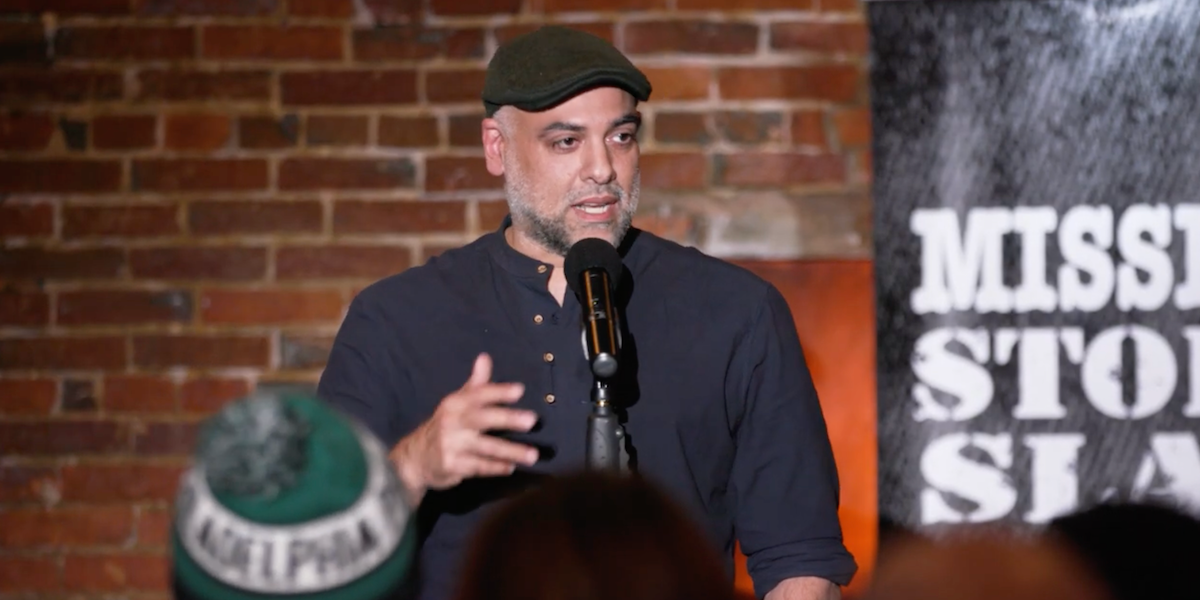
Last spring, shortly after Mayor Cherelle Parker announced details of her plan to reform the city’s onerous Business Income & Receipts (BIRT) tax, Jigar Mehta began haunting the halls of City Hall, sounding the alarm over what he’s described as a looming financial calamity across the city.
Listen to the audio edition here:
As Mehta understood it, in reforming BIRT and reducing other corporate taxes — a longtime goal for corporations in Philly — the City had incidentally placed a new burden on those who could least afford it: small business owners. Until the Mayor’s tax plan, which passed in June, a longtime BIRT exemption allowed a company’s first $100,000 in earnings to not be taxed; that allowed small companies to keep more of their income, reinvest in their business and potentially grow jobs in communities.
The administration sought to repeal that exemption out of an abundance of caution, because a legal challenge threatened the constitutionality of the system.
When he first heard about those plans, Mehta figured the impact would be bad — but just how bad? After downloading the public data on the past few tax cycles, Mehta estimated that a small business with $95,000 in net profit, one that was previously exempt from BIRT, would be asked to pay about $4,600 next year in new taxes, then $1,600 the following year. That may not seem like much, but for a mom-and-pop business, it could be a game changer.
Mehta, a former board member of the Asian American Chamber of Commerce, brought this point to life during testimony in front of City Council last March. He described a mom-and-pop operation, the owners living within their means and saving modestly. “They’re able to put away $3,000 a year and, if they can stay the course, they can buy a house by 2030. Now, all of a sudden, we find out that the dream is going to be deferred, because of how the BIRT is structured,” he said. “[Their] savings are cut in half.”
Even after Mehta went public with his concerns, he hoped that his fears were overblown. “I ran the numbers 100 times and I still thought, This can’t be right,’” he says. “This is a systemwide crisis for small businesses. Why is nobody talking about it?”
So Mehta started talking — and talking — about it. He was encouraged by the Chamber of Commerce for Greater Philadelphia to testify; then, met with Councilman Mark Squilla, who recommended that he find legal experts to confirm his theory and help draw up a solution. In May, Mehta put together a brain trust that included Dean Krishna, a tax lawyer from Stradley Ronon, barreling forward. “There was something heartening about seeing people put their heads together to try to come up with a creative solution to replace the exemption,” says Chris Jones, the head of Ballard Spahr’s tax team in Philly, who provided legal help during the effort.
As spring turned to summer, several people inside City Hall believed that Mehta was right — not only about the problem they’ve caused, but also, potentially, how to fix it.
Right before Thanksgiving, City Councilmember Mike Driscoll introduced a bill that borrows directly from Mehta’s brain trust. The bill, which is scheduled for a City Council hearing in January, faces an unknown future. But already, the collaborative nature of how the legislation came about is an example — some might say, an exceedingly rare one — of local advocates and government officials’ willingness to step up, perhaps even owning up to a mistake, when it counts.
“You appreciate your City Council in times like this,” says Mehta.
Protecting the corner store
Throughout his grassroots campaign, Mehta confronted an obvious question, stemming from the fact that he primarily resides in New Hope, PA. Why do you care so much?
Mehta, the son of immigrant parents who settled in Northeast Philly, says that his advocacy around the BIRT exemption is deeply personal. When he was a teenager, his father got sick and they lost their family’s grocery store. For a long time after his father’s death, the family struggled to make ends meet and relied on help from members of their extended family and religious community — which, although a necessity, filled Mehta with shame and guilt at the time.
“I saw, as a 15-year-old kid, how a decline in income can cause stress to the whole family,” he says. “It’s led me to think about economic security on a neighborhood and community level.”
Like a lot of residents (Mehta owns property here and does work as a business consultant in the city), he supported Mayor Parker’s plan to rewrite aspects of the tax code. One of the reasons that Mehta moved outside of Philly was the notoriously onerous local tax structure. But as details of the plan began to emerge, he quickly grew concerned about the potential fallout from eliminating the $100,000 BIRT exemption.
“I ran the numbers 100 times and I still thought, this can’t be right. This is a systemwide crisis for small businesses. Why is nobody talking about it?” — Jigar Mehta
Often referred to as a “double tax” on local businesses, BIRT claims a percentage of both net income and gross receipts from a company. For example, setting the exemption aside, companies owe taxes on the gross amount of their sales and services (even if they’re operating at a loss); plus, they’re taxed on the net income that they make over the course of the year. The two-pronged BIRT applies to all businesses, from restaurants to retail stores to multinational corporations.
Its detractors have blamed BIRT for everything from Philly losing out on the Amazon headquarters sweepstakes to hampering the success of small and minority-owned businesses to forcing homegrown firms to relocate. Op-ed after op-ed has made the case that the tax is a scourge on the city: unfair, unnecessary, and reputationally damaging to the city’s business ecosystem.
But in practice, the $100,000 exemption has protected most businesses from the damage. A 2024 Pew analysis found that three-quarters of all Philly businesses have no liability whatsoever when it comes to BIRT — even though the plight of small businesses has been often used as justification for reducing the tax writ large.
In other words, since the exemption took hold in 2015, BIRT has functioned as a progressive tax: Businesses that make the most money account for nearly all of the City’s tax revenue.
“That exemption was put in place as a shield for small and minority-owned businesses,” Mehta says. “They can’t afford to lose it, especially right now.”
The City was forced to rethink the exemption as a result of a shifting legal landscape. In recent years, multiple lawsuits have challenged the constitutionality of Pennsylvania local taxes and exemptions on the grounds that they violate the state’s “uniformity clause” — in essence, a law that requires taxes to be levied evenly across the same tax class (i.e. corporations and individuals).
While PA’s uniformity clause is not unlike provisions that exist elsewhere — including the equal protection clause of the U.S. Constitution — the state’s judges have allowed for minimal wriggle room and have struck down taxes that have the effect, even unintentionally, of creating graduated tax rates.
“Going back probably 100 years, the PA Supreme Court has interpreted the requirement for uniformity in a way that I don’t think any other state courts or federal courts have,” says Jones, a tax-compliance expert.
Fearing that the popular exemption was on shaky constitutional footing, because of case law that developed after its enactment, Mayor Parker chose to preemptively remove it, even as some observers asked her to stand behind it. “Instead of fighting for small businesses in court, the Administration chose to give up on defending the BIRT exemption,” said Councilman Nicolas O’Rourke during the spring’s budget negotiations. “Our City’s smallest businesses will pay the price.”
Small businesses-centered legislation
In May, weeks after Mehta’s brain trust of lawyers and business-minded citizens got to work, they landed on a promising idea. “The lightbulb went off in my head,” says Jones.
Although the state’s uniformity clause could be an obstacle for a narrow exemption, there were other ways of working around it. In Philly, for example, corporations do not have to pay the net profits tax or NPT (which is separate from BIRT) because they already pay a state corporate income tax. They are not technically exempt, rather, not eligible for NPT thanks to nuances in the law. “It sort of hit me: Wait a minute, if corporations can be constitutionally carved out from the net profits tax, then there’s no reason why a specific taxpayer classification couldn’t be carved out from the business income and receipts tax,” says Jones.
Mehta and others ran with it, coalescing around a bold idea to effectively restore the BIRT shield for thousands of businesses. In place of an exemption, the City could create a new business class within the local tax code that would not be subject to BIRT, one that includes a large portion of the small businesses that will suddenly see their tax liability rise. Their proposed new class is for individuals as single-member LLCs and sole proprietorships, which would protect solo entrepreneurs, members of the gig economy, and a wide range of companies.
It’s not a perfect solution. At first, the brain trust considered separating each and every business that wasn’t a corporation into a new class, but by doing so, they would allow large partnerships (like law and accounting firms) to profit. The idea they settled on would not save every previously exempt business from BIRT, but it would provide some relief.
“I’m not sure that it’s some kind of magic wand, but it’s at least a possibility,” says Jones, who clarifies that he’s not making a policy recommendation to City Council — rather, his involvement has centered on the legality of Mehta’s proposal, which Jones believes “would pass constitutional muster.”
“This BIRT problem has become a pressure point with small mom-and-pop businesses. This could be the difference between those businesses being open or closed.” — Councilmember Mike Driscoll
Beginning in June, Mehta set out to find legislators who were willing to take on the challenge. He immediately found an audience. “This BIRT problem has become a pressure point with small mom-and-pop businesses,” says Councilmember Driscoll, who introduced a bill in November which would create this new tax class. “This could be the difference between those businesses being open or closed.”
Another booster of the bill is Councilmember Kendra Brooks, who has made progressive tax reform a central issue within her office and in March introduced “The People’s Tax Plan” as a counterpoint to the mayor’s plan. One of the reasons that Brooks voted against the Parker tax reforms, she says, was her understanding of what cutting the BIRT exemption would mean.
“We’re going to see many businesses that have never filed taxes before trying to figure out how or where to file these taxes,” says Brooks, a former small business owner herself. “I don’t even know how many of them will know this is happening.”
Once the Mayor’s plan passed, Brooks continued to fear the worst outcome — until Mehta dropped the legislative proposal on her desk. “It satisfied our number one concern, which was shielding the city’s small businesses from BIRT but still requiring the wealthy corporations to pay their fair share,” says Brooks.
The bill has received the backing of the Chamber of Commerce for Greater Philadelphia, along with endorsements from several additional members of Council. After consulting with the City’s Law Department, Mehta has confidence that the adjustments to the tax code would hold up in court. However, it remains to be seen if Mayor Parker is willing to change course on a key aspect of her tax reforms, so soon after it took effect. By 2039, the BIRT is scheduled to be eliminated altogether — and there’s reason to believe that if only large corporations are paying it, the urgency to continue winding down BIRT will fade away.
Then again, if nothing more is done, small businesses will look like pawns being sacrificed as a means to ultimately justify a tax break that primarily benefits wealthy corporations.
“The elimination of the BIRT exemption exposed a structural flaw in Philadelphia’s current two-class tax system,” says Mehta. “I wanted to design something that was futureproof.”
 MORE CITIZENS OF THE WEEK