
Walk into Homegrown Cannabis Store & Cafe in Downtown Easton and you’re greeted by a menu of coffee, tea and smoothies on the wall behind a cooler sporting a rainbow of canned beverages.
Display cases bear cannabis flower and smoking accoutrements, live resin vapes, tinctures, gummies, salves and body oil, pet products like dog treats and more.
They’re infused with CBD, CBG, THC and other cannabinoids derived naturally from hemp flower grown mostly in Pennsylvania but also by farmers in New York, North Carolina, Tennessee, California and Oregon.
Open since 2021 after being founded the year prior in the Pocono Mountains, Homegrown’s Easton location a block off Centre Square is part of a national hemp industry that is worth an estimated $24-28 billion and has been suddenly thrown into limbo.
Buried in the bill that ended the record-long federal government shutdown last month was a provision to ban any products with more than 0.4 milligrams of THC, the psychoactive ingredient in marijuana but which can also be derived from CBD in hemp.
Now, hemp farmers, industry groups and small-business owners like Homegrown CEO and co-founder Nicholas Martens are scrambling to save their livelihoods before the provision takes effect in November 2026.
“So right now it’s business as usual,” Martens told lehighvalleylive.com on a recent Wednesday morning, in between running his Easton and Stroudsburg locations and preparing to offer his products in one of the vendor huts at the Easton Winter Village.
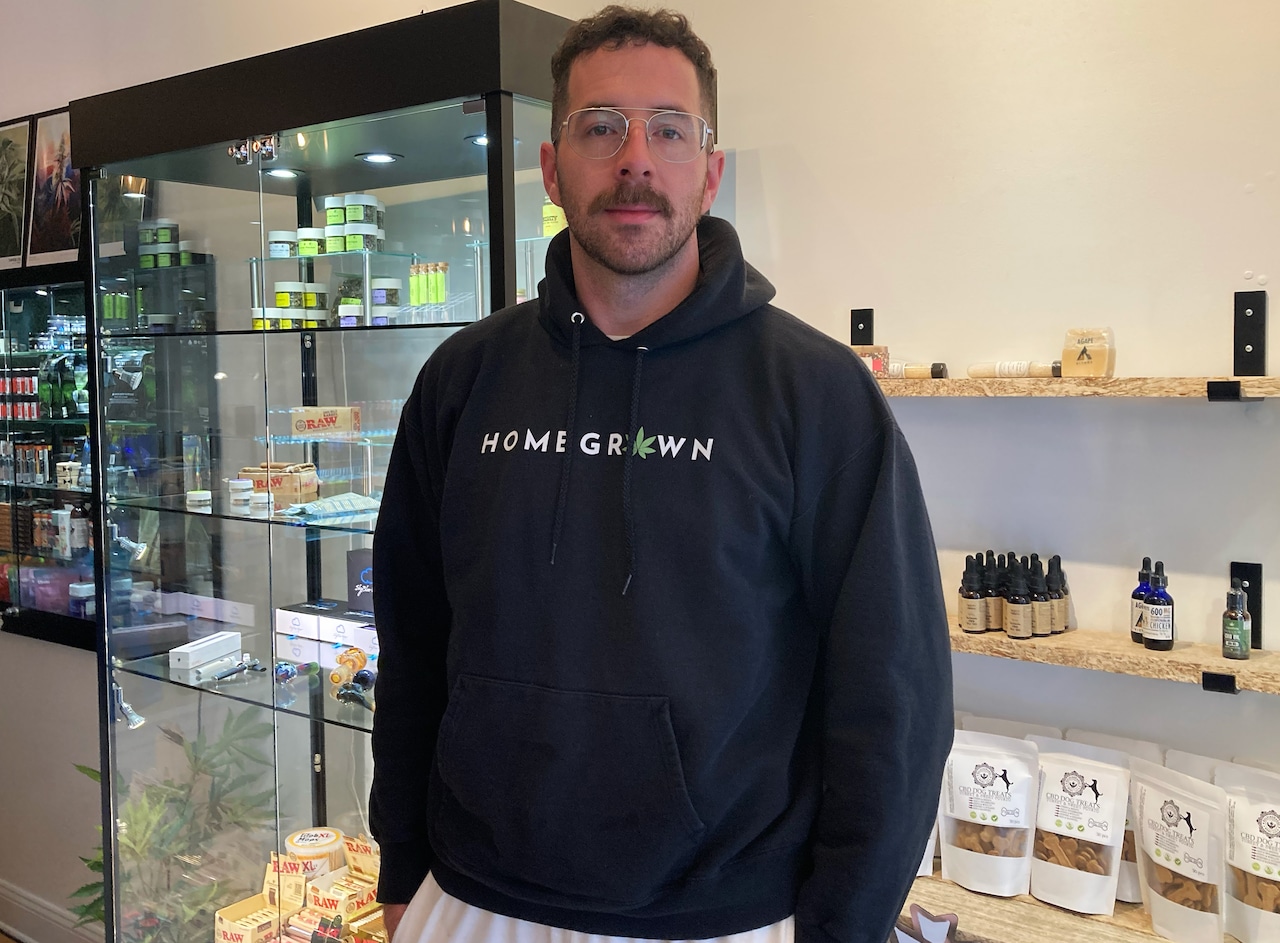 Homegrown Cannabis Store & Cafe CEO and co-founder Nicholas Martens is photographed in front of display cases offering hemp-derived cannabis products Wednesday, Nov. 26, 2025, at his 436 Northampton St., Easton, location.Kurt Bresswein | For lehighvalleylive.com
But if the ban stands, any package containing more than 0.4 milligrams of THC in hemp-derived consumer products would become illegal.
“So that eliminates the plant itself being able to be grown (and) 95% of the products that are created from it,” Martens said.
How did we get here?
Homegrown’s Pennsylvania stores operate outside the state’s medical marijuana program as well as the recreational adult-use marijuana legal frameworks in states like New Jersey.
Marijuana and hemp are varieties of the same plant species, Cannabis sativa. Marijuana is cultivated for high levels of THC in its flowers. Low-THC hemp is grown for its sturdy fibers, food or wellness products. “Rope, not dope” was long the motto of farmers who supported legalizing hemp.
After states began legalizing marijuana for adult use over a decade ago, hemp advocates saw an opening at the federal level. As part of the 2018 farm bill, Congress legalized the cultivation of industrial hemp to give farmers, including in Republican Sen. Mitch McConnell’s home state of Kentucky, a new cash crop.
But the way that law defined hemp — as having less than 0.3% of a specific type of THC, called delta-9 — opened a huge loophole. Beverages or bags of snacks could meet that threshold while still containing more than enough THC to get people high. Businesses could further exploit the law by extracting a non-impairing compound, called CBD, and chemically changing it into other types of impairing THC, such as delta-8 or delta-10.
The result? Vape oil, gummy candies, chips, cookies, sodas and other unregulated, untested products laden with hemp-derived THC spread around the country. In many places, they have been available at gas stations or convenience stores, even to teens. In legal marijuana states, they undercut heavily taxed and regulated products. In others, they evaded the prohibition on recreational use of weed. Some states have reported spikes in calls to poison-control centers for pediatric exposure to THC.
The U.S. Food and Drug Administration has not approved any drug products containing CBD and prohibits retailers from making any unsubstantiated claims about unapproved products’ therapeutic benefits.
Dozens of states have since taken steps to regulate or ban impairing hemp products. Jake Sitler, president of the PA Hemp & Cannabis Guild, is among those calling for Pennsylvania to regulate the hemp-products industry.
Sneaking a nationwide ban into a must-pass vote is not the way to go about it, he said.
“This didn’t happen in a public forum where it’s like you can openly debate it,” Sitler told lehighvalleylive.com. “So I think that’s the biggest gripe here, right, is a lot of this industry has actually asked for regulation for a long period of time, especially in Pennsylvania.”
Sitler’s road to advocating for the nation’s 330,000 jobs in the hemp industry and the tenfold more Americans who say they find relief from its products began with a 2018 bicycle crash. A professional rider, he raced all across North America and Europe before the crash left him nearly paralyzed. The Farm Bill passed that year opened the door to being able to work through his recovery without opioids, he said, and today he and wife Jamie run a cafe in Lancaster and a national cannabis beverage company both under the name Endo.
Additional year extension sought
This week, he began speaking with the teams of Pennsylvania’s U.S. Sens. John Fetterman and David McCormick, respectively Democrat and Republican, on the possibilities of at least a one-year extension before the hemp-products ban would take effect.
“Let’s just say that does happen,” he said. “That now gives us two years to hash out regulation within the federal government while also trying to create a systemic system within the state of Pennsylvania.”
Even the one-year window has given the industry hope that there is time to pass regulations that will improve the hemp THC industry — such as by banning synthetically derived THC, requiring age restrictions on sales and prohibiting marketing to children — rather than eradicate it.
In Minnesota, hemp products have become so popular that Target is now offering THC drinks at some of its stores in the state. They’ve also been a boon to liquor stores and to small Minneapolis brewers like Indeed, where THC drinks make up close to one-quarter of the business. At Bauhaus Brew Labs, a few blocks away, THC drinks account for 26% of their revenues from distributed products and 11% of revenues at the brewery’s taproom.
None of that was what McConnell intended when he helped craft the 2018 farm bill. He finally closed the loophole by inserting a federal hemp THC ban in the measure to end the 43-day federal government shutdown, approved by the Senate on Nov. 10.
“It will keep these dangerous products out of the hands of children, while preserving the hemp industry for farmers,” McConnell said. “Industrial hemp and CBD will remain legal for industrial applications.”
Some in the legal marijuana industry celebrated, as the ban would end what they consider unfair competition.
They were joined by prohibitionists. “There’s really no good argument for allowing these dangerous products to be sold in our country,” said Kevin Sabet, president and CEO of Smart Approaches to Marijuana.
The industry group U.S. Hemp Roundtable argues that the federal ban would not only jeopardize the hundreds of thousands of jobs but also cost states $1.5 billion in lost tax revenue.
“We are very hopeful that cooler heads will prevail,” said Jonathan Miller, the group’s general counsel. “If they really thought there was a health emergency, there would be no year-long period.”
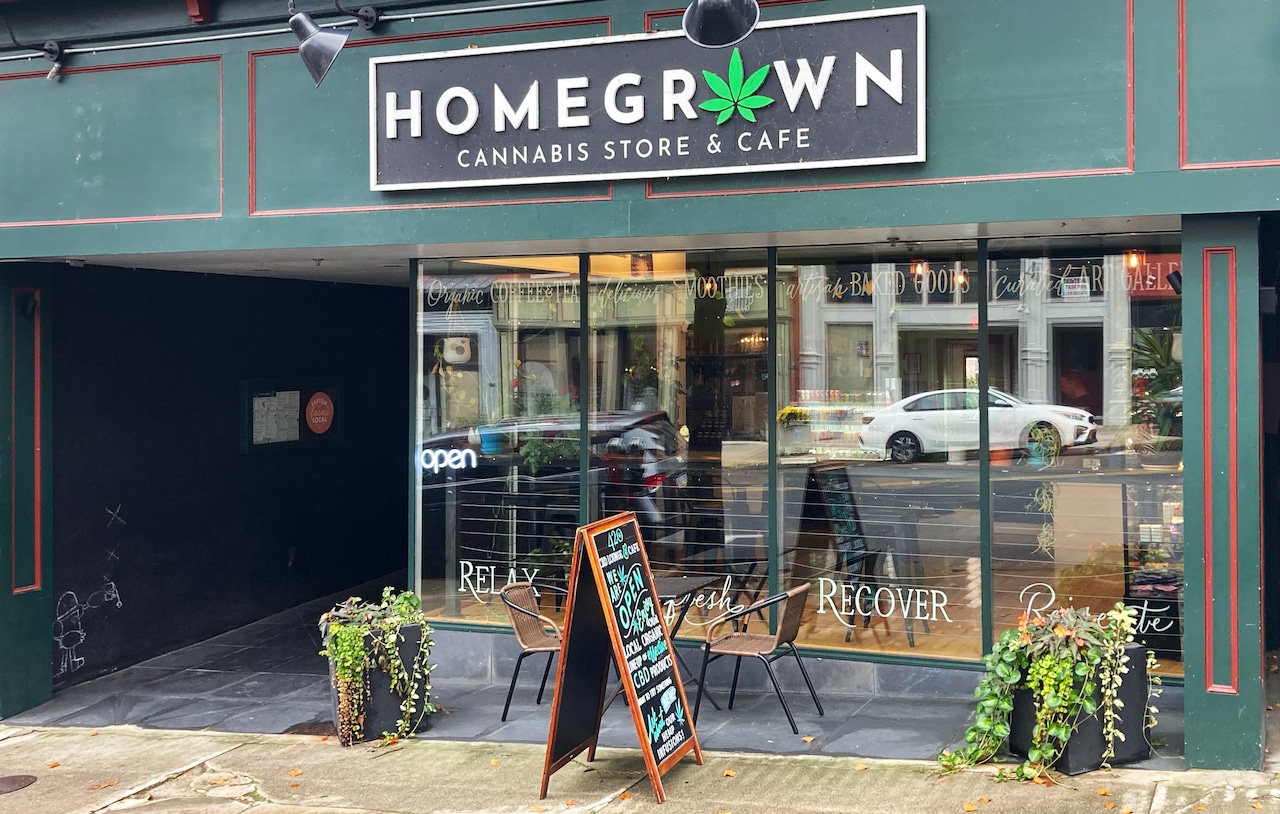 Easton is home to one of two locations of Homegrown Cannabis Store & Cafe, in addition to Stroudsburg.Kurt Bresswein | For lehighvalleylive.com
Martens, speaking inside Homegrown’s 436 Northampton St. location, said he’s closely monitoring the avenues this fight could take — either through new regulation at the federal or state level, or the hemp industry gets a seat at the table as Pennsylvania lawmakers debate opening adult-use recreational sales of marijuana and its array of intoxicating products.
Homegrown’s hemp-derived products are laboratory-tested and include many with effects that don’t include intoxication, he said.
“So the people that want benefit of cannabis, not the intoxication aspect, they’re going to be left hanging,” Martens said. “Those people that don’t have access to even medical marijuana in their state or recreational, then they’ll be pushed off to the black market.”