
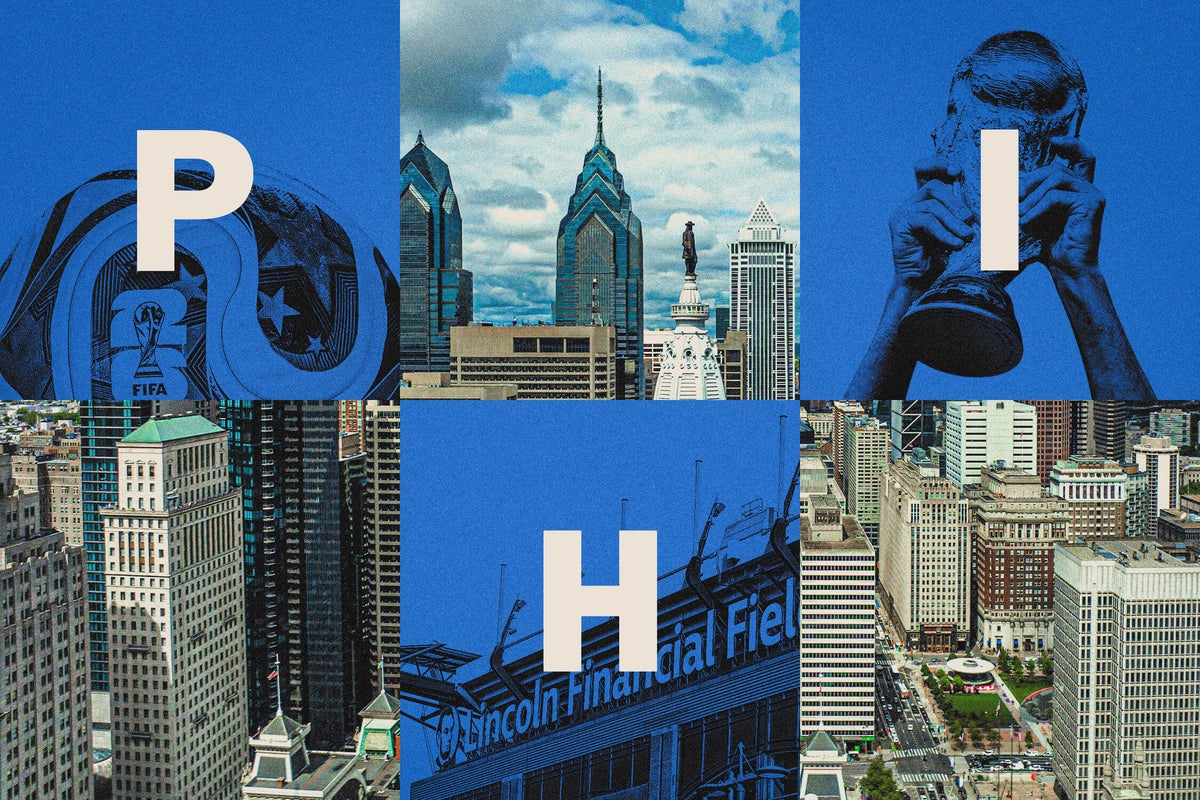
The Athletic has live coverage of the FIFA Men’s 2026 World Cup draw.
It was 2018, and the Philadelphia police were greasing the poles.
The Philadelphia Eagles had made their way to the Super Bowl, and the Crisco was meant to stop fans from climbing the city’s traffic lights and lampposts. The Eagles got the job done, and euphoric fans flooded the streets — and scrambled atop the poles. A few years later, when the Philadelphia Phillies won the National League Championship Series in 2022, one fan was seen on a traffic light, shotgunning at least seven beers tossed to him from the raucous crowd below.
In Philadelphia, pole grease is more of a dare than a deterrent.
That energy runs much deeper than Eagles wins in the 2010s. It goes all the way back to the 1700s, when Philadelphia was the center of a fledgling country, soon to declare independence from Great Britain. Philly was where delegates from the original 13 colonies signed the Declaration of Independence in 1776 and where, 11 years later, leaders created and signed the United States Constitution, making Philly the birthplace of American democracy.
That history will be on full display in summer 2026, when the United States celebrates its Semiquincentennial. A testament to Philly’s key role in that milestone, the city will host a World Cup round of 16 match on July 4, the United States’ 250th anniversary. Intermixed with the World Cup festivities will be a slew of events all summer (and year) long, marking the occasion. In short, if there is one place to be for the 250th anniversary of the United States, it’s Philadelphia.
In the centuries since that pivotal moment in 1776, Philly has grown into a major U.S. city. It has welcomed generations of immigrants — just look at Philadelphia’s other greased pole-climbing event, an annual Italian Market tradition in which teams scamper up to grab meats, cheeses and other prizes.
These days, the Italian Market’s cheese shops and bakeries mix with taco spots, and Asian markets surround the blocks nearby. You can wander north through Philly’s neighborhoods to Chinatown, which, like the Italian Market, dates back to the late 1800s, or head south to the Southeast Asian Market, founded by Lao and Cambodian refugees in the 1980s. According to data from the Pew Research Center, published in 2024, the portion of residents born overseas — 15.7 percent — is the highest it has been in 80 years, largely due to immigration from Latin America and Asia.
Philly’s multiculturalism should make for a vibrant World Cup. I’ll admit it — soccer is not Philadelphia’s number one sport, or even its number two. Like much of the United States, football, baseball, basketball and hockey reign supreme, and Philly has teams competing in all four, along with the MLS’ Philadelphia Union.
But if there is one thing Philly loves, it is showing up for sports.
This is a city whose hockey mascot is a beloved, wild-eyed orange creature named Gritty, who tells other mascots to “sleep with one eye open”, and whose baseball mascot is an equally furry, big-bellied creature with an extendable tongue called the Phillie Phanatic. It’s a city whose most famous piece of media is the movie “Rocky”, the classic underdog story of a small-time, working-class boxer from Philly holding his own against a great — on the bicentennial of the United States, no less.
“Grit” is a common word thrown around when referring to Philadelphia, a city with a strong working-class contingent that, like many in the U.S., weathered post-industrialism. Sometimes I think of Philly as a middle child, sitting about 95 miles south of New York and about 125 miles north of Washington, D.C.
But that’s what makes Philadelphia great. The city holds its own against the multiculturalism of New York and the national history of D.C. It has a vibrant arts and music scene, great food, historic character, and the density and walkability characteristic of the Northeast. Without massive federal and financial industries jacking prices up, Philly is a city that has not yet completely priced out its working class. Travel here for the World Cup, and you will get everything the Northeast has to offer with a cheaper price tag.
Just know this: Philly sports fans love hard, but they also hate hard. In 1968, Philly fans became infamous for pelting Santa Claus himself with snowballs during halftime at an Eagles game, as the team held a 2-11 record.
Contemporary Eagles great Jason Kelce put it best in his teary 2024 retirement announcement.
“Some people struggle to play in this city, they can’t handle the boos, the media, or our fans,” he said. “I consider it a great blessing to play in the most passionate sports town in America. At times, you hate it as an athlete, especially those new to our city. But when you’ve been through it enough, you learn to appreciate it. No one celebrates their own like the city of Philadelphia. Athletes become demigods in this city…
“Yes, they will let you know when you’re not performing well. Every time. But they will also love you if you show effort, aggression, desire, the will to fight. They will love you in this city if you love it the way you love your brother.”
Yes, Philly is a city known to boo its own. But perhaps stereotypes are most powerful when they are broken. Like in 2023, when Philadelphia Phillies shortstop Trea Turner, recently signed to a massive contract, walked up to the plate amid a brutal slump.
Instead of jeers, the sold-out home crowd gave Turner a standing ovation. The next day, he hit a three-run homer to secure a comeback win, kicking off a 17-game home hitting streak.
Soon after, billboards began appearing across the city featuring Turner.
They read: “Thank you, Philly.”
The stadium
Lincoln Financial Field (Al Bello via Getty Images)
Lincoln Financial Field, or the Linc, will be temporarily renamed Philadelphia Stadium for the World Cup. The stadium typically hosts American football, home to the Philadelphia Eagles and Temple University football. But the Linc has borne witness to soccer history, too; its first ticketed event was a soccer match between Manchester United and Barcelona in 2003.
The stadium seats 67,594 people and is located in the South Philadelphia Sports Complex, an area in the south of the city home to two other sporting venues, which host the Philadelphia Phillies (MLB), Philadelphia 76ers (NBA), and Philadelphia Flyers (NHL). The Philadelphia Union plays outside the city in Chester, Pa.
The complex is accessible via public transportation, which often features added service on game days. It is also surrounded by paid parking lots and is accessible by Uber and Lyft. As for the fastest and cheapest ways out? I’ll defer to a race conducted by Philadelphia Inquirer reporters at the end of an Eagles game, which found a rideshare to be the fastest but priciest, followed by biking, driving (which included costly parking), and then public transit (slower, but cheaper than rideshares or parking).
What do the players say about the city?
The Philadelphia Union finished the 2025 regular season ranked first, and a growing contingent of Union players have taken the field for the U.S. men’s soccer team.
That includes midfielder Quinn Sullivan, whose Philly soccer history stretches back 50 years, to his grandfather playing at Temple University and coaching in the area. Sullivan and his three brothers grew up in Philly and all play soccer, including Union teammate Cavan Sullivan. Here’s what Quinn told The Philadelphia Inquirer about being from Philly after the U.S. men’s soccer team lost to Turkey in June:
“This badge, this country, it’s everything to me, and that intensity, I will always bring no matter what,” Sullivan said. “It definitely helps coming from Philly, where the intensity is always high. You’ll always get that from me, and it seems like from the rest of the team.”
Union defender Nathan Harriel told the Inquirer this about that same match: “It’s in our DNA to fight, especially in Philadelphia — that’s what was installed at the club.”
Where to go for breakfast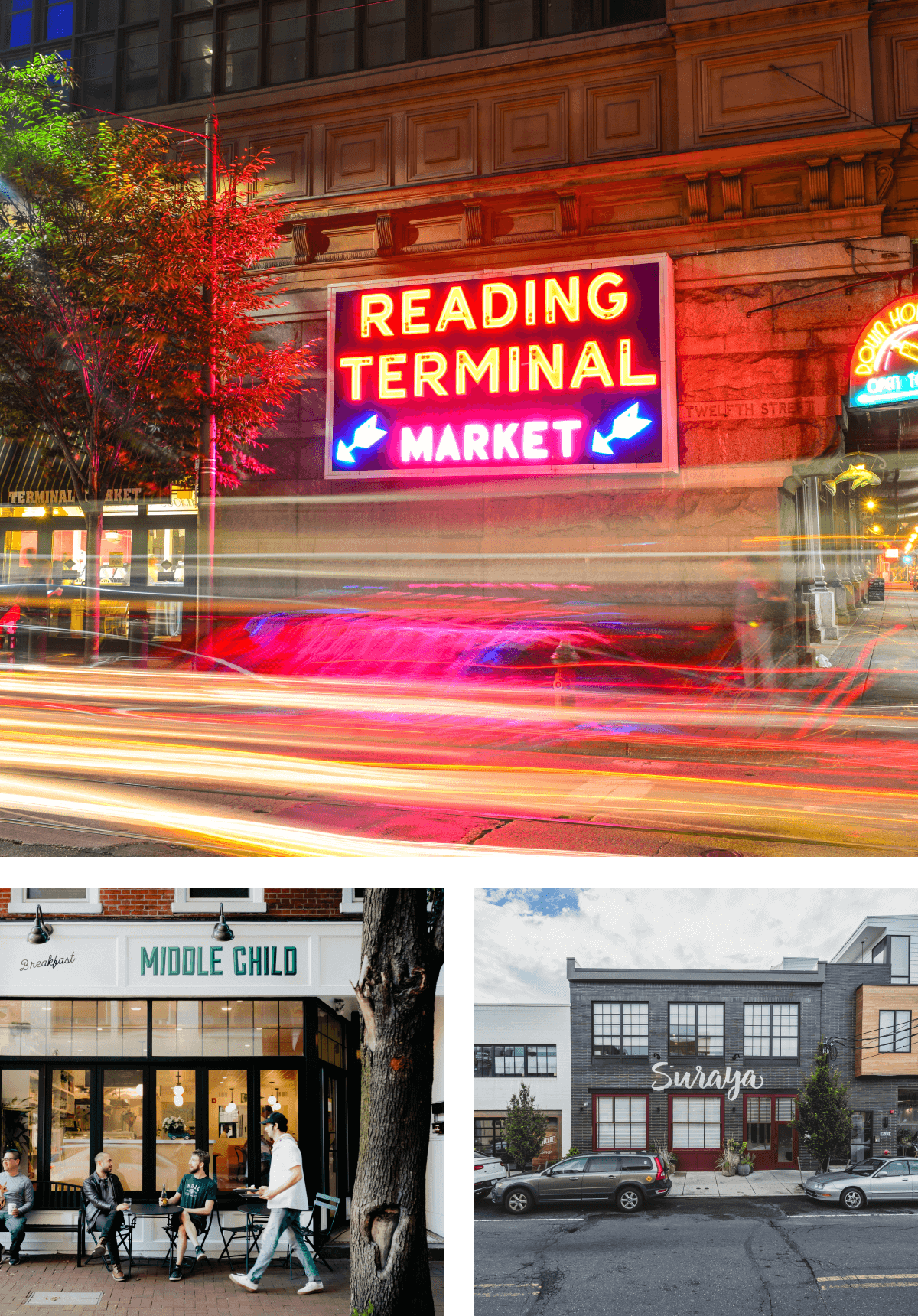
Top: Reading Terminal Market, Bottom Left: Middle Child, Bottom Right: Suraya (Images supplied by venues / Russ Brown Photography)
Where to go for lunchWhere to go for dinnerWhere to grab a drink during the day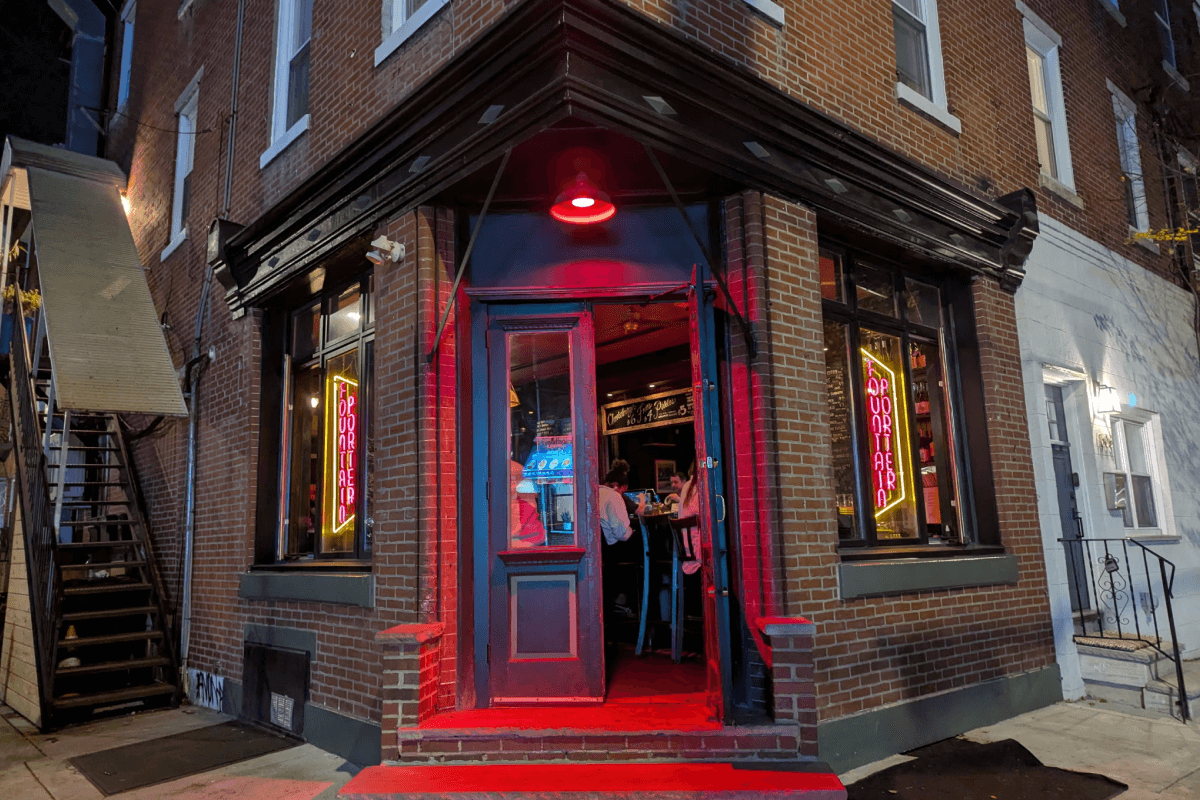
Fountain Porter (Image supplied by venue)
Where to grab a drink in the eveningWhere to stay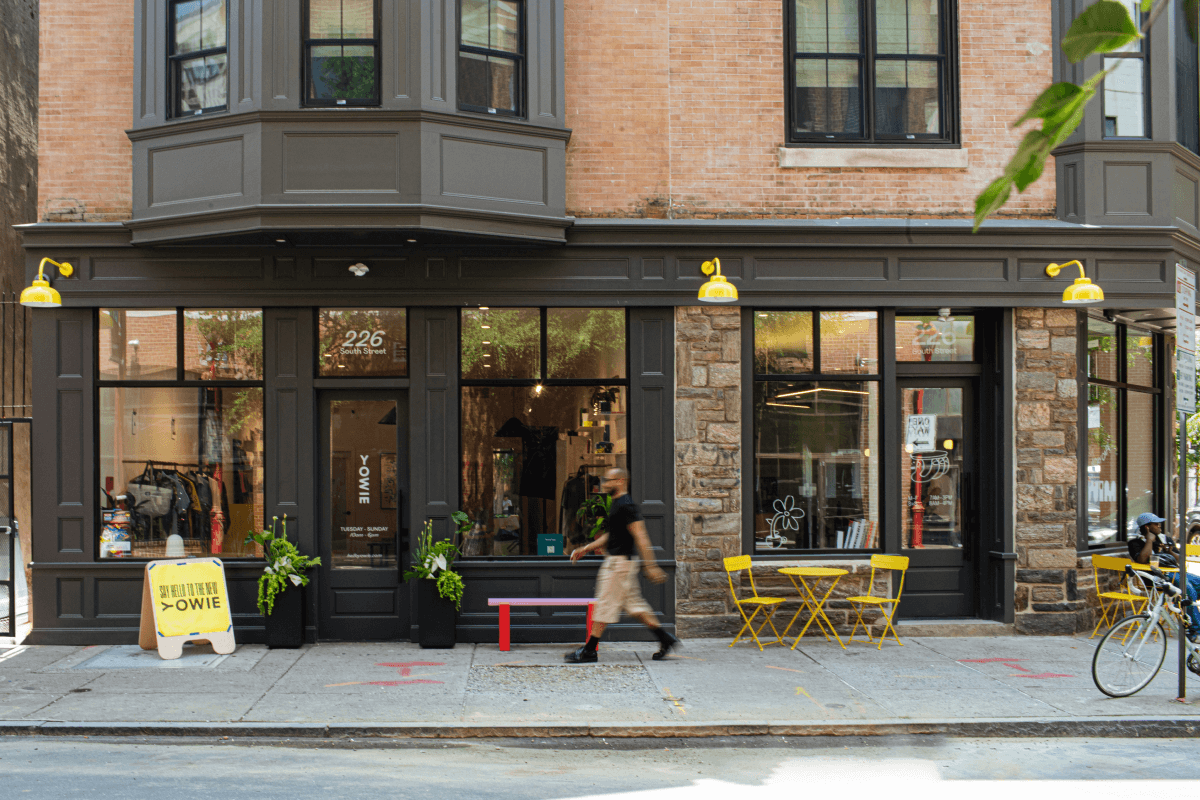
Yowie (Image supplied by venue)
What to do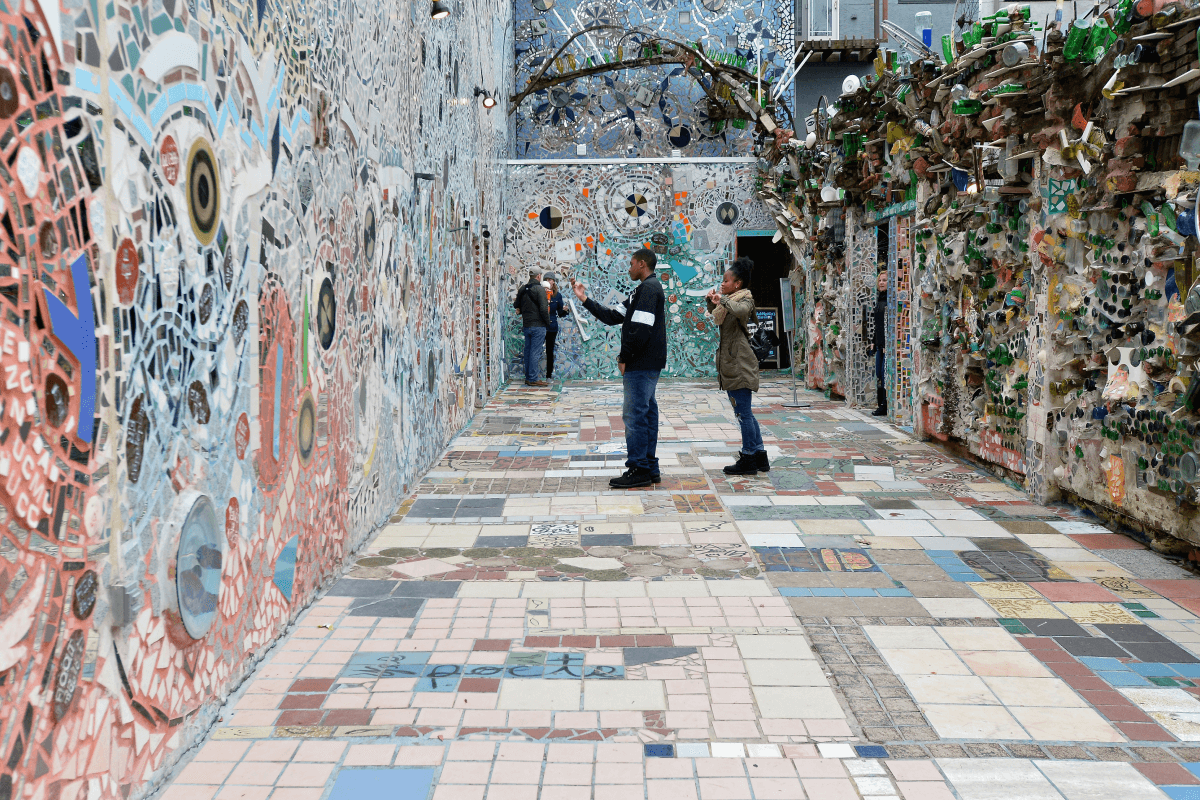
Magic Gardens (Paul Marotta via Getty Images)
Where to watch other World Cup games
For something soccer-specific, Philly has its share of options — like Tir na nOg (1600 Arch St.) or Cavanaugh’s Headhouse (421 S 2nd St.) — which play host to Premier League fans and will surely be packed during the World Cup. Otherwise, good sports bars are a dime a dozen in Philly — walk a few blocks and it will not be hard to find a packed house cheering at the TV. Be sure to order a Citywide (a shot and a beer, often PBR and whiskey).
Game-day hacks
For fans looking for a game-day party, Stateside Live! (formerly Xfinity Live!), right next to the Linc is the classic rowdy pre- and post-game spot (and a mid-game spot for those without tickets, thanks to its massive screens). If you’re feeling brave, take a spin on the mechanical bull. (1100 Pattison Ave.)
On Saturdays and Sundays, skip the food at the Linc and opt for the Southeast Asian Market instead, located in FDR Park adjacent to the South Philadelphia Sports Complex. With more than 70 vendors, the market will take you across Indonesian, Thai, Lao, Vietnamese and Cambodian cuisines — a testament to the diversity of the city and its great food scene. (1500 Pattison Ave.)
The best way to get around
Much of Philadelphia is accessible via SEPTA, the city’s public transportation agency. As of writing, trips cost $2.90 (£2.20), and riders can pay with contactless payment on their phone or by purchasing a SEPTA Key chip card.
Philly is also extremely walkable. Especially near downtown, it is easy to wander from neighborhood to neighborhood. Visitors could start their day at Reading Terminal in Center City, visit the museums of Old City, and end their day on South Street without walking more than 20 minutes at a time.
Ubers and Lyfts are also plentiful in the city. For those who want the flexibility of their own car, parking downtown is hard but not impossible (parallel parking skills required).
What will the conditions be like?
Average June/July temperature: 72F/77F (22C/25C)
Average June/July rainfall: 101mm/100mm
Altitude: 3m
You can read more here.
A sporting fact you might not know
Philadelphia will soon have its first major professional women’s sports team. The WNBA announced in June that Philly will be one of three expansion teams coming to the league. The yet-to-be-named team will tip off in 2030.
You can read guides to all of the 2026 host cities here.