
By MARTY LEVINE
Editor’s note: “Lasting Lessons” presents stories from faculty and staff about an educational moment that made the most impact on their lives — as a student or an instructor, inside a classroom or out, here at Pitt or elsewhere, formal or impromptu, between friends or even at a bad moment — something that challenged or changed them. Look for more Lasting Lessons in future editions of the University Times.
Erin L. Mathia is an assistant professor in the School of Health and Rehabilitation Sciences’ Department of Occupational Therapy and assistant director of its Doctor of Occupational Therapy Program.
“When I was a kid, I used to put on my mom’s glasses and carry a bag and pretend that I was a teacher,” says Erin Mathia. “Teachers were the rock stars where I grew up,” in Knox, Pa., 95 miles northeast of Pittsburgh. “Everyone knew who the teachers were in my small town.”
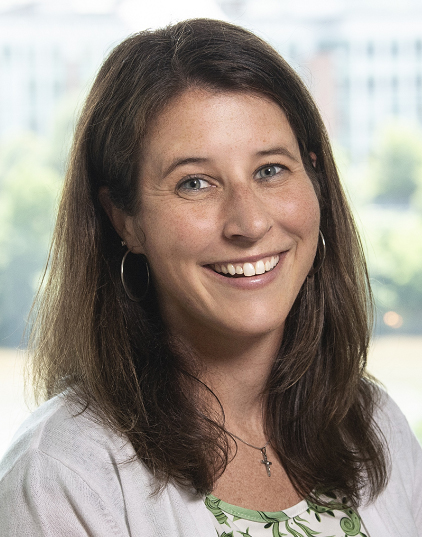 Mathia began this playacting before she even went to school. “The teachers where I grew up were involved in everything, whether it was the community, church, they were all over the place,” she says.
Her mother was not a teacher — in fact, no one in her family was one, officially — but in a way, they were her teachers, she says, as were many people in many positions: “It wasn’t just the teachers who taught, it was everybody. You were taught by everybody in the community.”
She especially idolized the elementary and high-school teachers. She is still in contact with her sixth-grade teacher, who “always wanted to help, doing the extras, coming in early, meeting with students outside the classroom,” even providing school supplies, snacks and lunches to new students with fewer resources — or simply being there for them: “Being the person you can reach out to, … being the kind of teacher I would want to be.”
She graduated from Pitt in 2005 with a master’s degree in occupational therapy. For the first years of her career in OT — helping people get back to doing things they want, need and are expected to do, from starting their day to participating in hobbies — she specialized in early interventions for the youngest kids: “I’m teaching the parents, I’m teaching the kiddos, how to build up their skills. … As I moved forward,” she recalls, her career “came fully around when I had a colleague reach out from the University of Pittsburgh.”
She took the chance to return to her alma mater “to teach the next generation of occupational therapists. I ended up in my dream job of being able to combine those two passions … getting to have an influence on the next generation, instilling that love of being able to teach others how to do things in a new way, and how to help communicate that to our students who want to be clinicians.”
At first she was a part-time instructor, then became an assistant professor following her 2021 doctor of clinical science degree.
Back in her pre-school days, when Mathia was only playing at bring a teacher, her mother “loved it,” she remembers. “When I became an assistant professor, that was one of the things she reminded me of: ‘You’ve come full circle.’”
Carma Sprowls-Repcheck is assistant professor and clinical internship coordinator of the Health and Human Development Department in the School of Education.
Carma Sprowls-Repcheck has helped many students to secure internships. When one of them contacts her years later — to ask to supervise new interns at their current place of employment — that’s when it’s clearest: these internships are working. Such students found their own internship experience valuable enough that they wanted to give back.
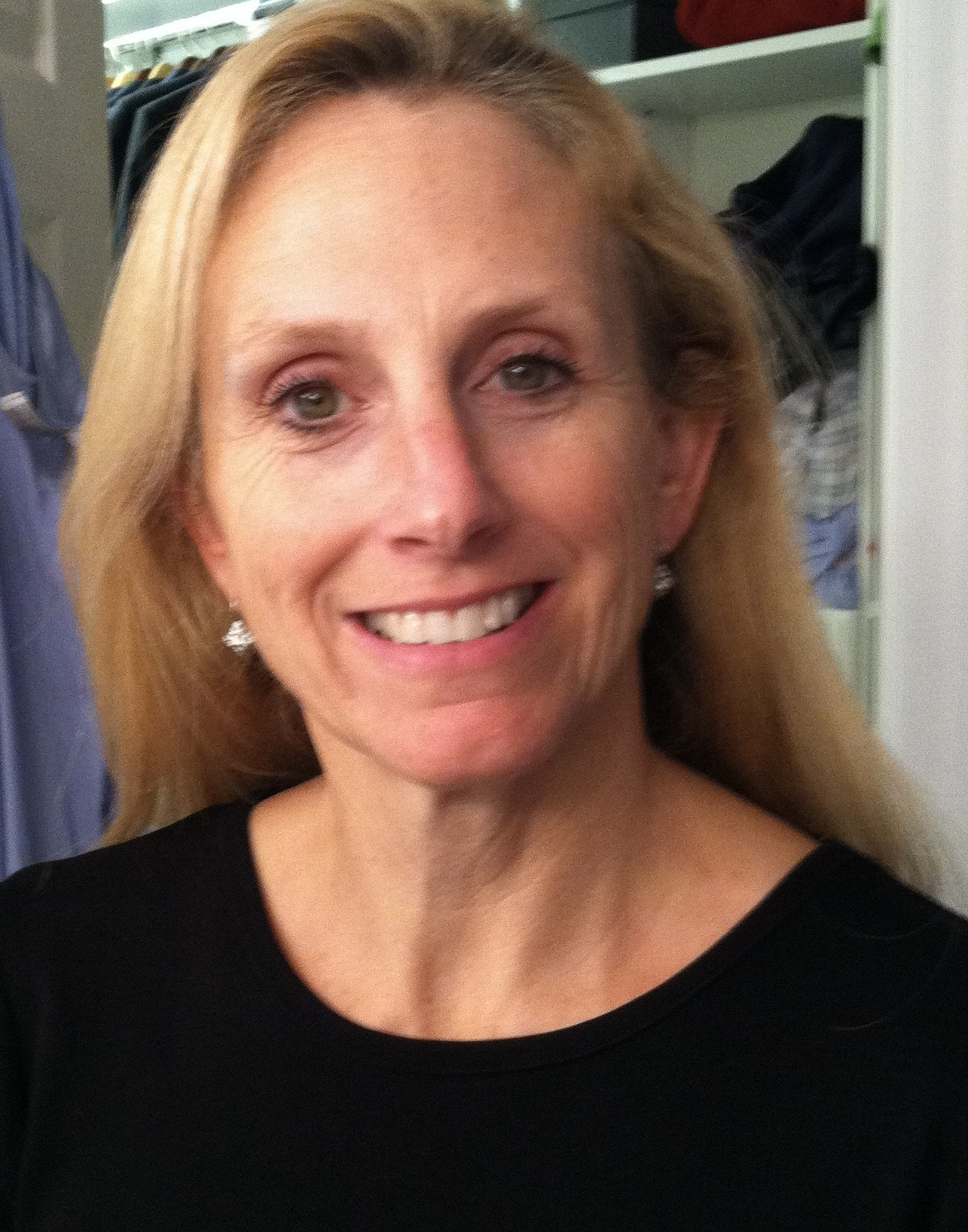 Sprowls-Repcheck started at Pitt in 2013, hired both to teach and to run her department’s clinical internship program. She recalls one early student who interned at a local pulmonary rehabilitation facility. “He was a student who really wasn’t quite sure what path he wanted to take,” she recalls, and he was already a graduate student. “That was concerning,” she says.
But during the internship, “he kind of blossomed. He realized he could use his skills and help people. He liked the idea of working with special populations.” Soon he was hired at the facility where he had interned, and quickly reached out to see if he could supervise interns himself. Now he is director of that facility.
Sometimes the interns have “an aha moment: ‘I like this! Who knew?’” she says. “And of course sometimes it goes the other way. Sometimes you figure out what you want to do and sometimes you figure out what you don’t want to do.
“And now with some jobs being fully remote, some students are learning ‘I don’t want to be fully remote,’ or ‘I like the mixture of hybrid.’
“Some internships are very hands on, and that’s really what we look for,” she explains.
The University is always looking for ways to work better with the community, the businesses, and this is a way to help, she adds. “We’re developing them as professionals, to be on time, to work hard. They don’t like it at first, but they learn to like it.”
Marty Levine is a staff writer for the University Times. Reach him at martyl@pitt.edu or 412-758-4859.
Have a story idea or news to share? Share it with the University Times.
Follow the University Times on Twitter and Facebook.