
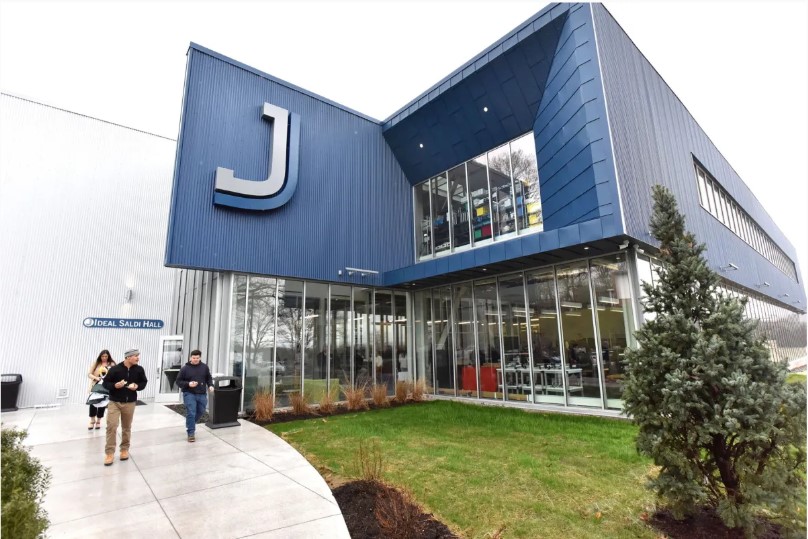
Johnson College has implemented a training program to help inmates prepare for work after their release.
Finding stable employment is a hurdle formerly incarcerated people face. Individuals may not have the proper training to enter the workforce. Educational programs are often not available to incarcerated people. Programs available after their release may require a long-term commitment or bear a prohibitive cost.
Johnson College’s prison training program provides incarcerated individuals in Northeast Pennsylvania with industry-recognized credentials. Since May, Johnson College has trained 50 men and women in preparation for their release.
The online initiative allows inmates to take about 10-15 hours of training over several weeks. Instructors teach in real time, providing the opportunity for students to ask questions and to get to know them. Evening courses allow inmates to fulfill daytime obligations.
Kellyn Williams, associate vice president of special programs, said the abbreviated schedule takes into consideration that inmates may have limited time in a specific institution before being moved.
The college has offered courses in OSHA 10 and Customer Service Basics. It plans to expand offerings to include Basic Electrical and Pre-CDL training courses.
The college delivers training remotely to the Wayne County and Pike County prisons and the United States Penitentiary at Canaan. Williams said the college hopes to bring the program to Luzerne County Correctional Facility and Lackawanna County Prison.
The college also hopes to offer the program in person, using mobile training units.
Program funding
The Sordoni Family Foundation funded the pilot program in 2020 with a $10,000 grant. Funding from the Mellon Foundation through an agreement with Villanova University as part of the Expanding Access to Higher Education in Pennsylvania State Prisons project now supports it.
A partnership with Goodwill Industries further supports the college’s efforts to expand. Goodwill identifies interested individuals, coordinates participation and provides post-training career preparation and job placement support.
Funding support for the current phase of the program continues through Dec. 31, with goals to sustain and expand the initiative going forward.