
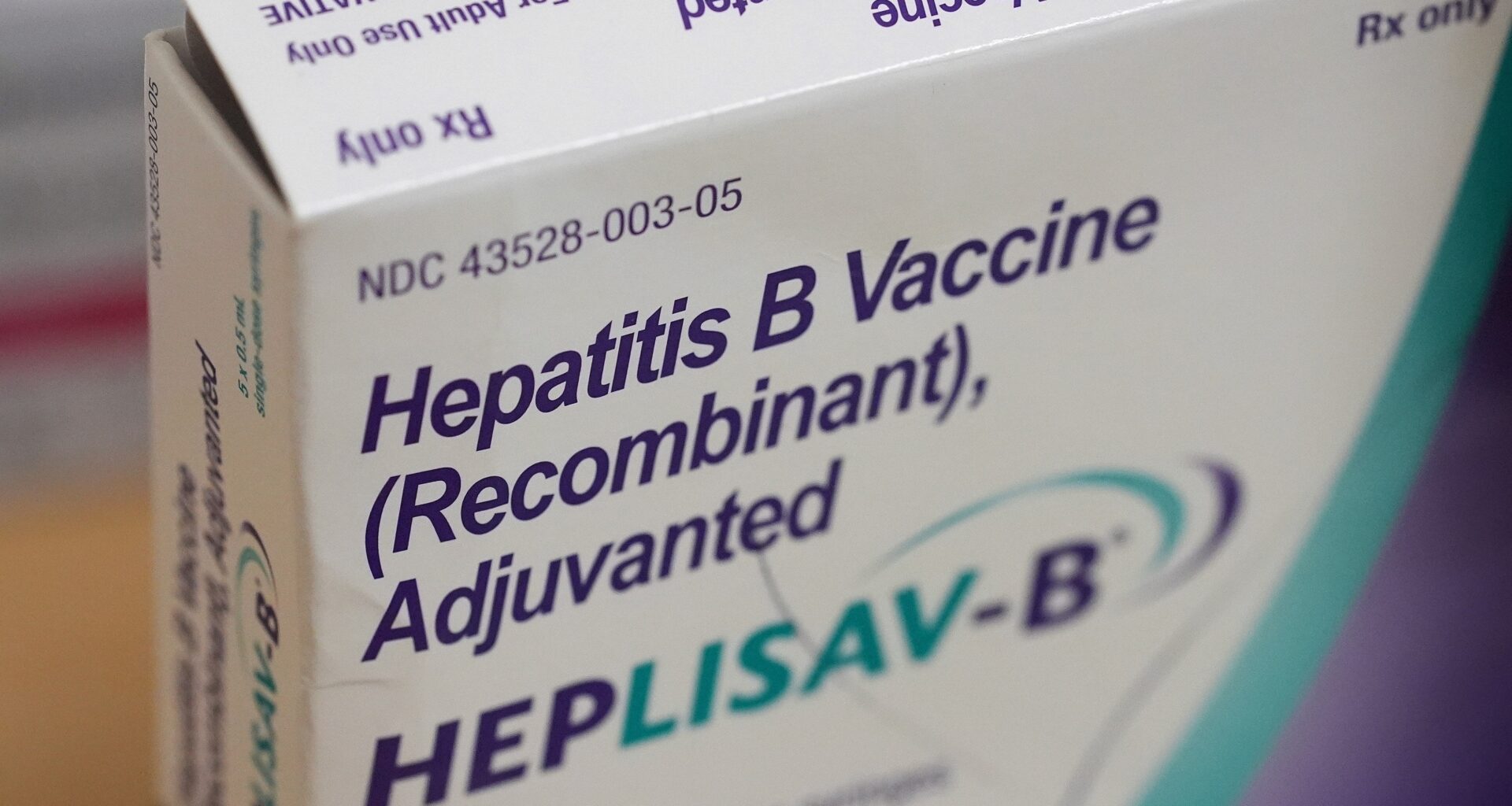
How will hepatitis B vaccination change for families?
Major medical organizations like the American Academy of Pediatrics and the American Academy of Family Physicians, as well as state health leaders in Pennsylvania and New Jersey, are rejecting these arguments and the proposed changes.
“We will continue to follow evidence-based recommendations that have kept our communities safe for decades,” Acting New Jersey Health Commissioner Jeff Brown said in a statement. “The hepatitis B vaccine has been safely given to millions of newborns and delaying it unnecessarily puts children at risk from an entirely preventable disease.”
In her nearly 30-year career in medicine, Richards-Rowley, who is vice president of the Pennsylvania chapter of the American Academy of Pediatrics, said issues or pushback against the hepatitis B vaccine from families were rare until about two years ago.
“Definitely post-COVID, we have been seeing a larger and larger proportion of people saying no to the hepatitis B vaccine,” she said.
Misinformation and disinformation about all kinds of vaccines on social media and from leading government officials like RFK are playing a part, said Richards-Rowley, who added that a majority of families still support and get routine vaccines.
“I wouldn’t give anybody else’s child a vaccine that I wouldn’t give my own child or I wouldn’t take myself,” she said. “If I had any thought, any concern, I wouldn’t give it. But I’ve done the research and I’ve had the education and I know that these are safe.”
For now, access to hepatitis B vaccinations has not changed, Richards-Rowley said.
In Pennsylvania, health insurers are required to cover childhood immunizations recommended by the state Board of Health and trusted medical organizations, regardless of actions at the CDC, under an executive order signed by Gov. Josh Shapiro.
“Insurance companies in Pennsylvania will continue to cover the hepatitis B vaccine for newborns, full stop,” Pennsylvania Insurance Commissioner Michael Humphreys said in a statement.
Pennsylvania has not recorded any cases of hepatitis B in a child under 4 years old since 2019 “due to the high rates of hepatitis B vaccination,” according to state officials.
Most pediatricians and health care workers in hospitals will continue to recommend vaccinations at birth, Richards-Rowley said. It continues to be a critical window for preventing infants who are at risk of infection from developing chronic hepatitis B.
Community health providers may begin to see more families come in with infants that have not gotten their first vaccine dose at the hospital, Richards-Rowley said. In those cases, providers will need to be extra vigilant in examining birth mothers’ health histories and possibly start testing infants for hepatitis B infection.
“Now, does that increase health care costs? Yes. Does that increase anxiety for everybody involved? Yes. Does that increase the amount of time that I can’t spend talking about nursing or jaundice or car seats or other kinds of safety issues? Yeah, it will,” she said. “But are we going to do it? Yes.”