
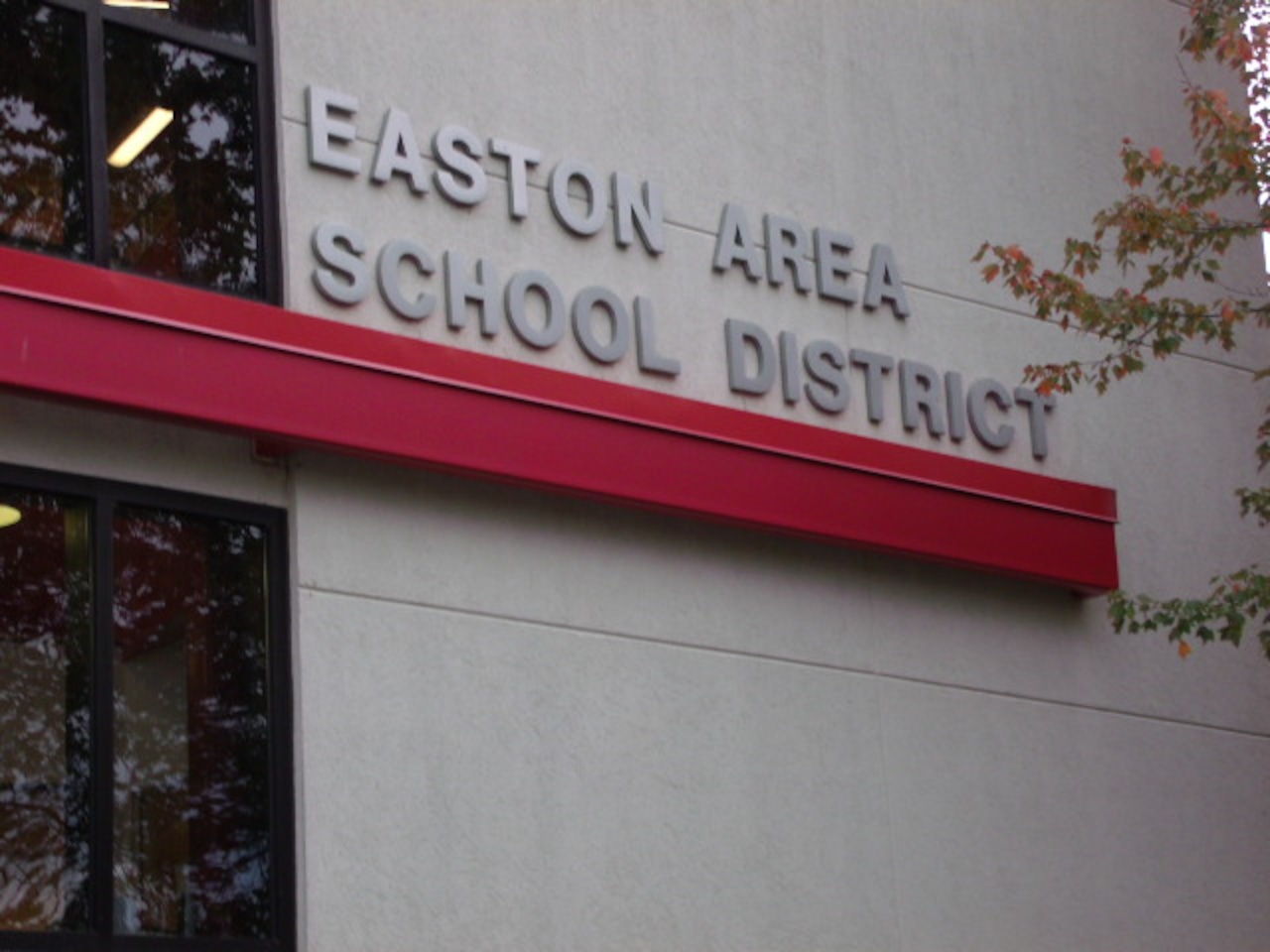
As Easton’s nearly $300 million new high school is expected to be constructed, the district is faced with a shortfall in the upcoming budget.
Chief Financial Officer Jack Trent said it’s not something to worry about yet, though.
The Easton Area School District received an early look at its 2026-27 budget at a recent school board meeting as Trent outlined projected spending, revenue and long-term financial priorities. The draft plan shows estimated expenditures at $231,697,165 and revenues at $224,749,645, leaving a deficit of nearly $7 million.
“That is where we start with budgets, usually,” Trent said. “So it’s not something to sound the alarm about just yet.”
The revenue figure assumes a 3.5% tax increase, which Trent said aligns with the district’s previously approved capital projects plan. For the 2025-26 budget, the board also approved a 3.5% increase.
Trent told the board that the district’s budget priorities include supporting capital projects, rebuilding the fund balance and addressing rising operating costs. He also emphasized the need to eventually generate surpluses to improve the district’s fiscal stability.
The district has been relying on reserves to fill budget gaps in recent years, a practice he described as unsustainable.
“As the board knows, there is a capital project spending plan that we currently have, and we need to build capital reserve and fund balance for these initiatives,” Trent said.
He also noted that salaries and benefits remain the district’s largest cost drivers and continue to grow at a rate that outpaces revenue growth. Trent said those expenses currently make up about 65% of the overall budget.
The district plans to analyze staffing levels, personnel costs and health benefits as part of its cost-saving evaluations.
Board member Brian Snyder noted the deficit was larger at this point in the previous budget cycle. He said this year’s process appears to be starting with more information upfront.
Superintendent Tracy Piazza told the board that the district is still awaiting completion of the 2023-24 and 2024-25 audits, which she said will provide important clarity on the district’s fiscal standing. Piazza said the district has spent the past year reorganizing the business office and addressing issues identified in earlier financial processes.
The audit results are expected to guide decisions on fund balance levels and other long-term planning needs.
“What we want to preserve to the greatest extent is our educational programs and our staff that needs to be here to deliver those programs,” Piazza said. “We will continue to look at attrition as appropriate, and other mechanisms for really looking at the cost savings, including the duplicative services and programs that we may have.”
Trent said one major goal of the district’s upcoming multi-year financial plan will be rebuilding the fund balance to recommended levels. That benchmark, he told the board, is about 8-10% of the total budget, or roughly $20 million.
“Then we can begin operating in other regards and build up the capital reserve,” he said.
The district expects to continue refining the budget through the spring, with a final vote scheduled for May.