
The Trump administration has proposed big changes to federal protections for threatened and endangered species, habitat, and waterways. The administration says they are needed to keep up with recent Supreme Court Rulings.
But conservationists and environmentalists are worried that these changes could remove millions of acres of wetlands from federal protection and push plant and animal species toward extinction.
The Allegheny Front’s Reid Frazier sat down with Kara Holsopple to walk through what some of the changes would mean.
LISTEN to their conversation
https://www.alleghenyfront.org/wp-content/uploads/2025/12/Rollbacks-2-way-SHOW-EDIT.mp3
Kara Holsopple: What did the Trump administration propose with the Endangered Species Act?
Reid Frazier: They made changes to several rules created to enforce the Endangered Species Act. Just to remind people, this is the landmark legislation signed into law by President Nixon in 1973, and it protects threatened and endangered species and, importantly, the habitats where they live.
One of the most significant changes the administration made is to revert back to guidelines created under the first Trump administration for listing species and designating habitats as critical. They’re now including more economic and national security considerations into the listing process.
As you might expect, the environmental groups are alarmed. Here’s Will Harlan, a senior scientist with the Center for Biological Diversity, talking about these four rule changes.
Will Harlan: All four of them essentially put economics ahead of science in the protection of species.
Reid Frazier: Another big change is the administration is not allowing climate change as a kind of predictor for what species to be included in these determinations. Trump’s Interior Secretary Doug Burgum says the changes restore the Endangered Species Act “to its original intent, protecting species through clear, consistent, and lawful standards that also respect the livelihoods of Americans who depend on our land and resources.”
Will Harlan: Another big change is the administration is not allowing climate change as a kind of predictor for what species to be included in these determinations.
The original law states its purpose was to conserve “the ecosystems upon which endangered species and threatened species depend.” And it does allow economic and national security concerns to factor into these listings, unless allowing development will lead to a species extinction.
Kara Holsopple: How would these changes affect wildlife?
Reid Frazier: Advocates say this change to the Endangered Species Act regulations would put more species at risk of going extinct. Harlan says the act rarely stops development, but it does require projects like pipelines or highways to consider their impacts on threatened and endangered species and modify their projects to accommodate them. Chris Bason, executive director of the Audubon Society of Western Pennsylvania, says the changes to habitat restrictions are particularly concerning, especially when it comes to birds.
Chris Bason: We are experiencing serious declines in bird life. We’ve lost three billion birds since 1970, and many species are experiencing precipitous declines. And the number one reason for that is habitat loss.
Reid Frazier: And Bason says just like people, animals need a habitat or a home to survive.
Kara Holsopple: Are there any species this could affect in Pennsylvania?
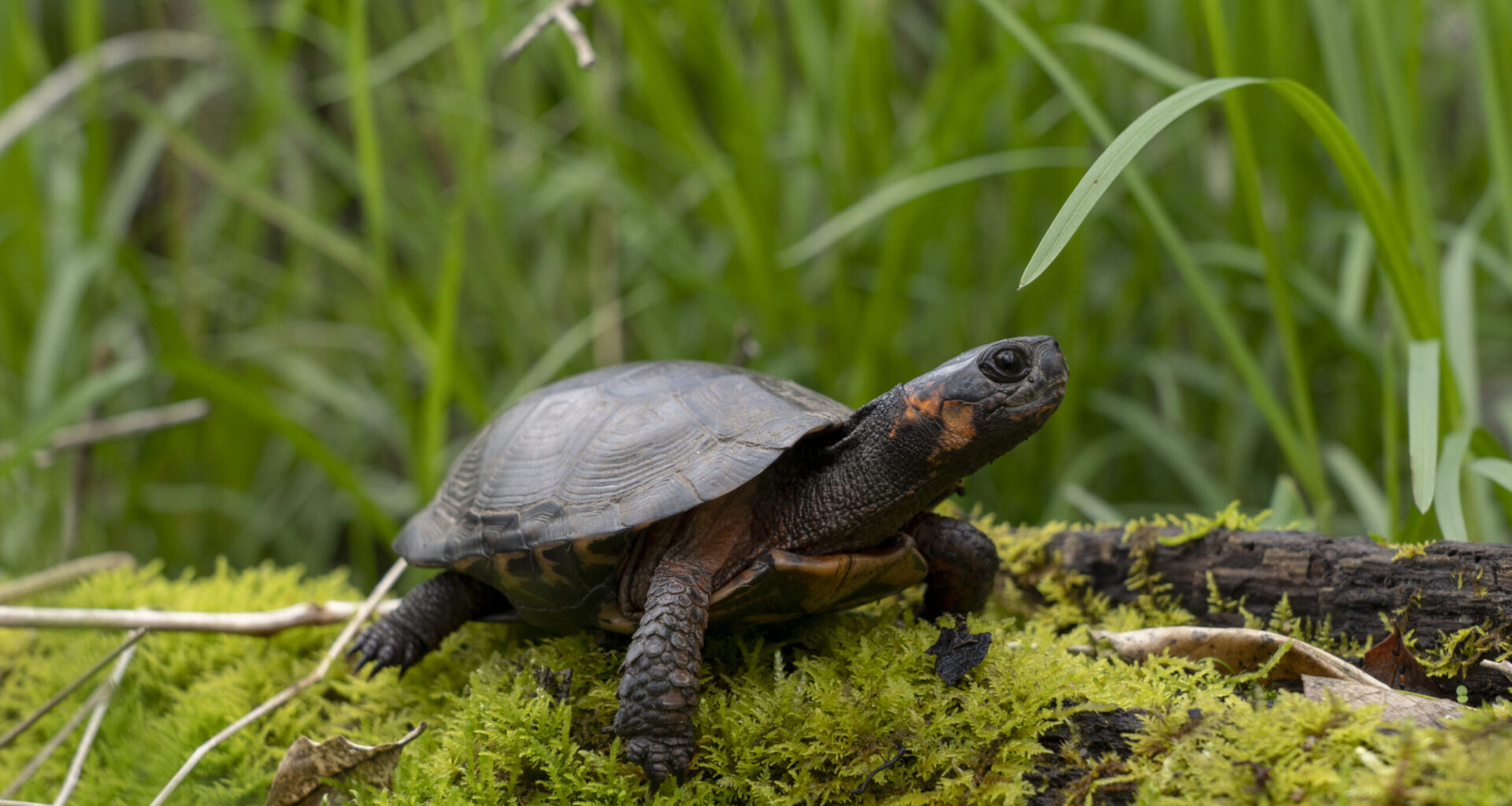
Reid Frazier: Yes, there are several. One major change the Trump administration has proposed is how it defines harm to an endangered species. Under previous administrations, harm could include destroying the species’ habitat, but the administration earlier this year proposed eliminating habitat ‘modification,’ as the government puts it, from the definition of harm to a species under the Endangered Species Act. Harlan says this could make a difference in Pennsylvania, for instance, in the case of bog turtles, which is a species listed as threatened under the Endangered Species Act.
Will Harlan: There are these tiny turtles about the size of a credit card or smaller. And they only inhabit wetlands; that is where they live. Pennsylvania is home to some of the last bog turtles. In wetlands of the Allegheny National Forest and across the state, but especially in the south-central and southeast part of Pennsylvania, bog turtles are hanging on. If these rules are enacted, [for] bog turtles, their wetlands would not be protected.
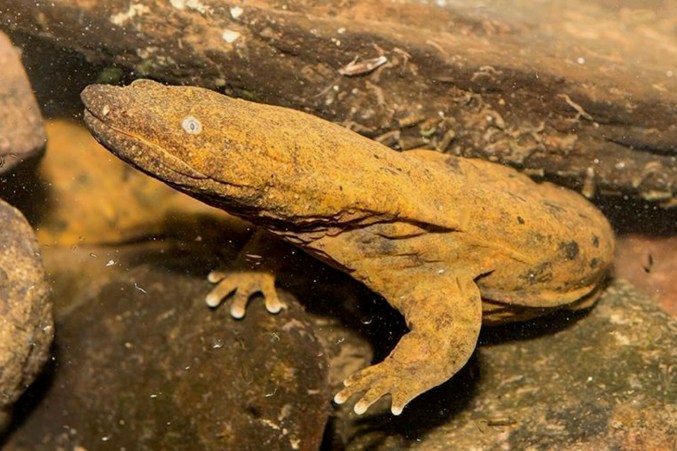 The eastern hellbender has been proposed to be listed as an endangered species. Photo: PADEP
Reid Frazier: And some of these changes could also affect the eastern hellbender, which is waiting to be put on the endangered species list. That’s Pennsylvania’s state amphibian, which only lives along high-quality cold water streams in the Appalachian Mountain region. So conservation groups here are very concerned about these proposed changes.
Kara Holsopple: So bog turtles rely on wetlands. What about new wetlands designations the administration is proposing?
Reid Frazier: This is another big change in the administration’s interpretation of the Clean Water Act. The Clean Water Act protects what’s called waters of the United States. And how you define waters of the United States includes obvious things like big rivers and lakes. But they also include things like wetlands or streams that aren’t always filled with water. The administration is proposing to redefine what wetlands are protected by the Clean Water Act to include only those that have a “continuous surface connection” to a river or stream or lake or other big body of water.
The administration is proposing to redefine what wetlands are protected by the Clean Water Act to include only those that have a “continuous surface connection” to a river or stream or lake or other big body of water.
Now, this is potentially a very big deal because it would include only about 19% of wetlands in the US. Most wetlands, around 80%, would be outside of this definition. The EPA says this is necessary to make the law compatible with a 2023 Supreme Court decision called Sackett. In that decision, the court threw out former guidelines for protecting wetlands to only include those that directly touch a relatively permanent waterway.
So it really paved the way for the EPA to shrink these protections. But conservationists argue that wetlands, even those that don’t directly touch bigger bodies of water, are important to keeping water clean elsewhere because they’re connected by groundwater. Here’s Chris Bason:
Chris Bason: Those bodies of water are fed and supported by wetlands. Wetlands are the filters and the sponges of our watersheds that provide that clean water. If you don’t protect wetlands, you’re not going to be able to protect water quality.

Kara Holsopple: So would this mean that these protections would shrink in Pennsylvania?
Reid Frazier: Not necessarily. That’s because the state has a much broader definition of a wetland than this new proposed federal definition. But what these federal changes do potentially is they cause the state to have more responsibility on protecting bogs and wetlands and other places that might not be protected by the federal government. Here’s Abby Jones, vice president of legal and policy issues at the environmental group PennFuture.
Abby Jones: It puts more onus and more burden on the states to ensure protection under our own statutes and our own regulations.
Reid Frazier: Even in Pennsylvania, Jones says it’s her opinion that the state government often comes down on the side of industry when it comes to these questions, whether an area should be protected or not. So these changes could have a long-term effect if the state, for instance, decides to loosen its own regulations or chooses not to enforce them.
Abby Jones: Then we are really seeing all of these things coming together that may result in a serious degradation of our streams, of our air quality, of our environment in Pennsylvania in the next decade or so.
Reid Frazier: And if in a few years states like Pennsylvania begin to loosen their regulations on wetlands, it could be a big deal for wetlands protections. Consider that only about 8,000 of the state’s 300-plus thousand acres of wetlands have a direct connection to a bigger body of water, according to the EPA’s own analysis.
Also, don’t forget some of Pennsylvania’s water comes from other states, like the Monongahela River, which starts in West Virginia. If the federal protections get more lax, West Virginia was one of the plaintiffs in the Supreme Court case that led to these new rules, so loosening federal regulations could result in fewer protections there. That’s a problem, says Nathaniel Hitt, senior scientist with the West Virginia Rivers Coalition.
Nathaniel Hitt: West Virginia is a headwater state. There are so many people that depend on clean water from West Virginia rivers and streams. And that’s at risk with this new move by EPA to redefine waters of the US.
Reid Frazier: So if the water quality changes in West Virginia, it could potentially impact the quality of water coming into Pennsylvania.
Kara Holsopple: And so what happens with these proposals now?
Reid Frazier: These will almost certainly be challenged in court by environmental groups, and they could make it back up to the Supreme Court. But it’s important to remember that the very conservative decisions made by the current Supreme Court in recent years could make it easier for at least some, if not all, of these changes to come to pass. And if in a few years we have a different party in the White House, we could see a new slew of proposed changes go back the other way all over again.