
From an 11-hour inclusionary zoning meeting in January to Allegheny County’s 500 in 500 initiative this past October, creating more affordable housing remains a priority for the Greater Pittsburgh region.
In April, we reported on the process required for Pittsburgh and Allegheny County residents to be placed in affordable units alongside some projects in active development. Since then, one such project opened and seven others throughout the greater Pittsburgh region secured Low-Income Housing Tax Credits (LIHTC) from the Pennsylvania Housing Finance Agency to move them forward.
The tax credits can reduce federal tax liability. While the credits aren’t always profitable for developers, investors are able to stake a claim in them by providing equity to the developments, according to Shelterforce, a digital publication that reports on affordable housing nationally.
In total, the eight aforementioned projects will add 372 units of affordable housing to the region. Four of those developments are designated for adults 62 years and older. For Allegheny County, where an estimated 19.7% of the population is 65 or older according to 2021 census data, those projects are crucial.
Laura Poskin is the executive director of Age-Friendly Greater Pittsburgh, a nonprofit that seeks to make the city better for all residents by promoting change that supports older adults.
“Our housing stock ought to match the people who live here, and so that’s what I think you’re seeing in a lot of these new investments — an acknowledgement that we have an older population and we need accessible, affordable options as we all age,” she says.
Poskin says that the popular notion of “aging in place” — staying in a personal home or apartment, rather than moving to an assisted living facility — often inadvertently isolates older adults who don’t have easy access to public transportation or social settings.
Affordable developments, like those opening now or in the works around town, are close to shopping centers, bus lines and work opportunities and provide older adults the chance to remain active community members if they wish to be.
Making the city easier to navigate for older adults makes it better for all, says Poskin. With a more diverse population, universal design principles — essentially, design that is accessible to people of all ages and ability levels like entryway ramps or automatic doors — improve the built environment.
“We know that if a sidewalk is made better for an 86-year-old who happens to be using a mobility device, it’s going to be better for a new parent who’s using a stroller, it’s going to be better for my 3-year-old who needs a little extra time, it’s going to be better for me at 42,” Poskin says.
From senior living to general use, LIHTC-awarded or downright notable, here are some affordable housing developments we’re keeping an eye on:
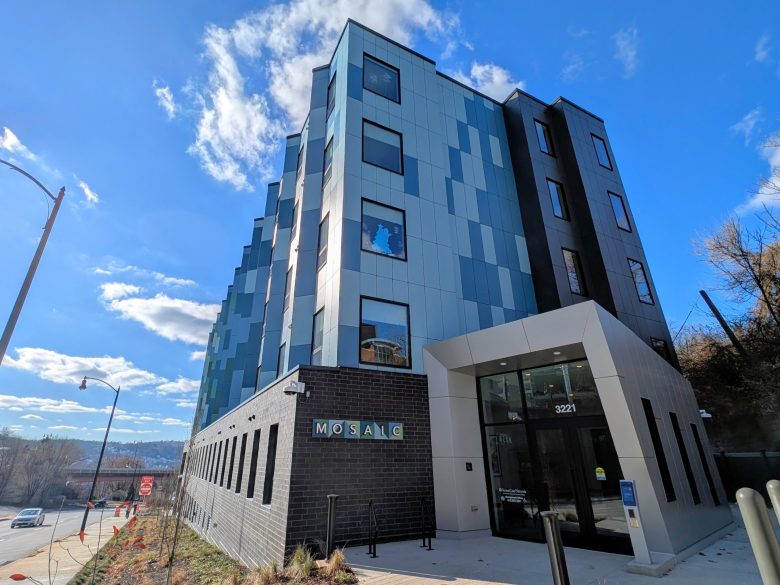 Mosaic Apartments in Oakland is Pittsburgh’s first senior LGBTQ+ housing development. Photo by Roman Hladio.
Mosaic Apartments
3221 Forbes Ave., Oakland
Late last month, Oakland became home to the city’s first affordable apartment building designed for LGBTQ+ residents and allies 62 and older. It’s also the only project on this list that is now open.
The five-story building has 48 apartments — 42 one-bedroom and six two-bedroom. Six of the 48 are also accessible, meaning they are designed to accommodate wheelchairs or other physical disabilities.
In total, the project cost $28.5 million and received $15 million in state and federal low-income housing tax credits.
Presbyterian SeniorCare Network, Affirmative Investments and other project partners hosted a ribbon-cutting ceremony for the new build on Tuesday, Nov. 25. It’s already accepting resident applications.
Chartiers Avenue Apartments
704-708 Chartiers Ave., McKees Rocks
This proposed four-story apartment building was awarded $1.85 million in credits. Once constructed, it will have 35 one-bedroom and nine two-bedroom units with no age restrictions.
Developer ACTION-Housing did not respond to requests for comment as of press time.
Shannon Heights Senior Living
200 Penn Drive, Penn Hills
Shannon Heights Senior Living has been promised $1.7 million in tax credits for its construction. All 48 units of this development are designated low income, meaning below 60% of the Area Median Income. Units will be available only to residents 62 and older, according to Minnesota-based developer Tareen Development Partners.
Andy Haines, the project’s lead developer, says Penn Hills leaders have been helpful as Tareen makes progress on Shannon Heights. He adds that as someone working on similar projects for 30 years, he often sees them fill up with community members who are ready to “move to that next stage in life.”
The property already has zoning approvals, and Tareen is currently working to close on the site, which he expects will occur in September or October 2026. Haines expects the apartments will be online by the end of 2027, and the project will cost about $20 million.
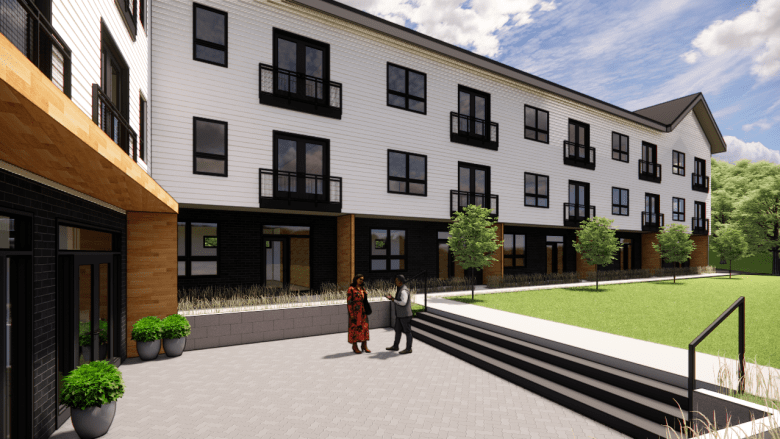 A Rendering of Hill Top Villas. Image courtesy of Tryko Partners.
Hill Top Villas
2039 Broadhead Fording Road, Fairywood
Hill Top Villas was awarded $1.67 million in credits for its construction. The one-story building will have 48 one-bedroom units available to residents 62 and older. Six will be accessible.
Developer Tryko Partners completed a similar development in Fairywood — Cedarwood Homes — in September 2024, per reporting by the New Pittsburgh Courier. Isaac Sassoon, senior vice president at Tryko, says that Cedarwood filled all of its 46 units in record time: within 60 days of opening.
“Because of what we saw with the demand for Cedarwood, it really necessitated another, similar project in the same neighborhood,” he says.
Site plans received land-use approval about a year ago, Sassoon says, and final designs — which are similar to initial drafts — are being finalized now. He expects construction will begin by the end of 2026, and it will open to residents sometime in 2027. Its total cost is projected to be about $23 million.
421 Seventh Avenue Apartments
421 Seventh Ave., Downtown
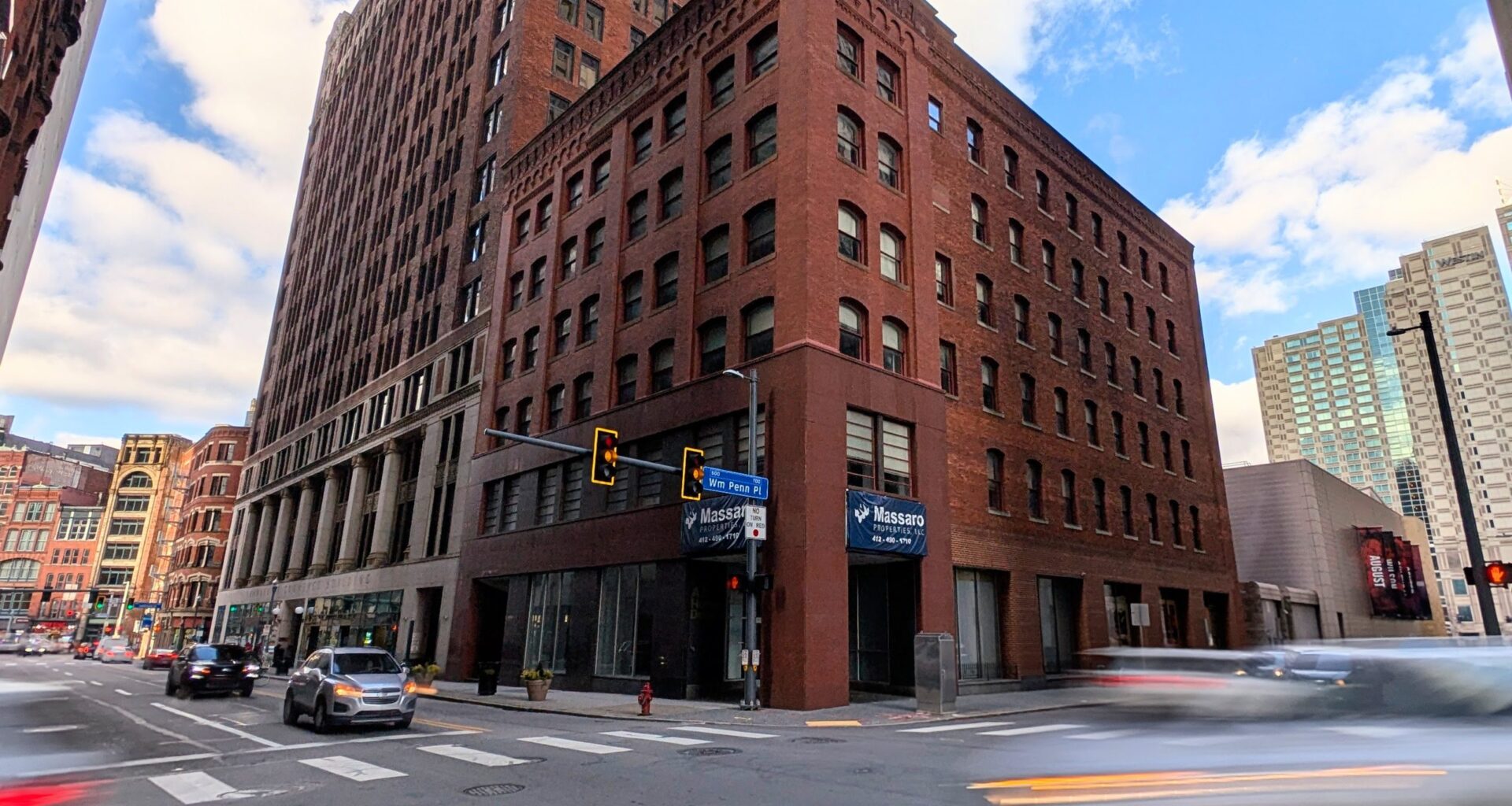
Another former office building Downtown also received credits for its conversion. Cleveland-based CHN Housing Partners’ project at 421 Seventh Ave., was awarded $1.1 million to convert the six-story building into 30 one-bedroom and 10 two-bedroom units for general occupancy.
Jennifer Chandler, CHN’s vice president of real estate development, says equity gained from the tax credit is expected to cover $11 million of its $24 million total cost. The remainder will be covered by a mix of city-, state- and federally awarded grants. CHN hopes to close on the property by September or October 2026, but the conversion has no concrete timeline beyond that.
Carrick Senior Apartments
2531 Brownsville Road, Carrick
This proposed 56,385-square-foot new building would add 52 low-income units to the market for residents 62 and older and is promised $1.65 million in conditional tax credits. The property is also being developed by CHN Housing Partners, but representatives declined to comment, saying plans for it are yet to be finalized.
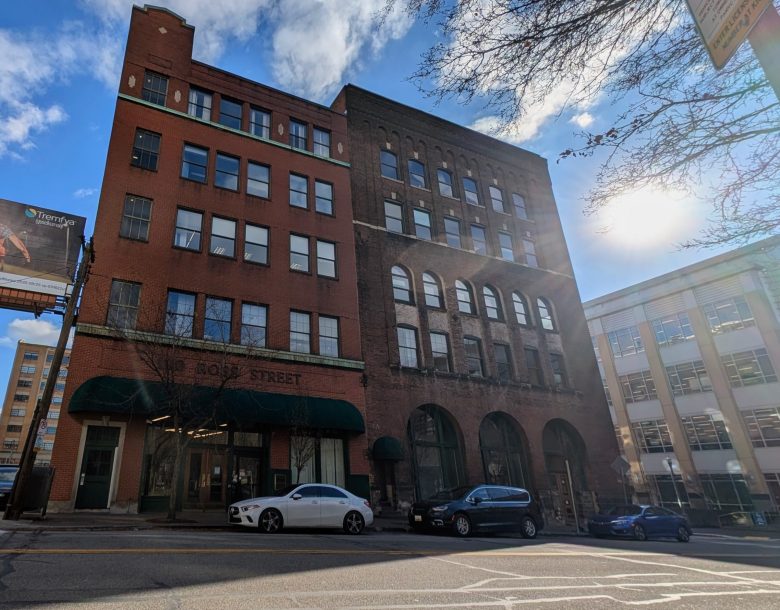 Developer Woda Cooper Cos.’ office-to-residential conversion of the vacant building at 100 Ross St., right, is expected to begin next year and will likely open in late 2027 or early 2028. Photo by Roman Hladio.
Ross Lofts
100 Ross St., Downtown
One of Downtown’s many office-to-residential conversion projects received $1.6 million in credits. Developed by Woda Cooper Cos., the five-story building will have 15 efficiency-bedroom units and 31 one-bedroom units, with a total of nine accessible units.
“We are now resuming the design process after securing our funding,” Woda Cooper’s Jared Miller writes in an email to NEXTpittsburgh. “We plan on submitting for building permits in the early summer and intend to start construction in the second half of the year. Construction completion is likely to be in late 2027 or early 2028.”
Miller estimates it will cost $29.8 million total.
HG Blair
Intersection of Blair and Eliza streets, Hazelwood Green
On the same block as Hazelwood Green’s first residential development is another apartment building that promises 46 units for residents of all ages.
Like its neighbor, TREK Developments is leading the charge on the currently unnamed project. Once complete, it will host 29 one-bedroom, 10 two-bedroom, and seven three-bedroom units, according to a press release from state Sen. Jay Costa, D-43rd District. Of those, six will be accessible and one will be equipped with hearing and vision accessibility accommodations.
Forty-four of the 46 units will be designated low-income. The Pennsylvania Housing Finance Agency earmarked $1.85 million in credits for its construction.
MORE ON AFFORDABLE HOUSING
It’s been 10 years since the Penn Plaza evictions in East Liberty. What has changed?
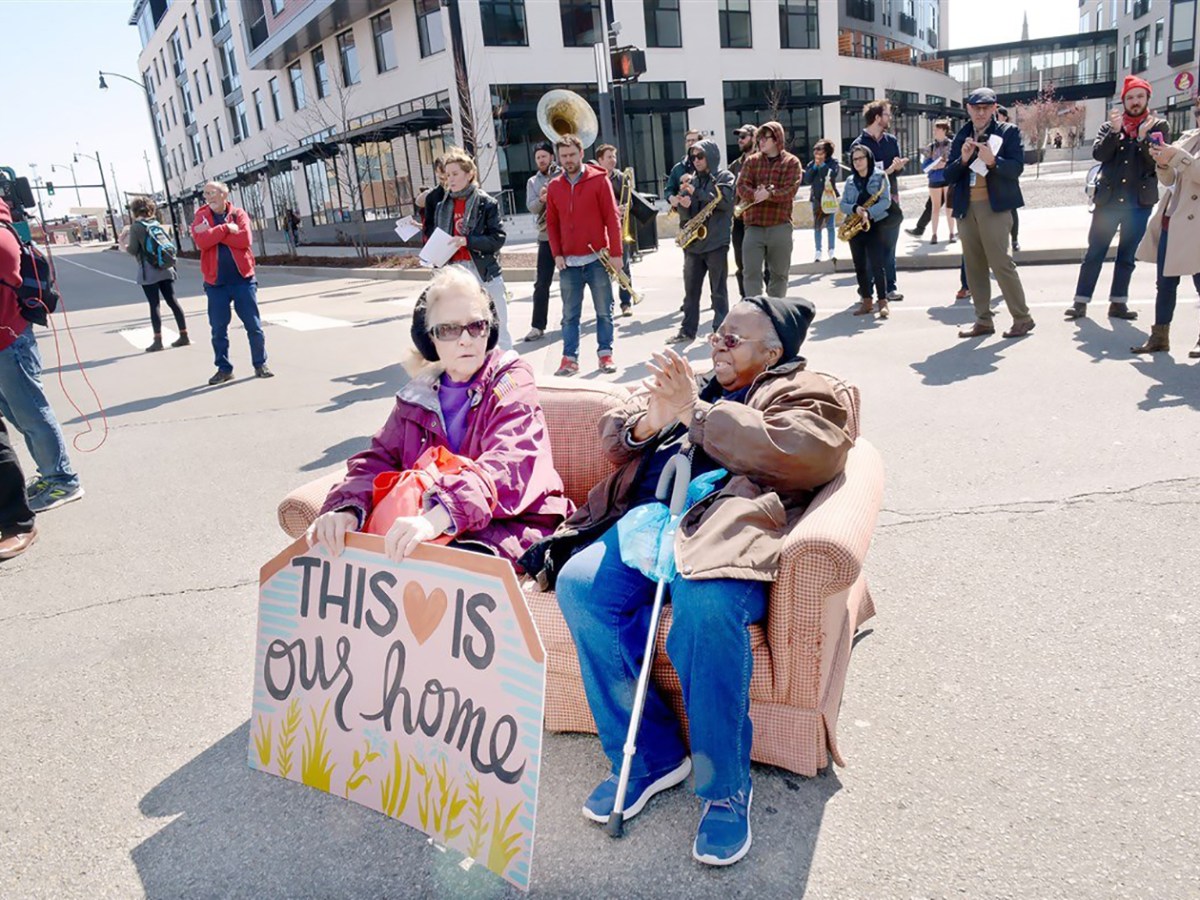
Housing justice activists will this week kick off a series of events to mark the 10th anniversary of the Penn Plaza evictions in East Liberty.
July 24, 2025July 25, 2025
Are home prices in Pittsburgh actually affordable?
The median cost of a home in the U.S. is around $447,435 as of June 2025, per real estate site Redfin. So, when you see that Pittsburgh’s median home price is just about $270,000, it’s easy to slap the “affordable” label on the Steel City.
July 21, 2025July 21, 2025
How to find affordable housing in Pittsburgh and Allegheny County
To get affordable housing in Allegheny County, you’ll first need to figure out what makes any given rental unit affordable.
April 24, 2025April 25, 2025