
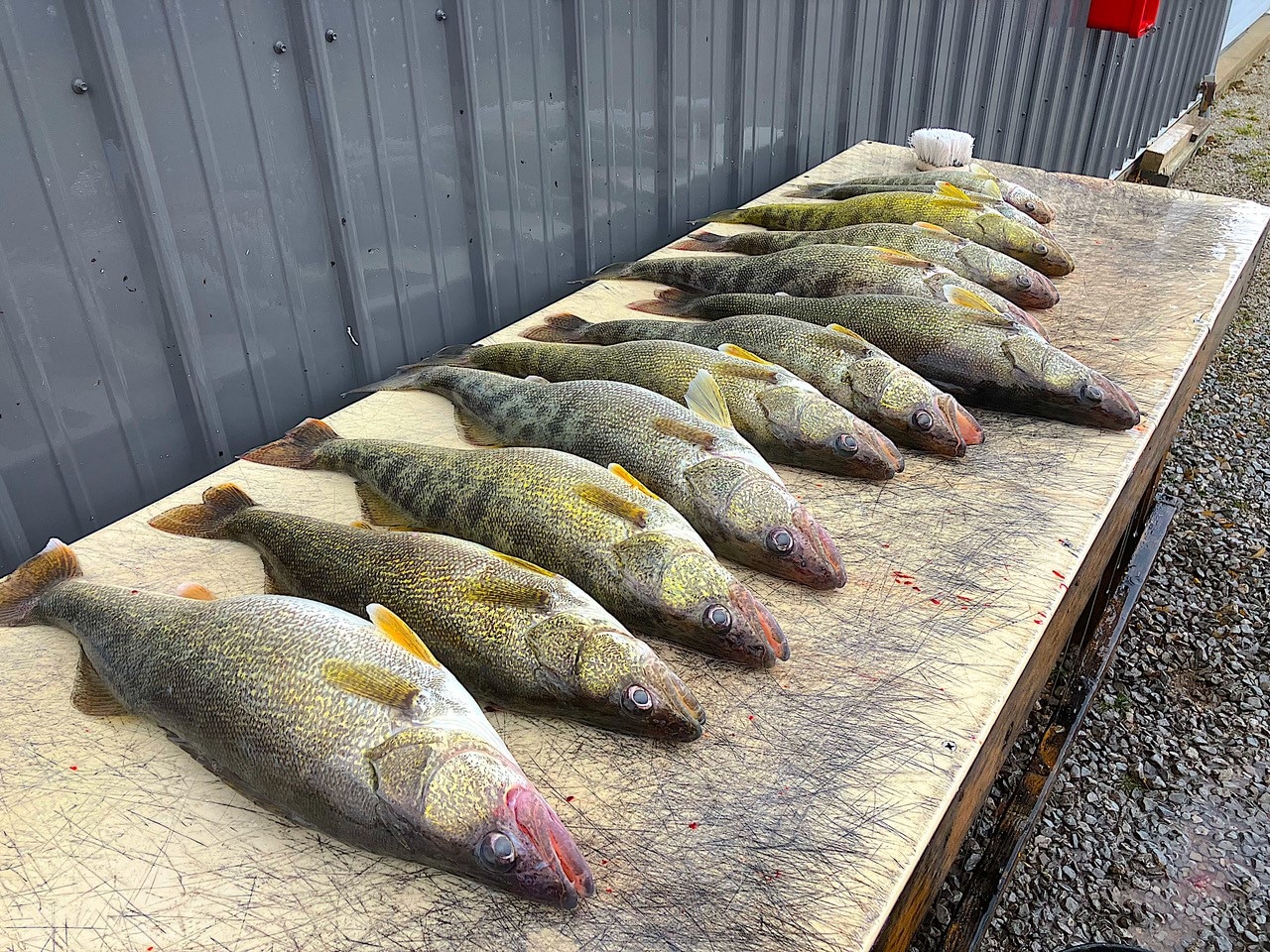
CLEVELAND, Ohio – The walleye hatch on Lake Erie in 2025 was among the largest in recorded history, which bodes well for anglers two years from now when the youngsters become big enough to catch and keep.
In many ways, it’s more of the same. Above-average hatches have occurred in eight of the past 11 years, according to the Ohio Department of Natural Resources.
Still, the numbers are notable.
Trawling surveys in the Western Basin this year counted 128 “young-of-year” per hectare, which is equal to 2.5 acres, making it the sixth-largest hatch in 38 years.
The index for the Central Basin, which includes the waters off Cleveland, estimated 26 little ones per hectare, ranking fourth over the same time period.
“Walleye fishing is expected to remain fantastic for many years,” ODNR reports.
Yellow perch are monitored differently than walleye, but they also had a noteworthy year.
The survey areas for perch are divided into three zones. The index for the west zone, from Toledo to Huron, came in at 733 little ones per hectare, ranking seventh in 38 years.
“This year’s strong hatch, along with contributions from previous years, is expected to support the trend of good yellow perch fishing in 2026 and beyond across the west zone,” ODNR reports.
The central zone, from Huron to Fairport Harbor, and the east zone, from Fairport Harbor to the Pennsylvania line, recorded below-average hatches.
It’s unusual for the yellow perch hatch to be strong across all zones in the same year.
“Hatch success is largely determined by the timing and variability of favorable conditions for both spawning and survival of newly hatched yellow perch in the spring and summer,” according to ODNR.
The annual trawl surveys track spawning success and survival of young walleye and yellow perch. Biologists use the data to predict how many fish will join the “catchable population” two years from now, in 2027. By then, they should surpass the minimum catchable limit of 15 inches.
The inter-agency Lake Erie Committee of the Great Lakes Fishery Commission uses the fish counts to determine safe harvest levels for walleye and yellow perch each year.
Trawl numbers for walleye combine surveys by ODNR’s Division of Wildlife and the Ontario Ministry of Natural Resources and Forestry in U.S. and Canadian waters. The yellow perch survey is only conducted in Ohio waters by state agencies.