
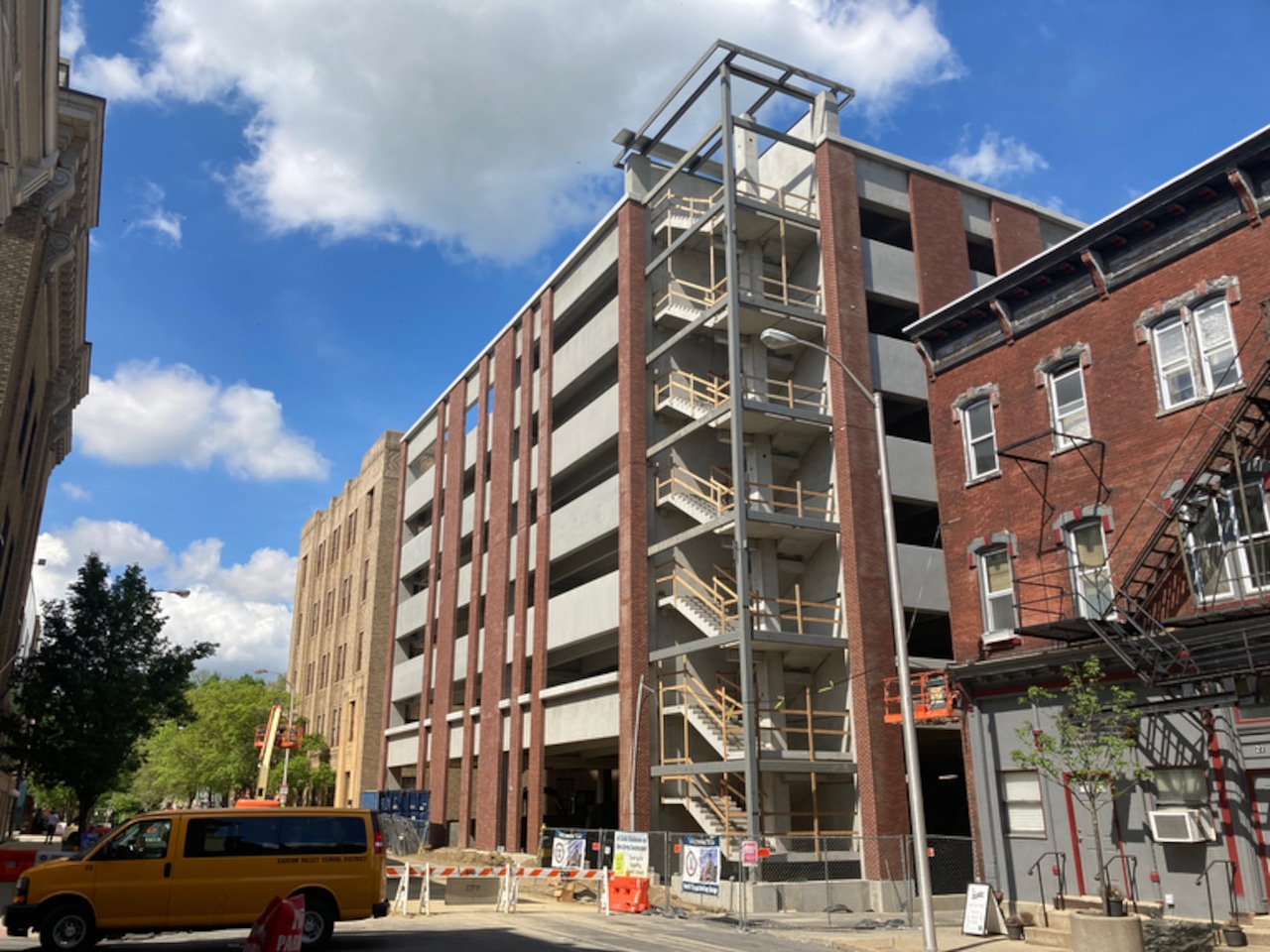
Easton is no stranger to large downtown events, which often fill up the parking garages.
To improve transparency about parking usage, the city has launched new online tools for the public, city council, and planning and zoning officials.
The new features are available through an added section of the city’s website that presents both short-term and longer-term parking data.
City Administrator Luis Campos said at a recent city council meeting that the effort follows extensive discussion about parking. After around two years of brainstorming, an initial version of the system is now live.
“So we’re trying to make parking data more transparent,” Campos said.
To access it, visit the city website here and hover over the “government” tab. Under that tab, find “departments,” then “parking department.” After clicking on that page, find “parking metrics” on the sidebar.
This page displays real-time parking availability for the city’s two garages: North 4th Street and South Third Street. That information updates every 15 minutes, allowing users to repeatedly check how many spaces are open at different times of day.
In addition to real-time availability, the page includes a section that shows a line chart of garage usage over the past 30 days, with an option to view a seven-day period.
Campos noted that certain dates show high spikes in garage usage. He pointed to the Nov. 30 peace candle lighting ceremony and free garage parking during the Easton Winter Village, which caused usage to exceed 100%.
“What this is not going to tell you specifically, is the reasons why we went over 100%,” Campos said.
He also explained that vehicle counters stop tracking individual entries and exits when garage gates are opened during large events. As a result, the system records usage as exceeding capacity until the gates are lowered again, even if the number of cars drops significantly.
Campos said this process requires manual oversight from public works staff, who must keep spaces available for monthly parkers. He added that attempts to keep gates down during busy periods have caused traffic congestion. This requires coordination between public works and the police department to manage traffic flow.
Campos said this is the first version of the system, but it is a start.
“While there’s still some issues with it, this is better data than what we have in an effort to be transparent,” he said.