
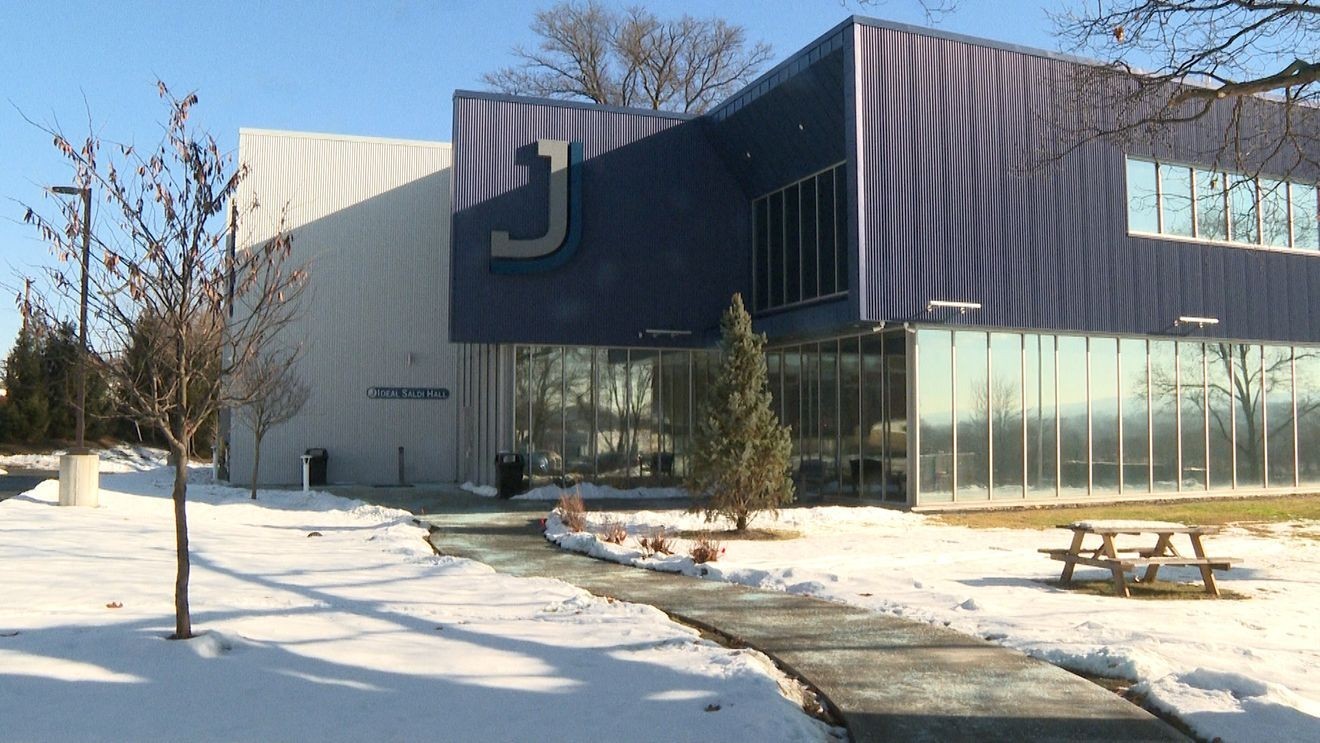
SCRANTON, LACKAWANNA CO. (WOLF) — Johnson College is expanding access to career education for incarcerated individuals, training students remotely from its Scranton campus to prisons across Northeastern Pennsylvania.
The program currently serves Wayne County Prison, Pike County Prison, and the United States Penitentiary at Canaan, offering industry-recognized credentials designed to help participants re-enter the workforce.
Kellyn Williams, Associate Vice President of Special Programs at Johnson College, says the focus is on real jobs and real shortages.
“The ultimate goal is to get the individuals an industry credential that’s recognized by the various fields that Johnson college trains for because there is such a skill shortage. We’re trying to help fill that gap,” said Williams.
Courses already offered include OSHA 10 and Customer Service Basics, credentials recognized nationwide. This winter, the college plans to expand into Basic Electrical and Pre-CDL training, with discussions underway to add more facilities, including Lackawanna County.
The pilot program is fully virtual, with instructors teaching live from Johnson College at night, condensing lessons into evening hours.
“There is a skill shortage in the construction, manufacturing, healthcare now. So, a lot of the programs here at Johnson college, we try to align with those industry standards and get them industry credentials along with the degree programs and get them out into the workforce as soon as possible,” said Williams.
Since May, the program has trained about 50 individuals across the three facilities.
Johnson College has also partnered with Goodwill Industries, which helps identify interested participants and provides career readiness and job placement support after release.
Williams says the impact goes beyond job skills.
“Our educators absolutely love teaching it. It gives them a sense of purpose.it gives the students a sense of purpose and something to look forward to when they leave the prison setting. It also the directors that we work with and the wardens that we work with at the prisons there, they love having the volunteers come in and kind of giving them career paths post-release,” said Williams.
The program was first piloted in 2020 with a $10,000 grant from the Sordoni Family Foundation and is now supported through additional funding from the Mellon Foundation, via Villanova University’s Expanding Access to Higher Education in Pennsylvania State Prisons project. Current funding runs through the end of 2025.
The timing may be critical. According to Pennsylvania labor market data, manufacturing and construction employment levels remain about 1.6 percent below pre-pandemic levels, pointing to long-term workforce gaps the program hopes to help fill.