
Our latest RealClear Opinion Research poll of Pennsylvania comes with a vast array of data about public opinion in the Keystone State relating to artificial intelligence, data centers, and their relationship between technology and the environment. We explore the reasons for skepticism surrounding these emerging technologies as well as reasons for optimism.
But first, what might be my favorite survey result of all time: Across a range of questions, there were similarities in the answers given. Respondents who were skeptical of AI werent, for example, noticeably more likely to disapprove of Josh Shapiro or to approve of Dave McCormick (though they were more likely never to have heard of either of them).
After respondents were at the end of their survey, we asked whether they had seen the movie “The Terminator.” In case you havent seen it, it features cyborgs who are created by rogue AI to wipe out humanity. As it turns out, people who had seen the film were more skeptical of AI. Around 32% of respondents who had seen the movie reported seeing AI as a “significant threat,” while 24% of those who had not seen it reported the same. On the other hand, only 8% of respondents who had seen the movie stated that it was “no threat at all,” versus 16% of those who had not. With the large survey sample (n = 2000), thats a statistically significant result (p < 0.002).
Did James Cameron change the trajectory of public opinion? As much as we would like to answer “yes,” we unfortunately cannot make such a strong causal statement. There were, for example, differences in age regarding those who had seen the movie. We do note, however – because we cant resist the possibility of the causal linkage – that for other questions, such as questions asking about AIs effect on the environment or the economy, there werent differences between those who had seen the movie and those who had not.
With that said, lets look at some of the more serious survey findings.
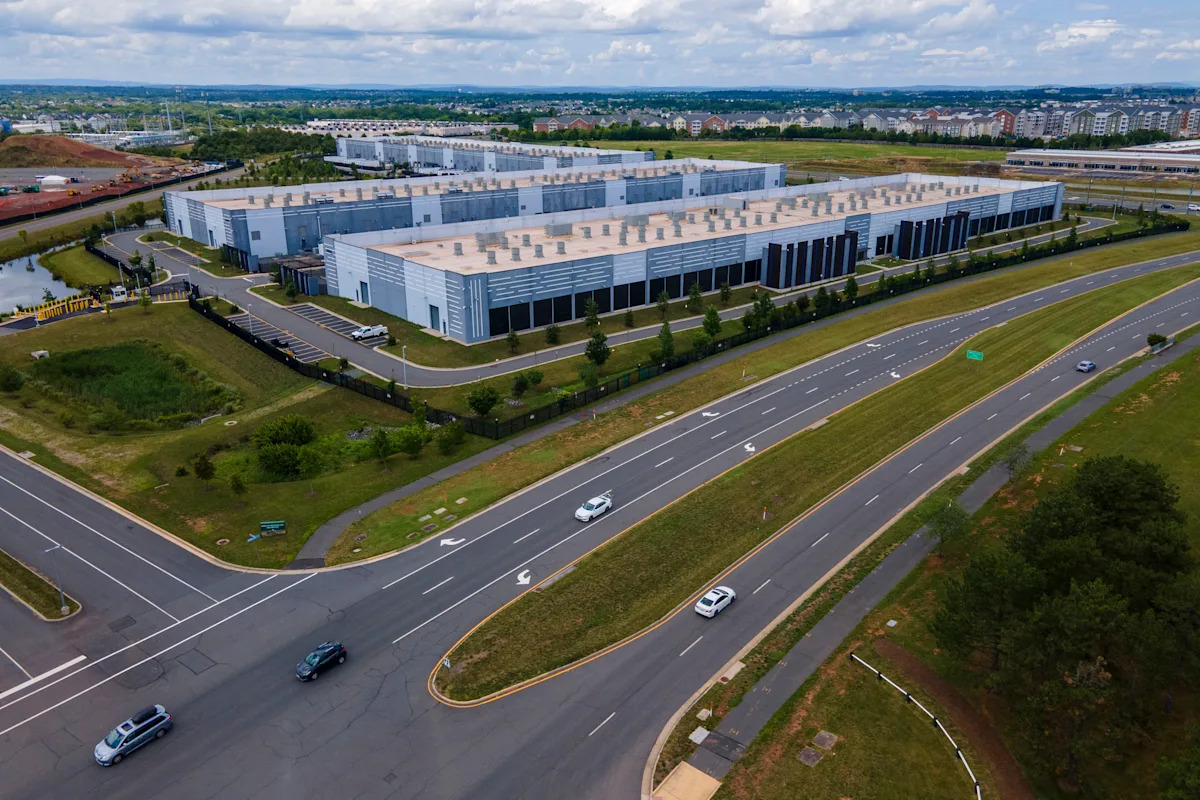
Data Centers
For background, most Pennsylvanians report being satisfied with the current state of energy delivery in the state. Even on energy prices, Pennsylvanians report things as surprisingly stable. Thats not to say that all is well – 60% of Pennsylvanians report that their electric bills are increasing – but given perceptions about the economy, we might have expected less than 40% of the population reporting that their bill had stayed the same or declined.
Pennsylvanians were, broadly speaking, familiar with data centers. Fifty-six percent reported some level of familiarity while 44% reported little familiarity; 38% of those responding supported building more data centers in their area, compared with 35% who were opposed.
When asked whether they supported or opposed more data centers being built in Pennsylvania, respondents were modestly negative, with 38% for and 48% against. When asked whether they wanted data centers built in their communities, their inner NIMBY came out: Respondents were even more negative, 33% to 55%. By overwhelming margins, Pennsylvanians expressed concern with the amount of water and electricity consumed by data centers.
On balance, however, Pennsylvanians were optimistic that data centers would contribute to the commonwealths economy. Likewise, broad majorities thought the centers would bring jobs to the region (45% positive, 19% negative), even if there were concerns about the impact on the environment (18% positive, 44% negative) and the cost of living (38% positive, 24% negative). There was also overwhelming support for requiring data centers to provide their own electricity source (70% for, 5.5% against); that support weakened if doing so would increase fossil fuel demand, but was still on balance positive.
At the same time, this doesnt seem to be a very high salience issue. Thirty percent said they would be more likely to support a candidate who opposed building more data centers, while 24% said less likely; 46% said “no difference.” Democrats and college-educated voters seemed the most skeptical of data centers.
That is unlike other new economy features …
Artificial Intelligence
Respondents were, broadly speaking, pessimistic about AI. Twenty-five percent expect it to have a positive effect on the economy, while 48% expect it to be negative. By a similar margin, 21%-46%, respondents thought it would be bad for the environment. Only 16% of respondents thought AI would increase the number of jobs available in their industry, while 55% thought it would decrease the availability of those jobs. At the same time, relatively few knew someone who had directly lost their job because of AI – about 22%.
Interestingly, the most negative age group when it came to AI was middle-aged respondents. Only 17% of them believed that it would help the economy, compared to 32% of 18-29 year olds and 24% of 60-somethings. This could reflect the unique threat that these workers face: They are the ones who, if laid off, would be unable to find employment elsewhere, yet are not currently eligible for Medicare and other retirement benefits. But even on the question of whether AI would be bad for the environment, they were the most negative.
Asian respondents were also particularly bullish on AI; 60% thought it would be good for the economy, versus a range from 17% to 32% for other racial groups. Forty-three percent thought it would be good for the environment; the range for others was 17% to 35%. Union members were broadly pessimistic.
Overall, Pennsylvanians are conflicted about the emerging information economy and its relationship to the Keystone State. They are concerned about the effect on the environment and would like to see steps taken to minimize the impact on the economy. At the same time, there seems to be an understanding that this is the economy of the future, and there is guarded optimism, at least with data centers, that this could help provide jobs.
And for a few, the threat of a cyborg from the future wiping them out seems very real.
Sean Trende is senior elections analyst for RealClearPolitics. He is a co-author of the 2014 Almanac of American Politics and author of The Lost Majority. He can be reached at strende@realclearpolitics.com. Follow him on Twitter @SeanTrende.