
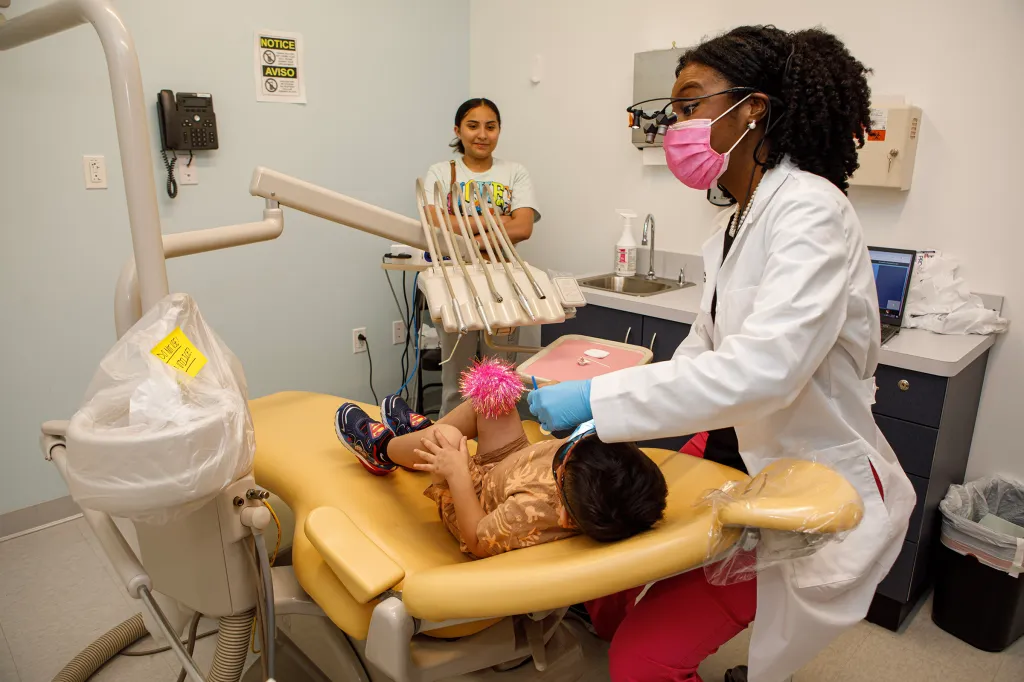
For all the public debate over how to fix American health care, some of the most effective solutions already exist in our own neighborhoods. Federally Qualified Health Centers, better known as FQHCs, deliver high-quality, affordable care to more than 30 million people nationwide each year. Their mission is simple but powerful: provide comprehensive, community- based primary care to anyone who needs it, regardless of insurance status or ability to pay.
In the Lehigh Valley, we are fortunate to have three such organizations serving this mission every day: Valley Health Partners Community Health Center, Neighborhood Health Centers of the Lehigh Valley and Star Community Health. Each operates independently, with its own history and patient community, yet all three share a commitment to improving health outcomes, reducing disparities, and delivering value in a health system that often feels costly and fragmented.
The national FQHC model has proven its worth. Health centers must offer a full range of primary and preventive services, including behavioral health, dental care, chronic disease management, and enabling supports such as interpretation and transportation. They are governed by boards in which at least half of members are actual patients, ensuring that care reflects community needs, not corporate strategy. Research consistently shows that FQHCs reduce avoidable emergency room visits, improve chronic disease control, and lower overall health care spending.
To see the true value of the model, look at how it functions here in the Lehigh Valley.
Valley Health Partners, operating as an FQHC look-alike, delivers care in some of Allentown’s most underserved neighborhoods (and more recently in Easton and the Poconos). Its mission emphasizes compassion, accessibility, cultural sensitivity, and affordability, values that play out in clinical practice every day.
VHP runs a network of family health centers, pediatric services, behavioral health programs, vision and dental clinics, and the Mark J. Young Community Health and Wellness Center. Its school-based sites in Allentown provide children with access to preventive care without disrupting their school day, reducing chronic absenteeism and improving long-term health.
Because VHP is closely integrated with Lehigh Valley Health Network, its clinicians help ensure that patients leaving the hospital have a primary care home. This continuity, often missing for uninsured or low-income patients, helps prevent complications, readmissions and unnecessary emergency care. It is one of the clearest examples of how an FQHC supports the broader health care system while also strengthening individual and family health, all the while proving that quality care is less expensive.
Neighborhood Health Centers of the Lehigh Valley operates clinics in Allentown, Bethlehem and Easton. NHCLV provides integrated primary care, dental care, behavioral health services, case management, and health education, forming a true “medical home” for patients who may face obstacles such as housing instability, food insecurity or limited English proficiency.
NHCLV is known for its team-based approach, physicians, nurse practitioners, behavioral health clinicians, dentists, pharmacists and community health workers collaborating around each patient’s needs. This coordination is exactly what value-based care should look like: fewer silos, more understanding of the full context of a patient’s life, and better long-term outcomes.
Its partnerships with schools, shelters and local nonprofits expand the reach of traditional medical care and help address the social determinants that shape health as much as clinical treatment.
Star Community Health, affiliated with St. Luke’s University Health Network, adds yet another dimension to the region’s health safety net. Star operates family medicine clinics, dental programs, OB/GYN services, pediatric practices, behavioral health services, and multiple school-based centers in Allentown and Bethlehem.
One of Star’s signature strengths is mobility. Its mobile dental units, health vans, and outreach programs bring preventive services directly into neighborhoods, schools, and community centers. These programs reach thousands of children who might otherwise go without routine dental or medical care, needs that, if ignored, often escalate into costly and painful emergencies.
Individually, each of the Lehigh Valley’s three FQHCs plays a vital role. Together, they form a network of access points that spans the region, improves quality and makes care more affordable for everyone.Collectively, VHP, NHCLV, and Star:
•Serve tens of thousands of residents regardless of insurance status.
•Reduce avoidable emergency room use through strong primary care.
•Improve maternal and pediatric health outcomes.
•Address language barriers, transportation challenges, and social needs.
•Provide culturally responsive care that builds trust.
•Strengthen coordination with area hospitals and health systems.
This is the very definition of high-value health care: systems that produce better outcomes at lower cost, especially for populations most likely to be left behind.
As health care costs continue to rise and workforce shortages deepen, the region’s three FQHCs will only grow more essential. Policymakers, employers, health systems and residents should recognize them as strategic assets, not just safety-net providers.
In an era when our health care system often feels impersonal and inaccessible, the Lehigh Valley’s FQHCs deliver something priceless: care rooted in community, dignity, and equity. Valley Health Partners, Neighborhood Health Centers of the Lehigh Valley, and Star Community Health are not just part of the region’s health care landscape, they are central to its future.
This is a contributed opinion column. Tom Whalen is a retired physician. He serves as vice chair of the Board of Valley Health Partners. The views expressed in this piece are those of its individual author, and should not be interpreted as reflecting the views of this publication. Do you have a perspective to share? Learn more about how we handle guest opinion submissions at themorningcall.com/opinions.