
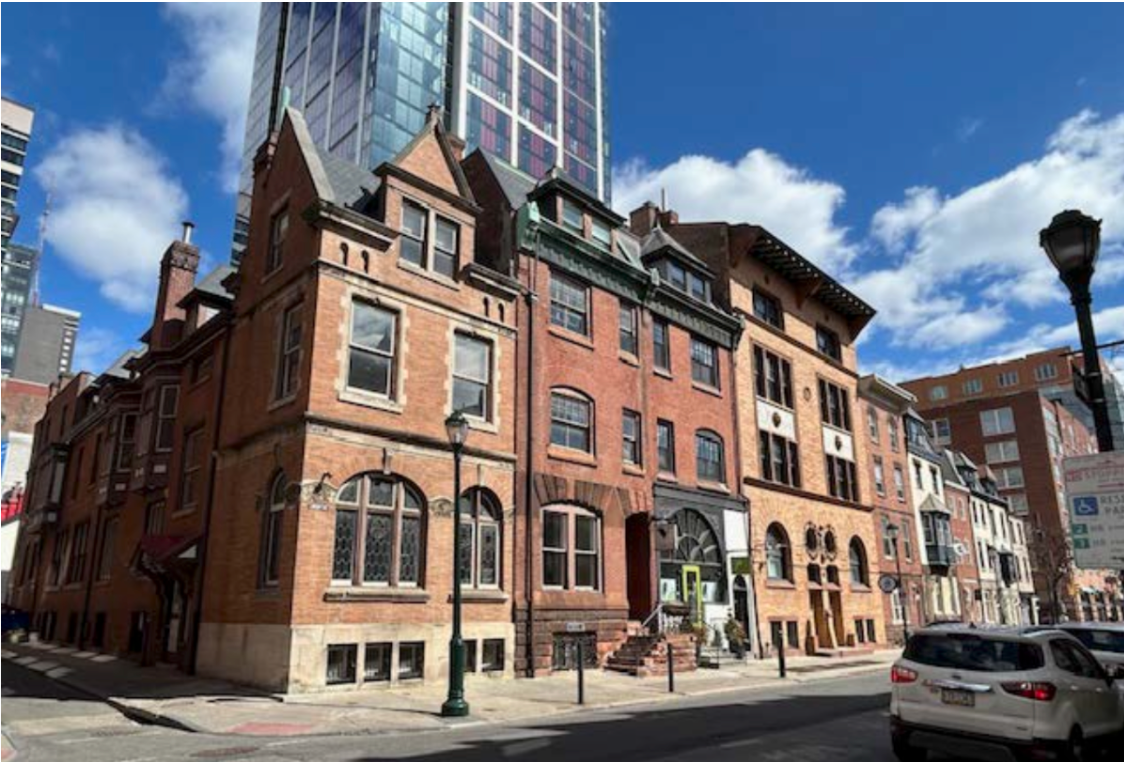
It’s back to the drawing board for a plan to revamp Philadelphia’s Historic Preservation law.
Councilmember Mark Squilla said he’s working with the Planning and Historical commissions to revise a bill he introduced that would make several significant changes to the law. The effort follows an outcry from preservation groups who said the legislation would undermine efforts to protect architecturally and culturally significant buildings from demolition.
“There’s a certain understanding that language in the bill would have a rush-to-demo type scenario. Some folks believe that is the case. Other folks believe it’s not the case,” Squilla said in an interview last week.
“But I believe that by working together with the Preservation Alliance, the Historical Commission, and our Planning Commission and our Law Department, we’ll get to a language that makes everybody feel comfortable to move forward,” he said.
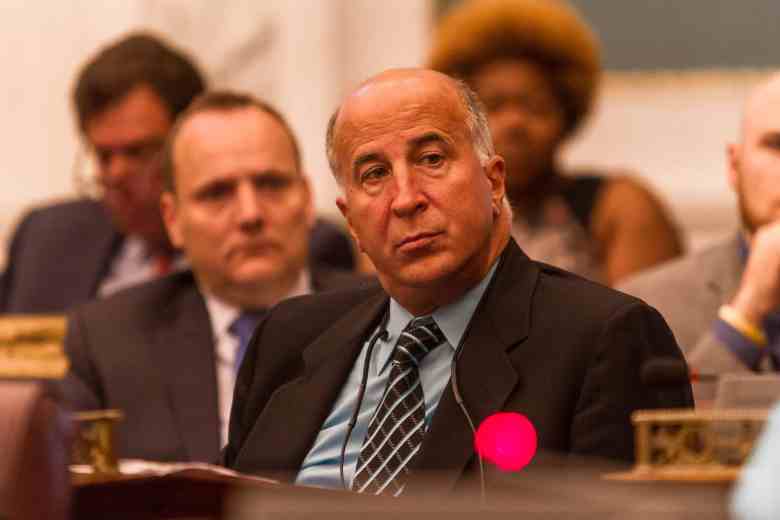 Councilmember Mark Squilla. (Philadelphia City Council)
Squilla said the commissions are also drafting language to create a tiered system of protections for preserved buildings and for homes in historic districts. That had been considered for the initial proposal but was not included.
A tiered system might exempt homeowners who are replacing roofs from having to satisfy Historical Commission requirements for more expensive, historically accurate slate roofs, for example, as long as the underlying structure isn’t altered.
“We get so much pushback every time we designate either a private property or designate a district. Residents feel like they don’t have a voice in it,” the councilmember said. “So maybe if we have two different tiers of designation that have certain criterias, it may make it easier, and we won’t have so much anxiety during the process.”
A demolition “loophole”
Squilla said he had heard complaints from the development community and property owners about the 41-year-old Historic Preservation law and passed those on to the two commissions, whose staffs drafted the bill language he introduced last month.
Perhaps the most controversial section is a new requirement that the Historical Commission wait 30 days before considering a new nomination to designate a building or a district as historic.
Currently, the commission gets a nomination from a resident, community group, commission staff or another party, and at a subsequent public meeting starts considering whether to approve it. While the commission is considering the nomination, the city is barred from issuing a permit for demolition or alteration of the building.
Squilla’s bill would introduce a new step, requiring the Historical Commission to issue a “notice of intent” to consider a designation, and to give the property owner 30 days’ notice of the coming meeting. During that time the building would not be protected.
“This means that simply filing a nomination, something meant to safeguard a building, could instead serve as a warning signal to an owner to rush through demolition before the Historical Commission can act. In practice, this could allow demolition or irreversible alterations before any meaningful evaluation of historic significance occurs,” wrote Paul Steinke, executive director of the nonprofit Preservation Alliance of Greater Philadelphia, in a letter to the Planning Commission.
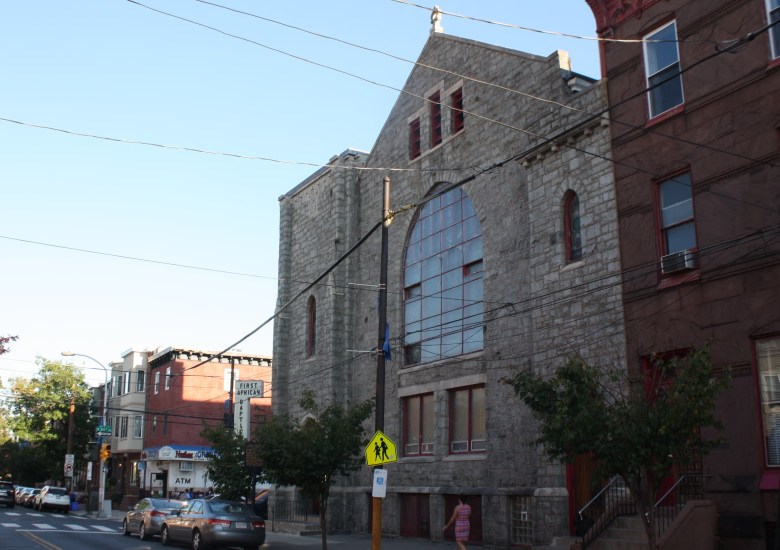 First African Baptist Church on Christian Street in South Philadelphia. (Jarey Brey/WHYY)
Oscar Beisert, a preservation advocate who has nominated many buildings for protection, said some of them — like the 115-year-old First African Baptist Church at 16th and Christian streets — would likely not have survived under the proposed rules.
“If these rules were to pass and this 30-day loophole were to be created for demolition, First African likely would have been demolished. And that’s the case with many other buildings that have been nominated,” he said during a Planning Commission earlier this month.
“There are also many buildings that are nominated, and then they aren’t designated, and they are demolished, because the Historical Commission uses their judgment to decide which buildings are most worthy to be designated. By taking this power away, the ordinance would be weakened, and the city would lack the authority to stop a demolition, as it currently does,” he said.
The Planning Commission voted Dec. 4 to put a 45-day hold on the legislation. Squilla said City Council will consider the revised bill at a meeting in February.
Allowances for zoning permits
Steinke and other preservation advocates criticized several other parts of Squilla’s bill.
• One provision would allow the Historical Commission to decline to issue notice and start the designation process if there’s already an active zoning permit on the property, or a zoning permit application is being reviewed by the Department of Licenses & Inspections.
“The bill allows pending zoning applications, often not public knowledge, to block designation altogether. This shifts the balance toward private development interests and away from transparent public review,” Steinke said.
• Another section appears to make it easier for property owners and developers to modify or demolish a building, even after the designation review has started. It would require the commission to approve construction permits if it finds that “a significant material commitment to development plans” was already in place, such as contracts, zoning permits, or “substantial design development.”
• Currently the commission may designate buildings as historic if they are the work of significant architects or certain other professionals, or if the commissioners believe the properties may later provide archeological information — which can allow for the designation of vacant lots.
The bill would add artists and artisans to the list of applicable professionals, but remove landscape architects and designers. It also tweaks the section relating to archeology, adding language that says the property must be “highly likely” to yield information that is “significant” in pre-history or history. Those changes would “[weaken] the city’s ability to recognize and protect landscapes that are central to community character,” Steinke said.
• The bill would change the way the Historical Commission decides whether to allow alterations to structures that are already historically designated. It would remove language directing the commission to consider the effect of the proposed work on “neighboring structures, the surroundings, and the streetscape,” which Steinke said would eliminate “an essential preservation standard and [weaken] design review.”
Pushback after a wave of designations
The pushback Squilla mentioned follows a boom in historic preservation in Philadelphia. Since the Kenney administration revitalized the Historical Commission in 2016, many individual buildings and 44 historic districts — some of which cover more than 1,000 homes — have been granted protection, according to a listing on the commission’s website.
The percentage of all city properties under historic designation has doubled from 2.2% to 4.4%, moving Philly from well below to slightly above the average rate of designation among large cities, according to a recent report commissioned by the Preservation Alliance.
However, opposition to the process has also mounted, particularly in the past year.
Some homeowners in historic districts or proposed districts say the historically accurate materials they would be required to use when replacing windows, doors, roofs, bricks and other exterior elements are much more costly than the alternatives. That makes the work unaffordable for some residents, discourages building improvements, and threatens to drive out lower-income residents and cause gentrification, they argue.
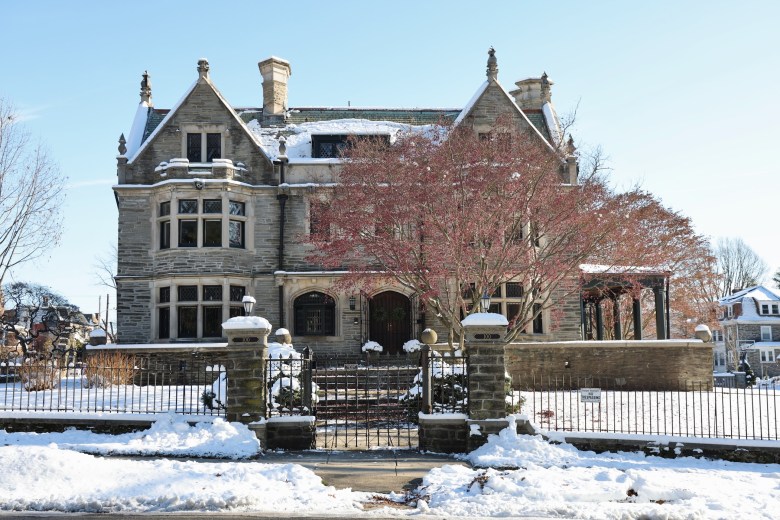 The stately Robert M. Hogue House, built in 1896 at 100 Pelham Road in West Mt. Airy. Some residents have raised objections to creation of a proposed Pelham historic district. (Emma Lee/WHYY)
Some property owners and developers also say the barriers to demolishing or substantially altering protected buildings infringes on their property rights, protects unremarkable buildings from being replaced, stymies the construction of badly needed new housing and impedes economic growth.
Attorney Michael Phillips, of Klehr Harrison, said the designation of a block of Chestnut Street in 2021, for example, had made it difficult to redevelop those buildings. He represents property owners who are appealing two recent district designations in court.
“When we talk about how are we going to continue to develop and grow as a city, it becomes extremely difficult to do that,” Phillips told Billy Penn in August, “and developers will just shy away from looking at that block, knowing all of the obstacles that they could face.”
A total of three recent designations are currently being appealed, including the designation of the large Washington Square West historic district.
Claims of NIMBY abuse
Squilla said the bill was written and introduced partly in response to claims from property owners that the nomination process was being abused by people who simply want to block legitimate redevelopment work that is already under way.
“What we heard from some property owners is that as soon as they go to pull permits to do something, some people rush to nominate it. It’s sort of being used, not so much as a way to preserve historic properties, but sometimes to stop a project from moving forward,” Squilla said.
“We want to make sure that if there are properties in that type of situation, that they are notified in time. As a property owner you do have property rights. You then could go to the commission and say, ‘Hey, listen, before you consider this, here’s what we’re already looking to do, and this may have been nominated because we are moving forward with this,’ ” he said.
He said the lack of advance notification of property owners contributed to the owners in the three districts deciding to sue. The city’s old Historic Preservation Task Force, which he was a member of several years ago, recommended providing notification to property owners, he said.
Squilla said a possible way to address the preservationists’ objections to the amendments is to add in a “demo delay.” It’s unclear how that would differ from what already exists in the law.
He said the task force also recommended tiered levels of preservation, and creation of a trust fund to assist homeowners who have a hard time affording historically accurate exterior repairs. The two commissions are considering including those concepts in the revised bill, he said.