

YARDLEY, Pa. – The Delaware River Joint Toll Bridge Commission is advising drivers about toll bridge rate increases set to go into effect in the new year.
A new toll rate structure for 2026 will take effect on the first second of the new year on January 1, 2026, the commission said in a news release Wednesday.
The rate changes affect all vehicle categories and will be applied to all eight of the Commission’s toll bridges:
Trenton-Morrisville (Route 1)
Scudder Falls (I-295)
New Hope-Lambertville (Route 202)
I-78
Easton-Phillipsburg (Route 22)
Portland-Columbia (Routes 611, 46, and 94)
Delaware Water Gap (I-80)
and Milford-Montague (Route 206).
The new toll schedule was approved by the agency’s board of commissioners in November.

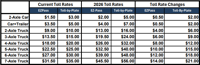
The commission said the increased rates will enable the bi-state agency (New Jersey and Pennsylvania) to finance transportation-infrastructure projects and improvements, offset rising construction-industry costs, and maintain favorable borrowing rates in the municipal bond market.

Commission’s jurisdiction
The commission operates eight toll bridges and 12 non-revenue-generating “toll-supported” bridges that connect Pennsylvania and New Jersey along the fresh-water portion of the Delaware River. The agency has 79 lane miles of roadway surface, 39 short-distance approach bridges (overpasses or viaducts) and various other maintenance and operational facilities. Its service jurisdiction extends from the Philadelphia-Bucks County, PA. boundary north to the New Jersey/New York state line.
Cashless toll collection system
All commission tolling points handle only cashless all-electronic toll transactions involving E-ZPass and TOLL BY PLATE (license plate billing). Tolls are collected only in the Pennsylvania-bound direction. The Commission charges higher rates to TOLL BY PLATE customers because that payment method involves increased costs for identifying vehicle owners and mailing toll bills. E-ZPass is the commission’s most frequently used toll payment method.
Financial structure
The commission says it is funded strictly by the tolls it collects at its eight toll bridges. The agency says it does not receive state or federal subsidies to run its transportation system and services.