
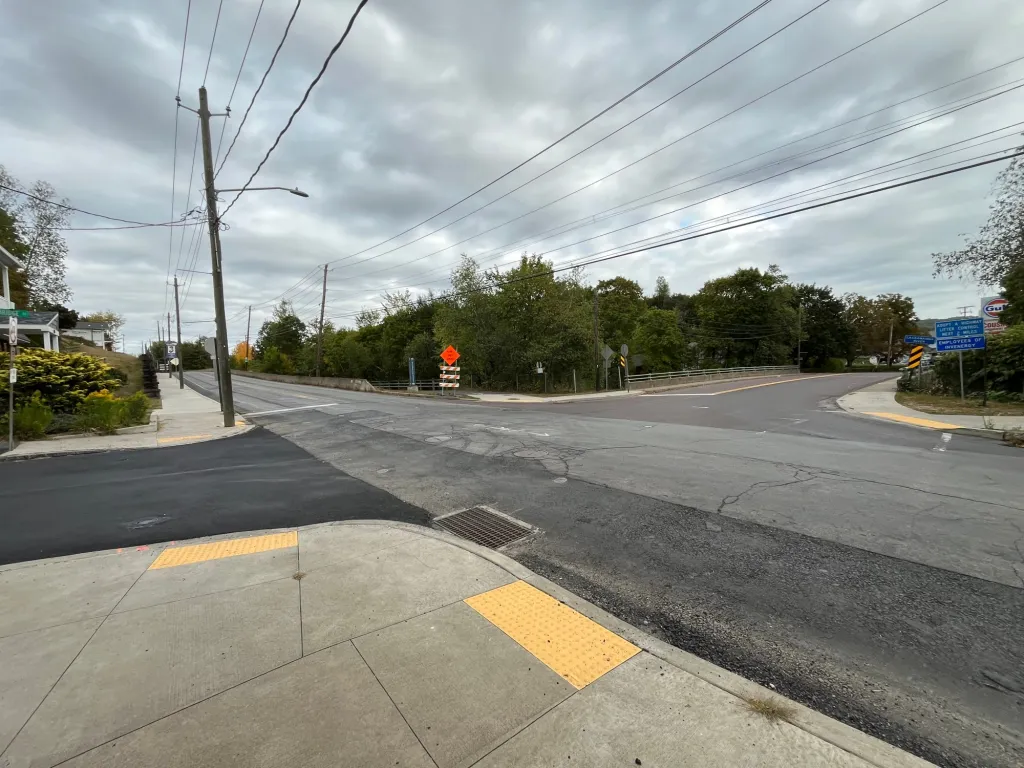
The widow of a cyclist sued the woman accused of fatally striking her husband with a vehicle, claiming the woman drove carelessly and left the scene rather than help the dying man.
Patricia J. Bacchiocchi claims Diane Fontana, 74, struck Raymond Bacchiocchi, 79, with her vehicle and fled, according to the lawsuit filed in Lackawanna County Court on Dec. 10.
According to the lawsuit, Fontana was driving west on Main Street in Blakely at about 10 a.m. on Sept. 20 when she struck Bacchiocchi as he crossed Bridge Street on his bicycle.
Fontana did not stop to render aid despite knowing she struck Bacchiocchi; rather, she fled the scene as he lay suffering on the road, the lawsuit claims.
Fontana returned to the scene, observed Bacchiocchi lying facedown in the road and left for a second time, again failing to call for help, according to the lawsuit.
Police found the man lying in the road with a bleeding head wound.
Emergency medical technicians attempted to resuscitate Bacchiocchi. He was transported to Geisinger Community Medical Center and died that night, police said.
At about 1:30 p.m., Fontana went to the police station in a blue Cadillac, which matched the description of the vehicle that struck Bacchiocchi.
She told police Bacchiocchi hit her while riding his bicycle and fell to the ground. Officers noted in the criminal complaint she didn’t show remorse.
Police charged Fontana, of Archbald, with accidents involving death or personal injury, failure to stop and render aid, failure to notify police of an accident involving injury or death, and failure to yield to a pedestrian. District Judge Laura Turlip ruled at a preliminary hearing in November that there was enough evidence to transfer Fontana’s charges to Lackawanna County Court. No trial date has been scheduled.
The suit alleges Fontana’s negligent, careless and reckless driving caused Bacchiocchi extreme physical agony, pain, suffering, distress, anguish, trauma and ultimate death.
The lawsuit seeks an unspecified amount in damages for Bacchiocchi’s physical pain and suffering prior to his death, loss of earning capacity and deprivation of “activities, pursuits and pleasures” he would have enjoyed had he lived out the duration of his normal life expectancy.