
What do you do for a living? How much do you make? Those are some of the first things people want to know about new acquaintances — but only the first of which they are likely to ask.
For folks working in the Allentown-Bethlehem-Easton area, there are more than 400,000 answers to those questions, including 170 short order cooks ($22,330), 260 butchers ($38,580), 100 septic tank servicers ($57,080), 320 professional firefighters ($80,300), 1,010 industrial engineers ($101,770) and 340 radiologists (more than $239,200). Those are median salaries, meaning that half the people make more, while the other half make less.
The Morning Call took a look at annual detailed occupation and wage data from the Bureau of Labor Statistics published in 2025 and compared it with similar data published 10 years prior to see how the area’s workforce is changing. The numbers cover the ABE Metropolitan Statistical Area, which is made up of Carbon, Lehigh and Northampton counties in Pennsylvania and Warren County, New Jersey.
The four counties have a combined population of 886,418 people, according to 2024 estimates from the American Community Survey. Of that total, 733,447 residents are age 16 and over, generally the statistician’s definition of the working-age population. Although less than 10% of people age 75 and over are still employed, that number has about doubled in the last 30 years. By 2030, the BLS estimates that 1 out of 8 people 75 and over will still be working at least part time.
The graph below shows how the area workforce has grown in number over the last 10 years.
The number of people working in nonfarm and nonmilitary jobs in the four local counties has risen 12% over the last decade, while the working-age population has risen 8.7% during the same period. About 55% of the local 16 and older population is employed. That is distinct from the workforce participation rate, which includes people who are looking for work but not employed, and those who work in military-specific occupations or in the farming industry, both of which are excluded from the BLS report.
The workforce is divided into 22 nonmilitary groups and excludes self-employed people, so the totals below do not exactly match those above. Occupation categories that are shrinking are highlighted.
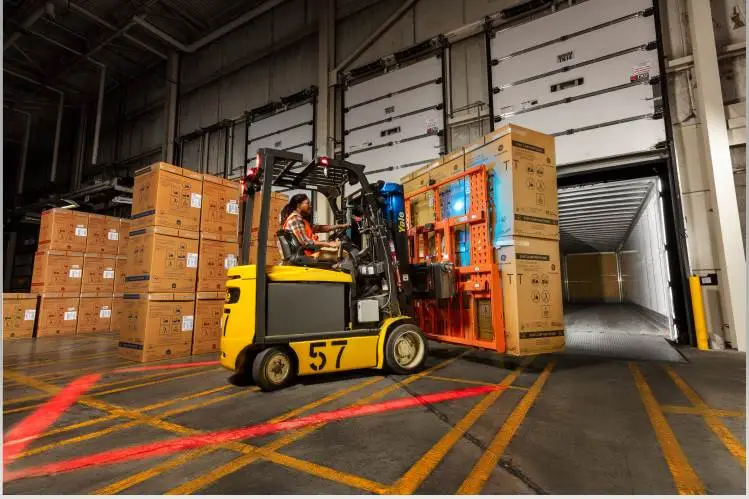
Unsurprisingly, the top job category in the region is transportation and material moving, which employs more than 50,000 people in the four counties — or 13.6% of the workforce — and has grown by 42%. Ten years ago the category with the largest group of workers was office and administrative support, employing almost 57,000 people.
The number of people working in personal care and service occupations declined the fastest, dropping 35.3% to 8,810 positions this year. The category includes such diverse jobs as animal caretakers, locker room and coat room attendants, morticians, hairdressers, manicurists, personal trainers and movie projectionists.
The growth rates in the number of management positions and health care support jobs were even higher, but those sectors are a smaller portion of the workforce, coming in at 6.3% and 5.7% of the total, respectively.
The following graph shows the changes in the number of jobs in each category.
In both percentage and absolute numbers, transportation tops the charts, adding more than 17,000 positions since 2015, more than the entire population of North Whitehall Township. The two major health care categories added more than 13,000 positions, and together account for 52,000 regional positions, topping even transportation.
Wages
Here is average hourly wage data for the 22 major job categories. It is compared with the national data for both share of total workforce and wages. The categories where local wages top national ones are highlighted.
While material handlers are more prevalent locally, they are paid 76 cents less per hour than the national average. Local construction and extraction workers earn the most relative to the U.S. average, making $31.29 per hour (or $65,083 per year, based on 2,080 hours worked each year), and top the U.S. average by 56 cents per hour, or $1,164 annually.
The largest negative disparity comes in the legal professions, where Lehigh Valley area employees earn almost $17 per hour ($35,340 per year) less than their national counterparts, bringing home $102,336 annually compared with the $137,675 national average.
Averages tend to skew higher than median wages. The median wage for a group of earners is the point where half the people make more, and the other half make less. One or two super high earners can drive up the average while not affecting the median. There is no limit to how much more than the median a person can earn, but they can’t earn less than zero, so there is a limit to how much less than the median one can earn. The bureau does not list averages or medians higher than $239,200 ($115 per hour), so we don’t know how many million-dollar salaries are in the region.
To illustrate the difference between average (also called mean) and median, if five people earn $12, $17, $19, $30 and $90 per hour, the median wage is $19, since two people make more, and two make less. But the average wage is $33.60 because of the one outlier. Comparing averages to medians is one shorthand way to determine if there is income inequality in a group.
Detail orientated
While the BLS breaks jobs into 23 major categories, the bureau tracks more than 500 specific job descriptions. The occupation definitions were changed since 2015, so a direct comparison cannot be made in all categories. Some positions were combined. Others were split and a small number were eliminated. For instance, there are no longer separate descriptions for mine shuttle car operators, transportation equipment painters or locomotive firers.
This table shows to top detailed occupational descriptions among the 364 job titles that did not change between the 2015 and 2025 reports. Once again, transportation and health care were at the top as far as number of positions. Retail salespeople, while a shrinking field, is still the third most common job in the four-county region.
The jobs report suppresses numbers for occupations where fewer than 30 people work in order to preserve anonymity. Some of the rarest positions reported in the statistical area are interpreters, education administrators, compensation and benefit managers, and environmental engineers, all with 30 local positions.
Occupations dealing with office work or retail sales have generally contracted in number over the decade, while health care, maintenance and transportation jobs mostly increased.
This table lists more than 500 specific job titles, showing the number of people in the region employed, as well as the average annual wage, the amount the bottom 10% of workers earn, the median wage, and the amount the top 10% or workers earn.
Some jobs have a very large spread between the lowest 10% of earners and the upper 10%. The widest range in the region is among personal financial advisers, where the bottom 10% earn $45,750, the median is $98,790, and the top 10% earn more than $239,200. That’s a spread of more than $193,000. The average annual wage for the 360 people working in that occupation is $161,700, 1.6 times higher than the median, indicating a few super high earners are skewing the average.
Other occupations with large spreads between high and low earners are lawyers (from $49,990 to $219,200, a difference of $169,210), landscape architects (from $55,580 to $220,490, a difference of $164,910), and public relations managers (from $77,600 to $236,000, a difference of $158,400).
Occupations with the smallest ranges between the top and bottom earners include ticket agents and travel clerks ($31,580 to $36,530, a difference of $4,950), automotive service attendants ($31,200 to $36,510, a difference of $5,310) and pharmacy aides ($33,180 to $39,950, a difference of $6,770).
The numbers for all 370,000 people working in the MSA show the lowest 10% of us makes $29,190, while the top 10% earns $102,810, a difference of $73,620. The local median wage is $47,770, while the average is 1.3 times higher, at $61,980.
The highest paid occupations in the four-county statistical area are radiologists, anesthesiologists and orthopedic surgeons (except pediatric), even the bottom 10% of which all make more than $239,200, according to the BLS report.
Use the search box in this table to find an occupation among the 544 listed. Select a column header to sort by that column.