
By Molly Given
New Year’s Day is one of the most festive occasions in the City of Brotherly Love, mostly because of the decadent fanfare of the Philadelphia Mummers.
The group is part of one of the city’s oldest and most unique traditions, with roots that date back centuries. Originating in European customs in which people dressed in costumes, masks, or disguises and went door-to-door performing short skits, music, or dances around the holidays, the practice was brought to Philadelphia by immigrants.
It became wildly popular during the 1700s and 1800s, and by the early 19th century, Philadelphians were already celebrating New Year’s Day by dressing up, parading through the streets, and visiting homes. The early celebrations were described as a bit unorganized and chaotic; to package everything together cohesively, the parade was officially organized in 1901.
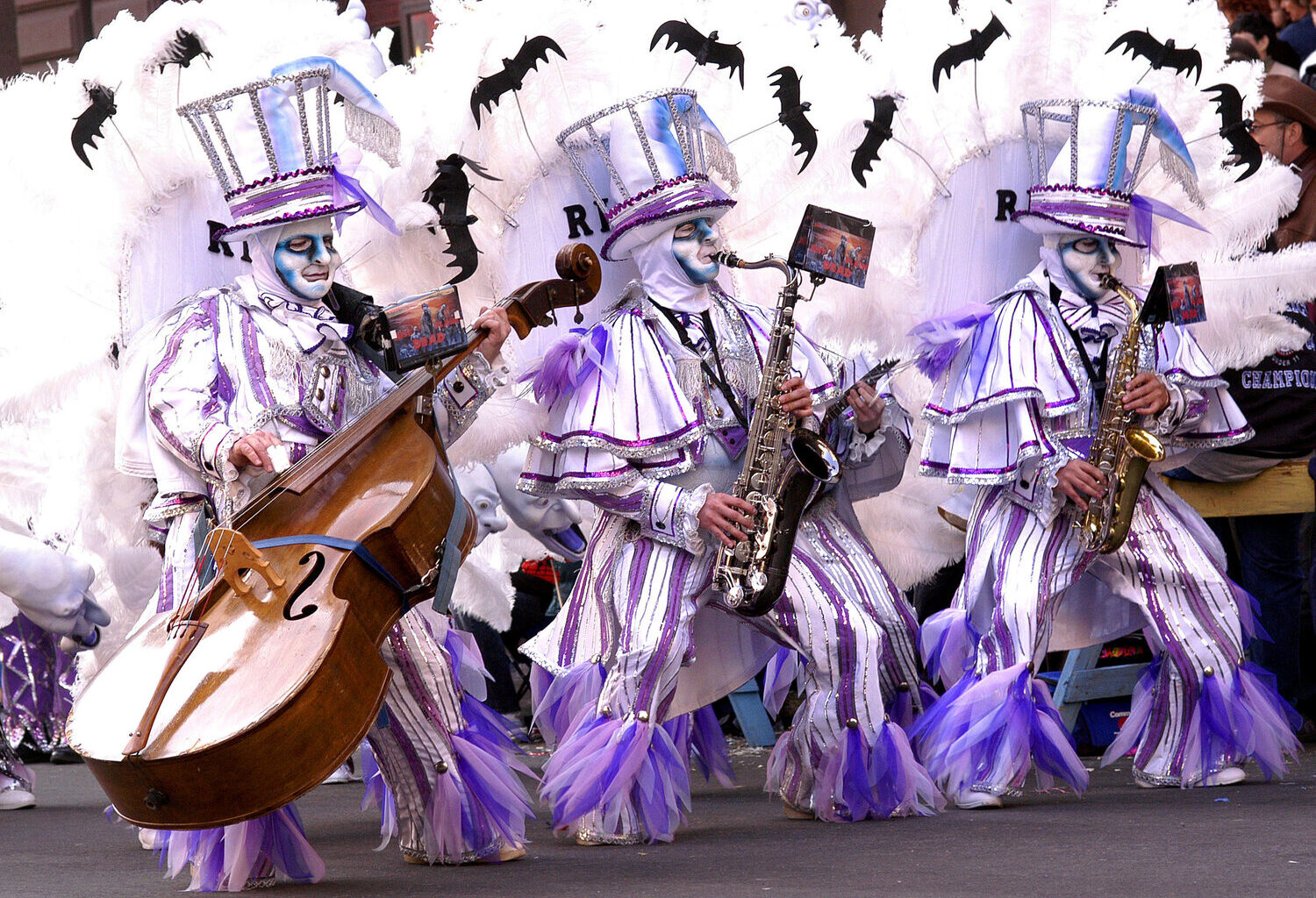
The Mummers Parade is made up of different groups (dubbed clubs) that compete in various categories: Comic (focusing on humor), Fancy (elaborate costumes), Fancy Brigade (which is now performed indoors) and String Bands (with groups that normally march in intricate patterns).
For many participants, being a Mummer is a family tradition passed down through generations, and clubs often have their own clubhouses in South Philly (most of which operate year-round). Some of the more well-known units include the Quaker City String Band, South Philly String Band (one of the oldest), Golden Sunrise (one of the largest), Riff Raff and Goodtimers.
South Philly became the home of the Mummers because of a mix of immigration, neighborhood layout, jobs, and culture. Rowhomes were actually a huge factor, as it offered a close-knit community for involved families, many of which constructed and housed their elaborate costumes in their basements.
What’s changed the most for the famous group is the access that is now included: What has historically been an exclusive and elusive group of people now allows members of all backgrounds and genders, and you also don’t have to live in South Philly. Now there are all ethnicities, walks of life, and women (who became allowed in the 1970s) in the performing troupes.
It’s also advanced in updates: Costumes and sets are far more expensive and technically complex, often costing tens of thousands of dollars per club. Some categories (like Comic) are smaller, while String Bands and Fancy Brigades have grown more sophisticated.
To celebrate the Mummers’ 125th anniversary this year, limited-edition commemorative merchandise will be available for sale, including an exclusive 125th anniversary holiday ornament, a Mummers plushie, and parade t-shirts. These items will be available for purchase online and will also be available at Shop Live! in the Live! Casino & Hotel Philadelphia lobby.
After more than a century of organized parades—and centuries of tradition before that—the Philadelphia Mummers continue to embody the spirit of the city itself: resilient, creative, and proudly rooted in community. While the parade has evolved to reflect modern values and expanding inclusivity, its heart remains the same—neighbors coming together through music, performance, and craftsmanship to ring in a new year.
To learn more information on the Philadelphia Mummers, visit philadelphiamummersparade.com