
Lawmakers in Harrisburg are close to making classrooms statewide cellphone free.
The state Senate Education Committee advanced a bill requiring that public schools adopt policies prohibiting cellphone use during the school day.
It allows exceptions for students who have a medical condition, individualized education plan, English language learners, or if a student is asked to use a cellphone by a teacher with the approval of a building principal.
Districts would be required to adopt the policies no later than the start of the 2027-28 school year.
Pennsylvania currently does not ban cellphone use during the school day. Across Northeast Pennsylvania, schools take various approaches to phone use by students in their buildings, ranging from students not being allowed to use them at all during the school day, to cellphones being allowed only during certain times of the day, to allowing their use in classrooms at the discretion of the teacher. Many schools require that students place their phones in a pouch or container.
Several superintendents contacted this month said they support good legislation but questioned how some aspects of the bill could be enacted.
“When you talk about a ban on cellphones, are they talking about that in a manner consistent with what we do at Abington Heights and what other districts do, or are you talking about an outright ban, when you say kids can’t bring phones to school?” Abington Heights Superintendent Christopher Shaffer said.
Shaffer said he supports school boards having autonomy because communities have differing needs.
Wyoming Area School District Superintendent Jon Pollard supports the legislation but wants it to provide specifics in its definition of a ban. He also said lawmakers should provide funding for districts to enact cellphone bans.
“The spirit of the law and the letter of the law do not always equal what they want to have happen, so I think that this legislation would need to have a little bit more specifics to it about what a ban means and what kind of processes the district would need to implement to have that ban be in place,” he said.
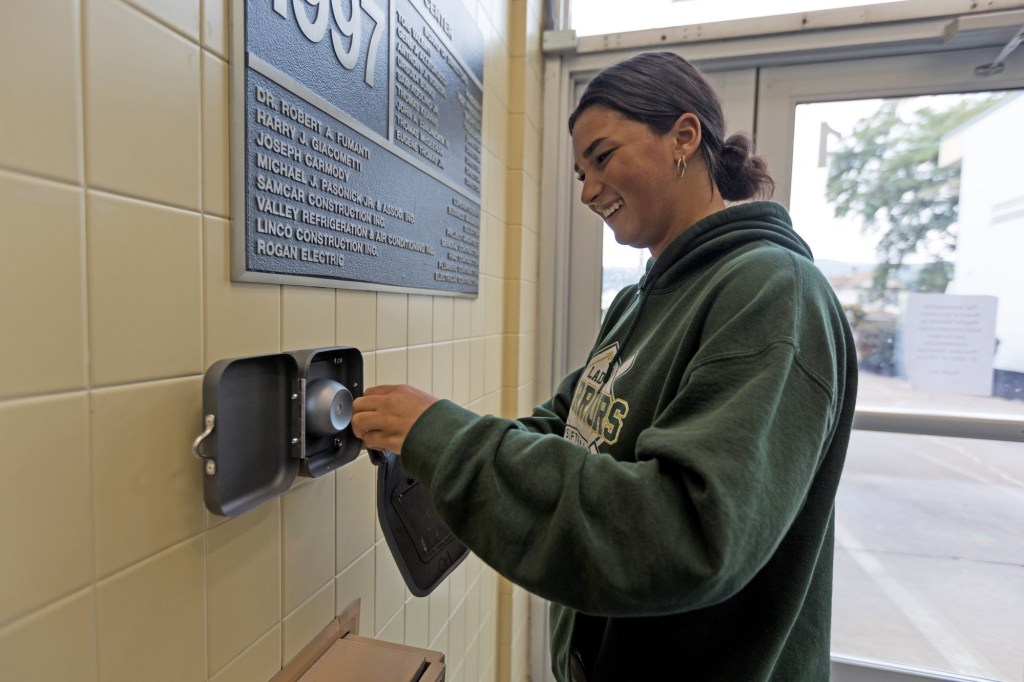
Officials began requiring students at Wyoming Area Secondary Center to lock their phones in a pouch each day at the start of the school year. Pollard said the district was able to purchase 1,200 pouches using around $35,000 it received from the Pennsylvania Commission on Crime and Delinquency. He said while the district was able to purchase the pouches, he isn’t sure other districts are able to make purchases to enable them to ban cellphones.
“If this is something that they’re looking for that hard, reduce the gray-area ban, then they need to follow through with some funding for districts,” Pollard said.
Students at Abington Heights are required to put their phones in a carrier at the start of class and retrieve them when they leave. Shaffer said he doesn’t see bringing cellphones to school as a bad thing but doesn’t believe they should be in the classroom.
“In my opinion, I think it would be very challenging to do a ban where you prohibited kids from bringing phones to school,” he said. “We as educators need to work with our families and our students on how to best utilize the technology in a manner that’s effective and at the same time respectful of that educational space.”
Hazleton Area School District Superintendent Brian Uplinger said in an email Wednesday he believes the intent of the legislation is positive but thinks it needs to allow districts flexibility in implementing their own policies.
“We all recognize that cellphones can be a major distraction in the classroom and can impact both academic performance and student well-being,” he said. “At the same time, I believe local districts need flexibility in how these policies are implemented. Every community is different, and what works in one district may not work in another.”
Uplinger also hopes if the law is passed, it allows for reasonable exceptions like medical needs and special education communication devices, and gives schools the ability to choose practical enforcement methods.
“Ultimately, our goal is to create an environment where students are focused, engaged and safe, and any policy should support that without creating unnecessary burdens for families or schools,” he said.
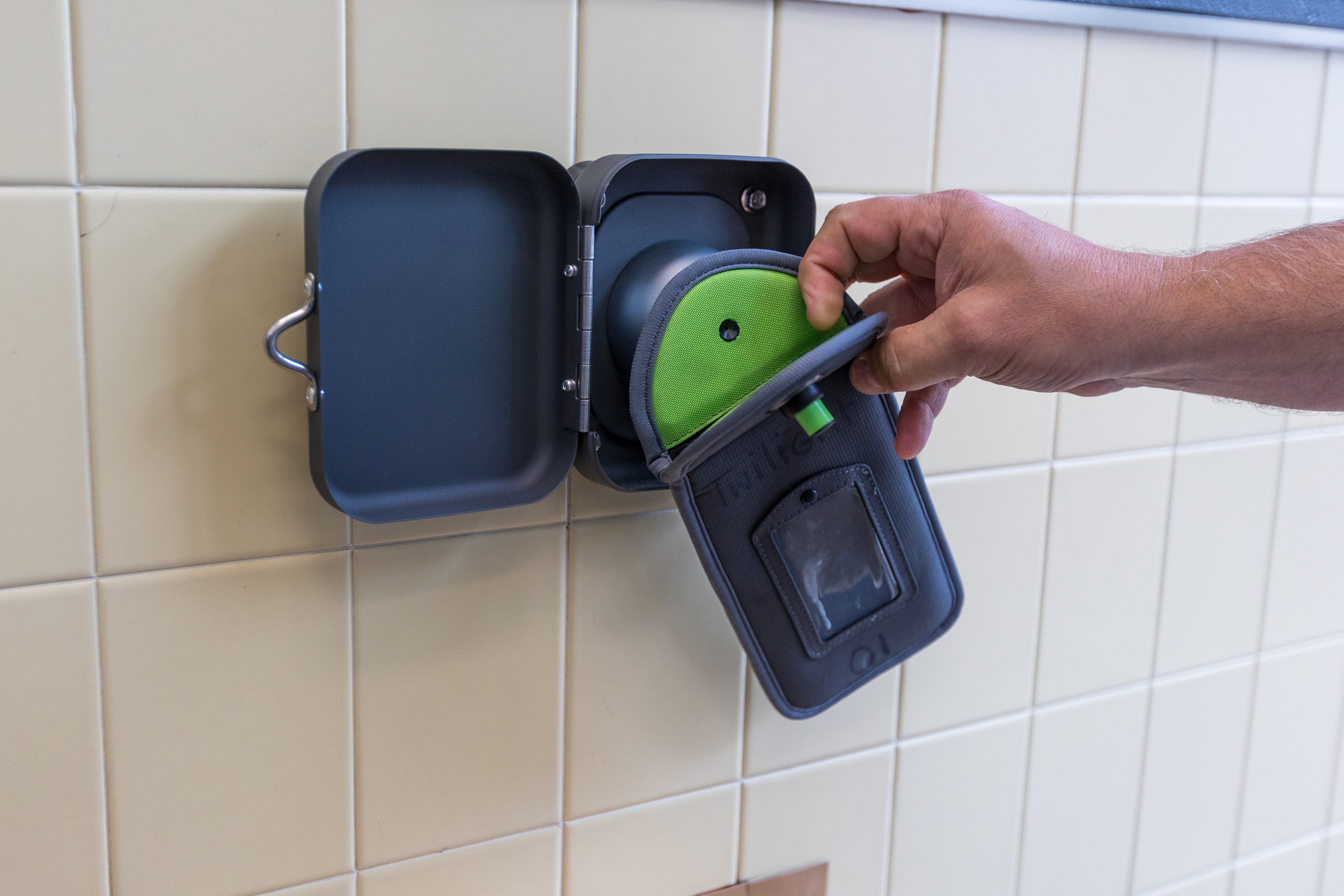
Wyoming Area superintendent Dr. Jon Pollard demonstrates the function of the Yondr pouch on Thursday, Sept. 25, 2025. (JASON ARDAN / STAFF PHOTOGRAPHER)
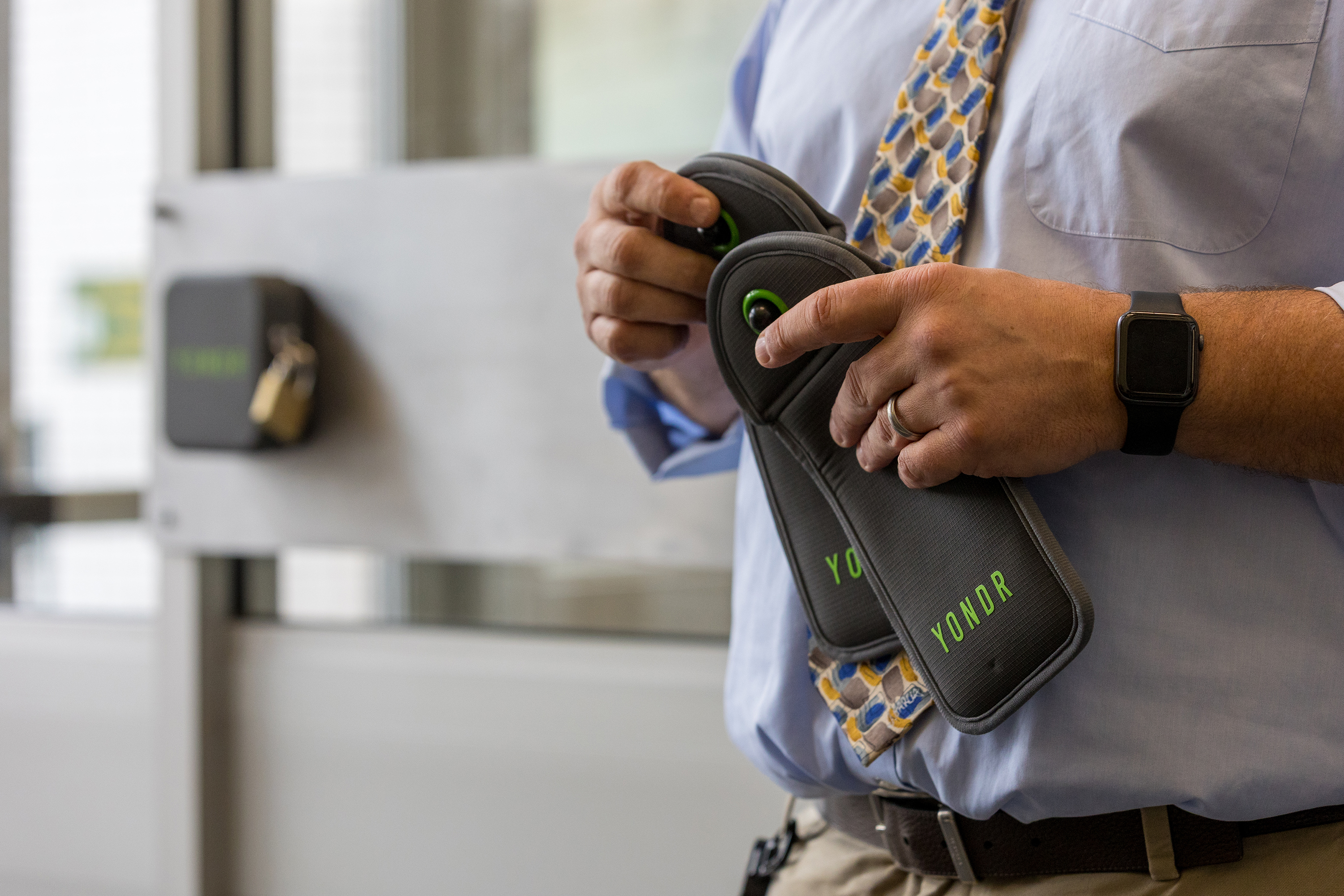
Wyoming Area superintendent Dr. Jon Pollard demonstrates the function of the Yondr pouch on Thursday, Sept. 25, 2025. (JASON ARDAN / STAFF PHOTOGRAPHER)
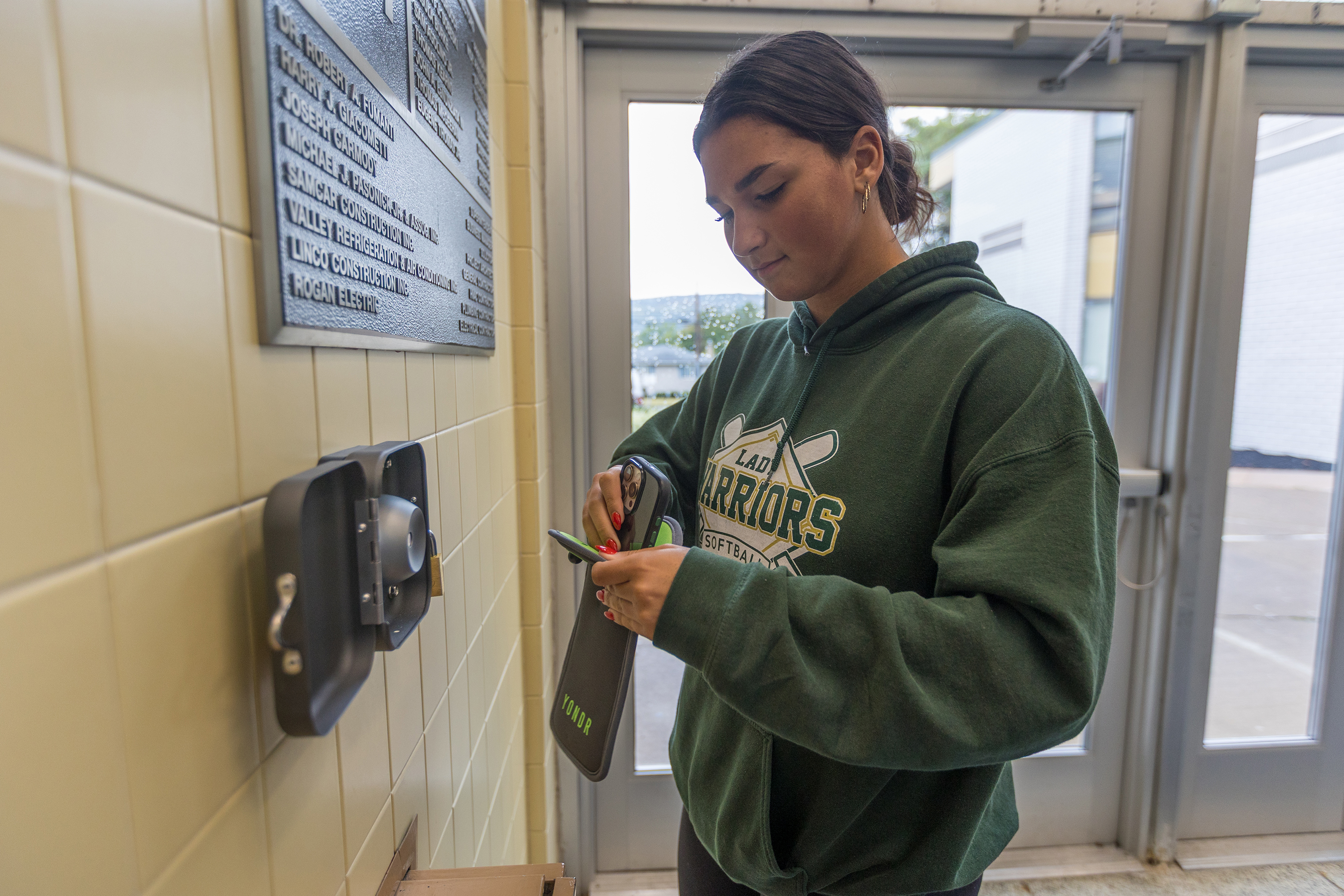
Ameriana Walker, senior student council vice president at Wyoming Area, demonstrates the function of the Yondr pouch on Thursday, Sept. 25, 2025. (JASON ARDAN / STAFF PHOTOGRAPHER)
Show Caption
1 of 3
Wyoming Area superintendent Dr. Jon Pollard demonstrates the function of the Yondr pouch on Thursday, Sept. 25, 2025. (JASON ARDAN / STAFF PHOTOGRAPHER)
The bill’s sponsors, Republican state Sen. Devlin Robinson and Democratic state Sens. Vincent Hughes and Steven Santarsiero, say their legislation aims to curb classroom distractions, improve academic performance, and address growing concerns about youth mental health and social development.
“The evidence is overwhelming — student cellphone use in schools is harming learning, social skills, and emotional well-being,” the senators said in a joint statement. “This legislation is about giving students the chance to be present — with their teachers, with their peers, and with their learning.”
Jeff Ney, vice president of the Pennsylvania State Education Association, also said in a statement cellphones disrupt students from learning, facilitate cyberbullying and are a contributing factor to student mental health issues.
“Mobile devices, like smartphones and watches, disrupt students from learning during the school day,” he said. “They contribute to students cheating, and they fuel cyberbullying and mental health risks for our students.”
Pollard said the pouches have had a positive impact on students, as crisis referrals and incident reports have been down significantly since they were implemented. They also have allowed teachers to focus more on instructional time.
“I’m very glad that the Legislature is taking this step,” he said. “I think it’s an important step and I hope they follow through with some specifics about what the ban should look like, as well as some funding to help implement it successfully in all the districts.”
Across the country, 35 states have laws or rules limiting cellphones and other electronic devices in school, including 18 states and the District of Columbia where phones aren’t allowed during the school day.
Although there is no statewide cellphone ban in Pennsylvania, lawmakers approved legislation in summer 2024 that allocated $100 million for school districts to purchase lockable bags to secure student cellphones. Only 18 school districts applied.
The current bill awaits approval by the full state Senate.