
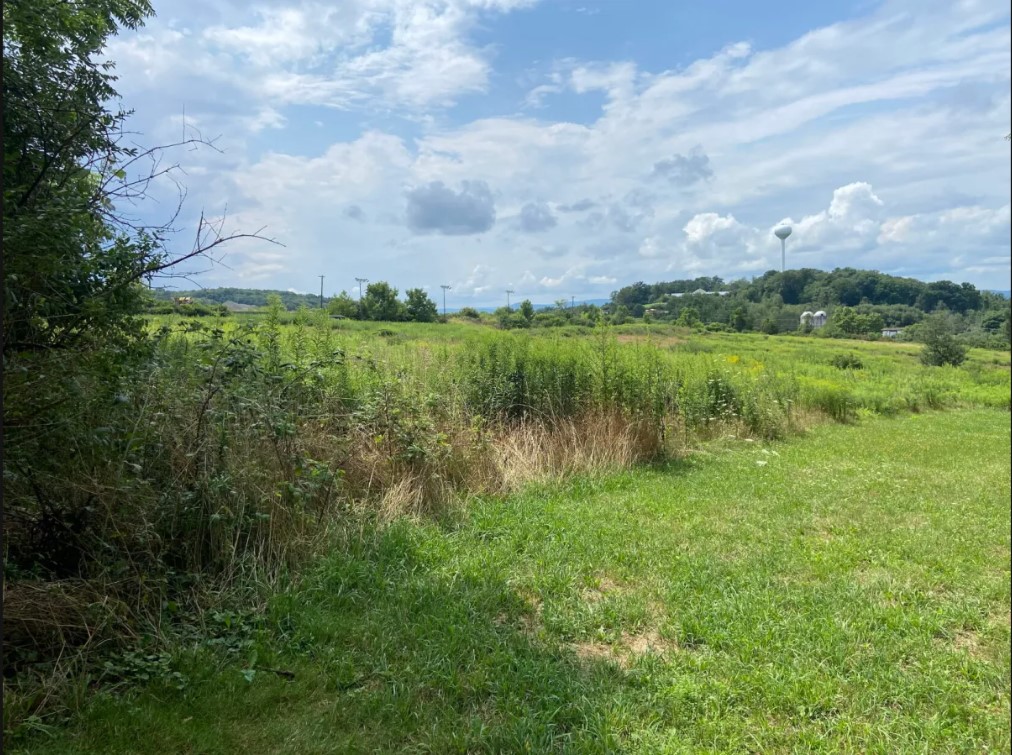
A Lackawanna County judge upheld Newton Twp. officials’ denial of a solar farm project that garnered opposition from residents.
In an order issued this month, Judge Terrence Nealon ruled Newton Solar 1 LLC did not establish that the township supervisors erred or abused their discretion when they denied plans in fall 2024 to build a solar farm on Hillside Drive near Newton Ransom Boulevard and Country Club Drive.
New Leaf Energy, the Massachusetts-based company doing business as Newton Solar 1 LLC, and Borrego Solar Systems Inc. of Oakland, California, sought conditional use to build nearly 12,000 solar panels on the 59-acre property, a former golf course the developer planned to purchase.
Supervisors cited resident health and safety, and deed restrictions on the property that allow only agricultural use, as factors in their decision. They also said the developer didn’t present information proving a solar farm is an allowable use on the property.
Attorney Jeffrey Malak appealed the decision on behalf of the developer late last year. He argued the township speculated that the project would drastically change the use, value and enjoyment of neighboring properties, instead contending it wouldn’t negatively impact those properties. Malak also said the proposed solar farm is permitted as a conditional use in the township’s rural resource zoning district, and the testimony of those who objected to the project amounted to nothing more than fears about its possible negative impact on the neighborhood.
In his decision, Nealon said the board considered the deed restrictions as reflecting the zoning district as agricultural, forestland and open spaces, and the decision cited the relevant conditional use provisions in the zoning ordinance, which the applicant did not establish. In addition, he said the board was free to regard resident testimony as credible proof that it would adversely affect their well-being, be detrimental to the use of their land and alter the bucolic quality of the district.
Nealon said the board’s references to the deed restrictions in its decision were evidence to support its finding that the area is agricultural, and they did not rely on it as grounds to deny the conditional use request.
He also said residents’ testimony that the farm would impact the area’s rural nature and decrease their property values is competent evidence against the developers’ testimony that the solar farm wouldn’t adversely impact the surrounding area. Nealon also wrote that the developer was unable to answer questions regarding whether the property was subdivided and why there are acreage discrepancies on the deed and solar farm plans.
“In sum, the Board’s determination that Newton Solar failed to credibly demonstrate that its proposed solar energy farm will not adversely affect the welfare of neighboring residents, be detrimental to their use of their property, or change the essential character of the district was supported by ‘such relevant evidence as a reasonable mind might accept as adequate to support a conclusion,’ ” he wrote.
Contacted about the opinion last week, Supervisor Chairman Doug Pallman said he was pleased that Nealon upheld the supervisors’ decision, adding they were uncomfortable with how the proposed solar farm would impact residents and the deed restrictions on the property.
“We believe that we demonstrated that it would affect the welfare of our neighborhood and be detrimental to the property,” he said. “We didn’t feel comfortable trying to make a decision on a piece of parcel that we knew had deed restrictions. In our thought process, it really needed to be something that the applicant and the state needed to work out first prior to coming in for a conditional use from the township.”
Pallman said the township is not trying to stifle progress, pointing out the supervisors approved another solar farm project recently, but laws and ordinances have to be followed, and the health and safety of residents has to be considered.
Malak said in an email last week that Newton Solar 1 respects the decision and doesn’t plan to appeal it further. In addition to the appeal, he also filed a declaratory judgment lawsuit in the spring in Lackawanna County Court against the state Department of Conservation and Natural Resources and the Department of General Services seeking to remove the deed restrictions. That lawsuit remains ongoing and it is unclear if the opinion ruling on the appeal will have any impact on it.