

The dominance of data centers
From largely unknown a year ago to dominating news this year, data centers have become a flashpoint in Northeast Pennsylvania. This “fourth industrial revolution” for the area is fueled by the region’s strategic location near high-tension power lines and major interstates. Tech giants have committed massive investments, including a project in Salem Twp., Luzerne County, while federal and state leaders have moved to fast-track the industry through executive orders and multibillion-dollar infrastructure pledges.
The economic promises are significant, including tax revenue and potentially jobs.
The breakneck speed of the influx has triggered community opposition and environmental concerns. The facilities require high amounts of electricity and water for cooling, leading to fears of increased utility costs for residents. In towns like Archbald, where 44 buildings have been proposed, and Clifton and Covington townships, which face a 30-building campus, residents have packed public meetings to protest the scale of development and the potential for noise and environmental degradation.
As 2026 approaches, the future of these projects remains a bit cloudy. Experts suggest that only about one-third of proposed projects may actually be built, primarily because the existing power grid cannot support the total electricity demand of every application. While local governments scramble to update decades-old zoning laws to gain some control over noise and land use, the clash between high-tech industrialization and community preservation continues to define the region’s political and social landscape.
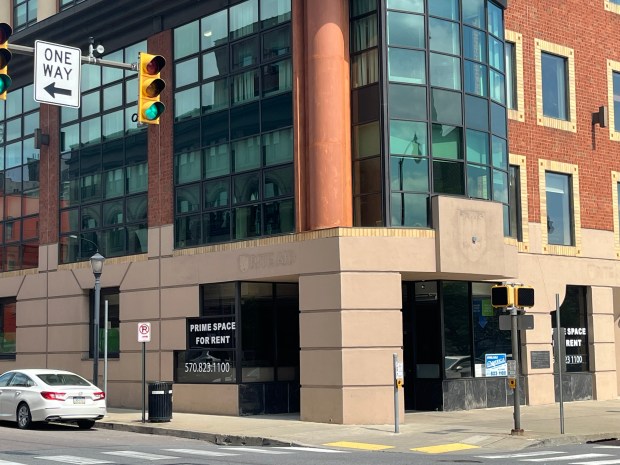 The former Rite-Aid location on South Washington Avenue in downtown Scranton remains vacant after the store closed in Jan. 2024. (ROBERT TOMKAVAGE/STAFF PHOTO)
Rite Aid closes final stores
Rite Aid, the iconic drugstore chain founded in Scranton in 1962, closed all remaining locations nationwide following its Chapter 11 bankruptcy filing. What began as a single “Thrif D Discount Center” in Scranton before rebranding in 1968 has ended more than six decades later, with the final Pennsylvania stores shuttering their doors by the end of August.
The collapse of the retail giant marks a somber milestone for Scranton’s business history, as the city served as the original home and launching pad for the brand’s national expansion. Despite initial hopes to sell off more than 1,200 locations to keep the business afloat, the chain was unable to sustain operations. This closure affects communities across the state and the country, including major hubs in the Lehigh Valley and Philadelphia, ending the brand’s presence in the very region where it was pioneered.
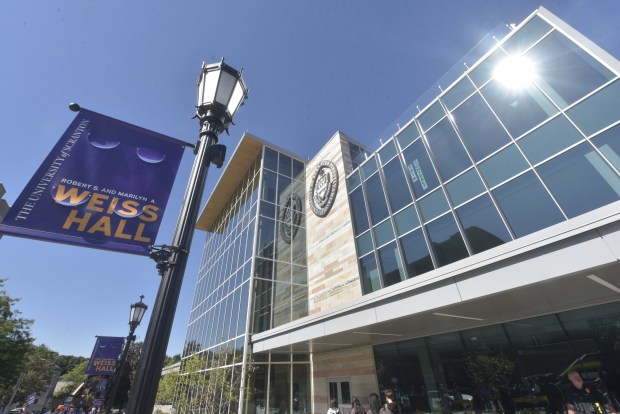 The University of Scranton’s newly dedicated Weiss Hall. (CHAD SEBRING/STAFF PHOTO)
Workforce development
The University of Scranton dedicated Robert S. and Marilyn A. Weiss Hall, a facility designed to foster interactive learning and community engagement. The $44.5 million, nearly 90,000-square-foot building serves as the new home for the psychology, criminal justice, cybersecurity and sociology departments. It also houses the Small Business Development Center, student health services, and the Center for Health Education and Wellness, providing a centralized hub for both academic and personal student growth.
The new building has cutting-edge amenities, including an innovation space for 3D printing, vinyl making, and woodshop work and a professional sound studio. University leaders and donors said the facility aims to create a local “Silicon Valley” atmosphere.
The project was completed in just under two years, funded through a combination of a $65 million financing plan, state and federal grants, and a $10.5 million gift from the building’s namesakes. Scranton Mayor Paige Gebhardt Cognetti highlighted the university’s role as an economic and cultural anchor for the city, noting that the rapid construction of Weiss Hall further cements the institution’s impact on the local community and its commitment to providing hands-on learning environments.
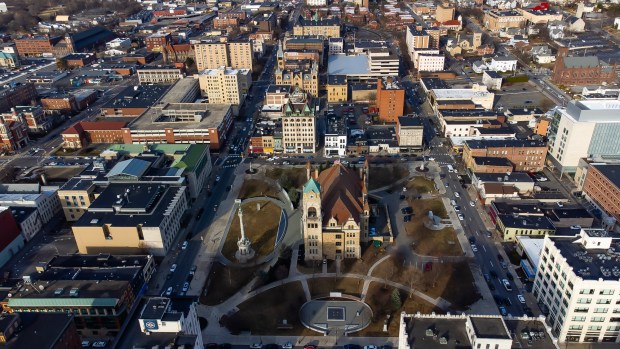 A view of downtown Scranton looking down on Courthouse Square. (SEAN MCKEAG / STAFF PHOTOGRAPHER)
Walkability project gets approval
Downtown Scranton will likely have a new look after a split city council approved Mayor Paige Gebhardt Cognetti’s proposal for changes to downtown streetscapes. The mayor and those in favor of the project tout an opportunity to change traffic flow, improve infrastructure, and make the downtown area safer for pedestrians and more attractive for businesses and residents. The changes include replacing some traffic lights with stop signs and reverting some one-way streets to two-way.
The mayor’s plan originated from a 2018 lecture by urban design expert Jeff Speck and was followed by a “Downtown Scranton Connectivity Plan” (walkability study) completed in 2023, which found that past traffic systems prioritized vehicles over pedestrians.
The plan comes with a trial period to see how changes are working, and federal funds also have to be committed and then expended by October 2026.
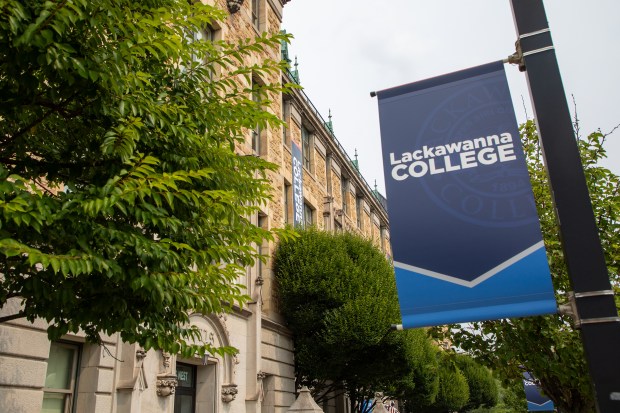 Lackawanna College on Wednesday, Aug. 6, 2025. (REBECCA PARTICKA/STAFF PHOTOGRAPHER)
Lackawanna College reaches out to grow; Keystone College breathes sigh of relief
In June, the merger between Lackawanna College and Philadelphia-based Peirce College officially took effect, creating the state’s largest private, nonprofit open-enrollment institution. The schools will function as a singular entity. While Peirce currently operates as a remote institution focused on adult learners, it will adopt the Lackawanna College name by summer 2026.
This union expands Lackawanna’s academic reach, allowing it to offer its first master’s degree programs by leveraging Peirce’s existing graduate curriculum. The combined institution now serves a vast geographic and digital footprint, including Lackawanna’s eight physical locations across Northeast Pennsylvania and Peirce’s established online infrastructure.
It’s been a time for growth at Lackawanna. President Jill Murray said the college’s athletic programs will transition from the National Junior College Athletic Association to NCAA Division II as a new member of the Pennsylvania State Athletic Conference. This move allows the college to expand its two-year athletic programs into four-year offerings, providing student-athletes the opportunity to complete full bachelor’s degrees while competing at a higher collegiate level.
Plans were also unveiled for a new Center for Technology Innovation on Wyoming Avenue in Scranton. The 16,000-square-foot facility will house specialized labs for high-demand fields, including robotics, cybersecurity and an advanced automotive space dedicated to electric vehicle equipment.
Keystone College, meanwhile, officially merged with a nonprofit aimed at boosting higher education. It’s a move the financially struggling institution touted as a positive development.
College officials announced in late May the merger transaction with the Washington Institute for Education and Research, a Washington, D.C.-based nonprofit formed to further and support higher education. Under the merger, Keystone continues operations under its current name and educational mission.