
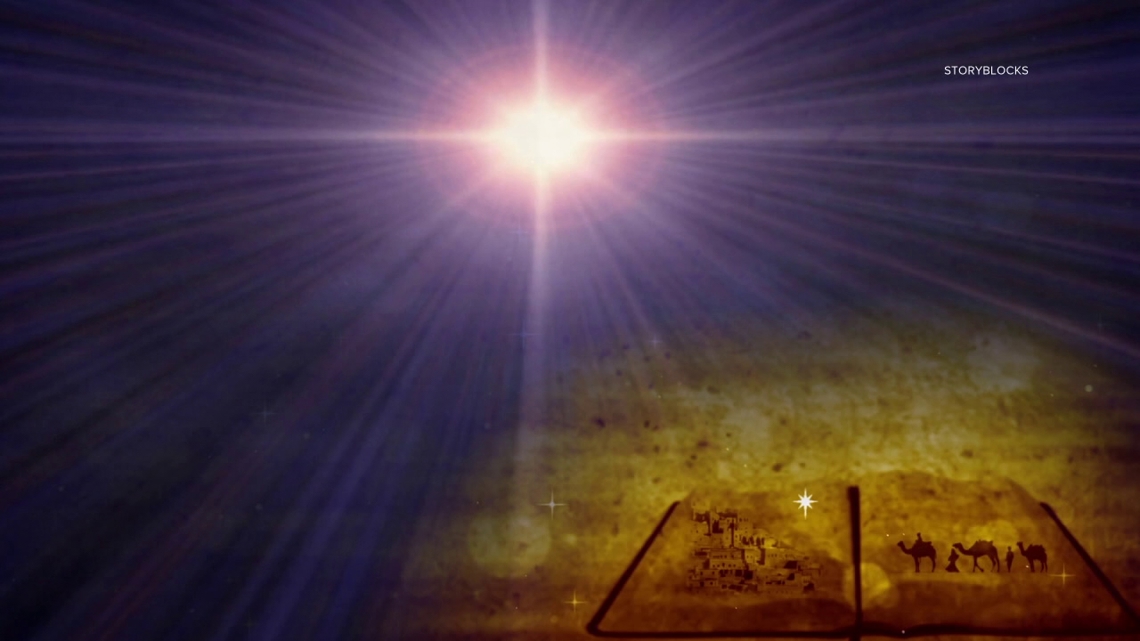
The identity of the “Star” of Bethlehem remains a mystery, captivating astronomers and believers alike with theories about rare celestial events.
Every year on January 6th, Christians who follow the Julian calendar celebrate epiphany, a holiday marking the visit of the Magi to the baby Jesus. But while the occasion holds deep religious significance, the exact date of this event remains a mystery.
What is not in question, however, is the enduring fascination with the Star of Bethlehem, the celestial phenomenon that guided the magi across vast deserts and uncharted lands.
Legends tell of a radiant star, bright enough to pierce the darkest night.
But was it truly a star? Or something else entirely?
Astronomers, like stargazers of old, have long looked to the heavens, searching for answers.
Some believe it could have been a rare planetary alignment. In 6 bc, jupiter, saturn, and the moon aligned in a way that would have been visible from the ancient city of bethlehem, creating a bright, unusual light in the sky.
Others propose it was a comet, blazing across the sky like a fiery messenger, its tail painting a streak of awe and mystery in the night.
Or maybe, it was a supernova, an exploding star that momentarily lit the heavens with a brilliance beyond comprehension.
In fact, some historical texts refer to an unusual star appearing around the time of Jesus’ birth.
While the exact nature of the
The “Star” of Bethlehem remains uncertain, what we do know is that its powerful symbolism, has shaped countless traditions, from the nativity story to the modern celebration of Christmas.
The mystery of the “Star” of Bethlehem continues to captivate, reminding us that sometimes, the greatest wonders are those we still don’t fully understand.