
There is no mountain high enough, valley low enough, or river wide enough to keep Daniel Rodriguez from getting to work.
The 34-year-old Philadelphia-based urban designer commutes over 800 miles from Pennsylvania to his job in Atlanta, Georgia.
Rodriguez takes on three forms of transportation for his six hour commute: Two flights, two trains, and a bus.
The unusual set up came about after he was laid off twice and had no luck applying to hundreds of jobs in and outside of Philadelphia.
He eventually managed to secure a role with AECOM but realized that it made financial sense for him to stay rooted in Pennsylvania and travel the huge distance twice a week.
And now he has racked up millions of views and followers on social media documenting his mammoth trek.
‘I was doing the commute for two months before I filmed the trip and shared it with my friends on Instagram as a way to show how wild this was,’ Rodriguez told the Daily Mail.
‘It went viral with four million views across Instagram and TikTok. I only had 300 friends—people I knew. But now almost 20,000 people joined in to see the journey.’

Daniel Rodriguez, 34, commutes 800 miles to his job as an urban planner

Rodriguez’s commute can take roughly four to six hours, and he has to take two flights, two trains, and a bus
Rodriguez says he uses other forms of transport to avoid rush-hour traffic and the pesky cost of owning a car.
The 34-year-old lives with his wife and zips back and forth from his home in Center City to midtown Atlanta.
Rodriguez previously studied Landscape Architecture and was working on his dream project in Puerto Rico after taking out loans and uprooting himself to get there.
‘For two years, I really believed this was the moment I had worked for my entire life. It felt like I was preparing to set myself up as a landscape architect that would bring real solutions to my people back home,’ he told Daily Mail.
‘But that was a brief and blissful fantasy. Because out of nowhere I was laid off.’
He had recently met his now-wife and they went from a ‘honeymoon phase to survival mode’.
‘That layoff forced me to confront how fragile everything was. I did not want to uproot our life so I locked in on doing anything to keep our lives where they were.’
Constantly searching for jobs, Rodriguez pivoted to the tech industry, enrolling in a bootcamp and Google UX certificate that put him ‘seven thousand dollars in the hole.’
‘I sent out more than six hundred applications. I barely got three interviews. Every rejection chipped away at my confidence. I felt humiliated,’ he told Daily Mail.
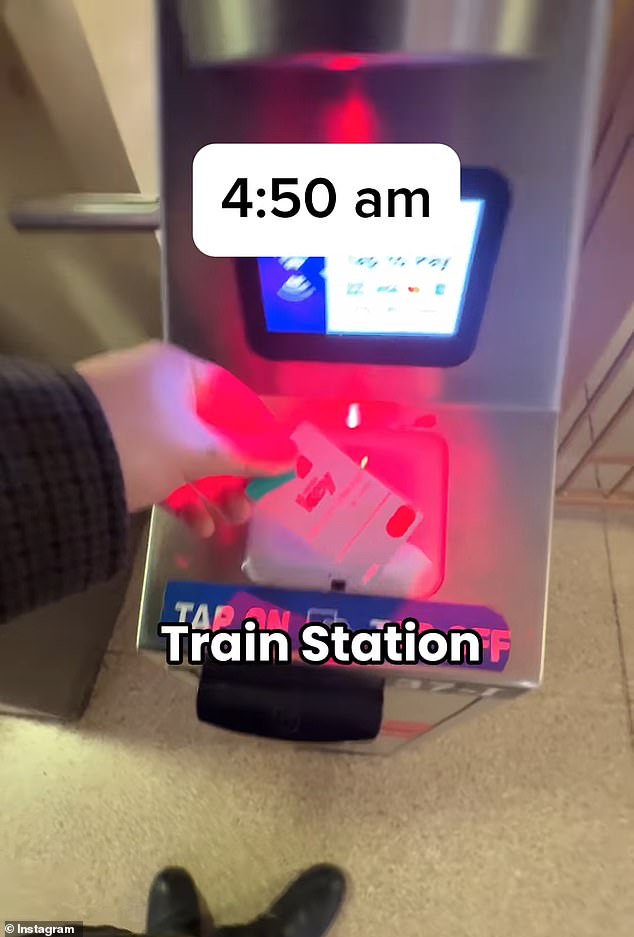
The 34-year-old starts his day bright and early, either on a Sunday or a Monday, and takes the train to the airport
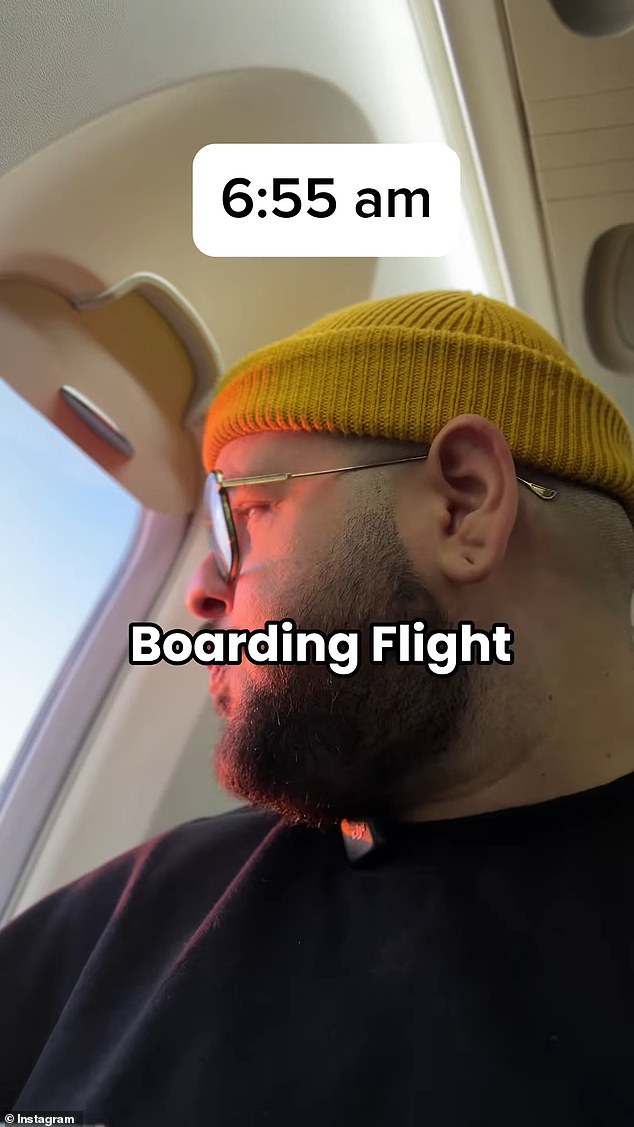
Rodriguez makes sure he boards an early morning flight so he gets to his job on time, counting in potential flight delays
Rodriguez eventually landed a role in product management, making just enough to cover the rent.
‘It was supposed to be my redemption arc, and then I got laid off again,’ he explained.
His first layoff lasted three months and the second one lasted five. By that point, Rodriguez faced extreme debt and could not pay his loans and credit cards.
Struggling to find work in Philadelphia, Rodriguez ultimately landed a hybrid role in Atlanta, but without the financial stability to pack up their lives, he and his wife stayed put.
‘We calculated the move would cost us $10,500…This was money we didn’t have, money I could not borrow.’
The couple later discovered his super commute would estimate to about $6,000 per year, so he started in May, traveling to the southern state every week, and staying for about two to three days at a time.
‘I’d super commute to Atlanta… not because it was glamorous. I chose it because it was the only option.
By using a Frontier Go Wild pass and public transit instead of owning a car, Rodriguez kept his travel costs low.
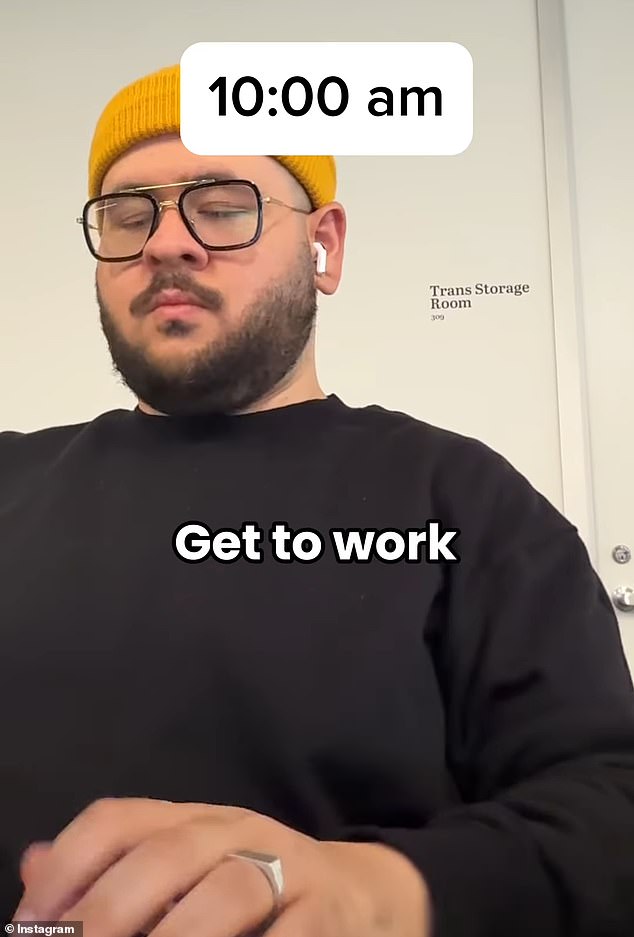
Rodriguez arrives to work around 10am, he has a hybrid role that allows him to be in the office twice a week

The supercommuter wakes up at around 4am for his long day, and ends his day at around 9pm
His monthly commute costs $400 to $600, much less than the average U.S. car payment of $700, helping him recover financially.
Each door-to-door journey takes roughly four to six hours, and the 34-year-old carefully plans his week.
He’ll either travel to Georgia on Sunday and return Tuesday, or fly out on Monday and come back Wednesday.
Rodriguez will occasionally do a single-day journey, leaving and returning the same day, though he told the Daily Mail he doesn’t do it often.
‘I now rent a room where I stay in Atlanta for two days and come back. So it’s less hectic,’ Rodriguez said.
The super commuter packs light, carrying a small bag with his laptop, food, and a change of clothes.
Once he arrives in Atlanta after a 90 minute flight, he’ll hop on the Metropolitan Atlanta Rapid Transit Authority platform for a 30 minute train ride to his office.

Rodriguez emphasizes that his super commute is temporary, it will just lead him to his next chapter in life
At the end of the day, he either takes an Uber or endures an hour-and-a-half bus ride to a friend’s apartment, where he finally crashes, only to gear up and do it all over again the next morning.
‘My wife supports me because she sees the intention. As we rebuild my career and start to design our future we are starting to see something take shape that’s unique,’ he told Daily Mail.
Rodriguez’s advice for those who struggled like him is the same advice he gives to those not wanting to give up a personal vehicle.
‘You have to do uncomfortable things, disrupt the pattern, and find a way out of what we are normally dependent on and it’s in that disruption that new opportunities arise.
‘For now this super commute is working. It’s not forever—it can’t be. But every 800 miles gets me closer.’