
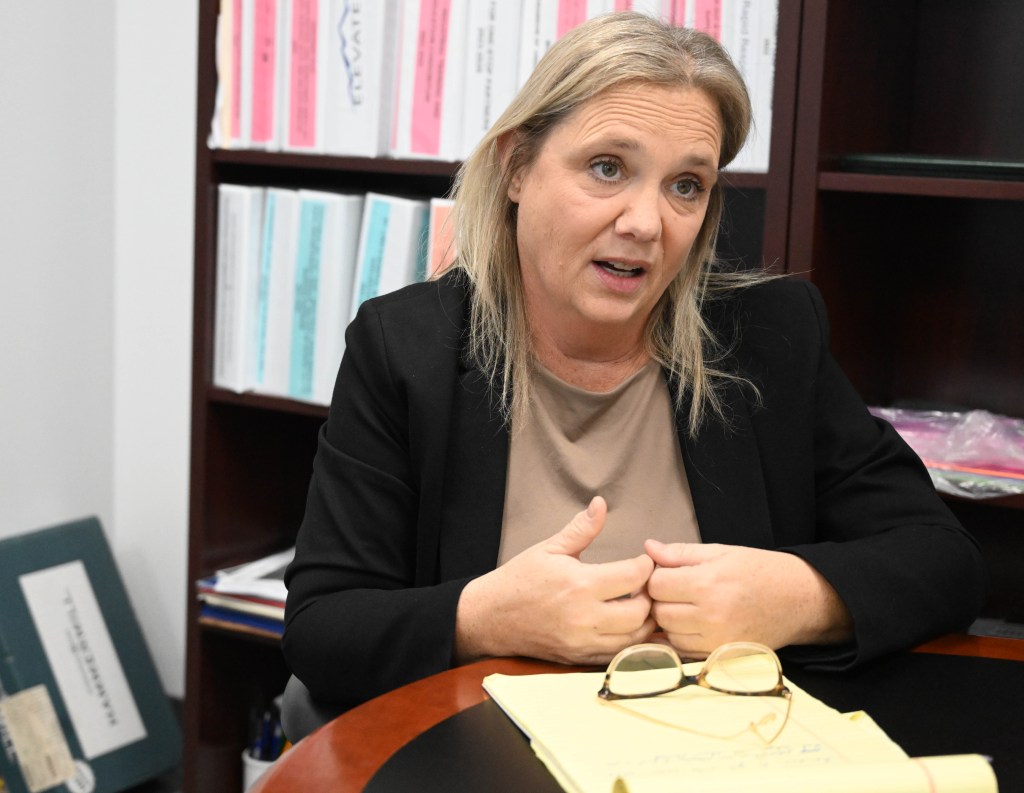
Cathy Rychalsky has had a long career helping people, especially those looking for a job.
While in college, she found her passion during a summer job as a state monitor under the Job Training Partnership Act that turned into a full-time gig and later a management position.
As the new executive director of Workforce Board Lehigh Valley, Rychalsky will get an opportunity to bring her experience to a fast-growing area. Recent statistics from the Lehigh Valley Planning Commission predict that the region will see more than 80,000 more jobs by 2050.
“This work is really good work,” Rychalsky said. “I think that this is why I’m so passionate about workforce development. It is the system that can change people’s lives. You can come in here, and you don’t have your high school diploma. You could have your Ph.D., and you could be anywhere in between there. And need to be connected to the workforce system. You might need to learn how to write a resume or to do a job interview, and we could help people change their lives.”

Workforce Board Lehigh Valley’s new executive director, Cathy Rychalsky, stands in the Career Link office Wednesday, Dec. 10, 2025, in Allentown. Rychalsky joined the board in October, replacing longtime leader Nancy Dischinat, who announced her retirement in July and died in November. (Amy Shortell / The Morning Call)
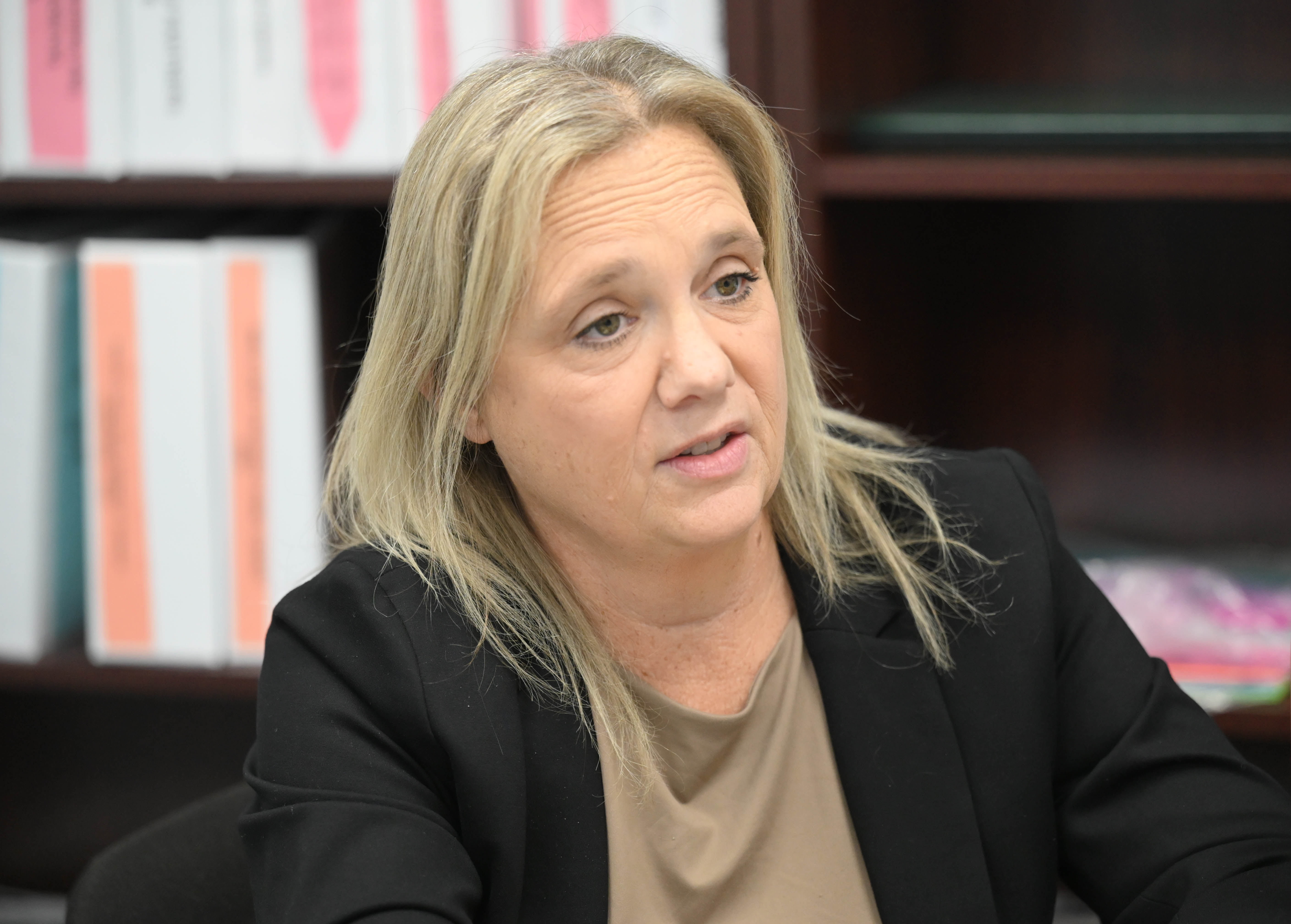
Workforce Board Lehigh Valley’s new executive director, Cathy Rychalsky, speaks in her office Wednesday, Dec. 10, 2025, in Allentown. Rychalsky joined the board in October, replacing longtime leader Nancy Dischinat, who announced her retirement in July and died in November. (Amy Shortell / The Morning Call)
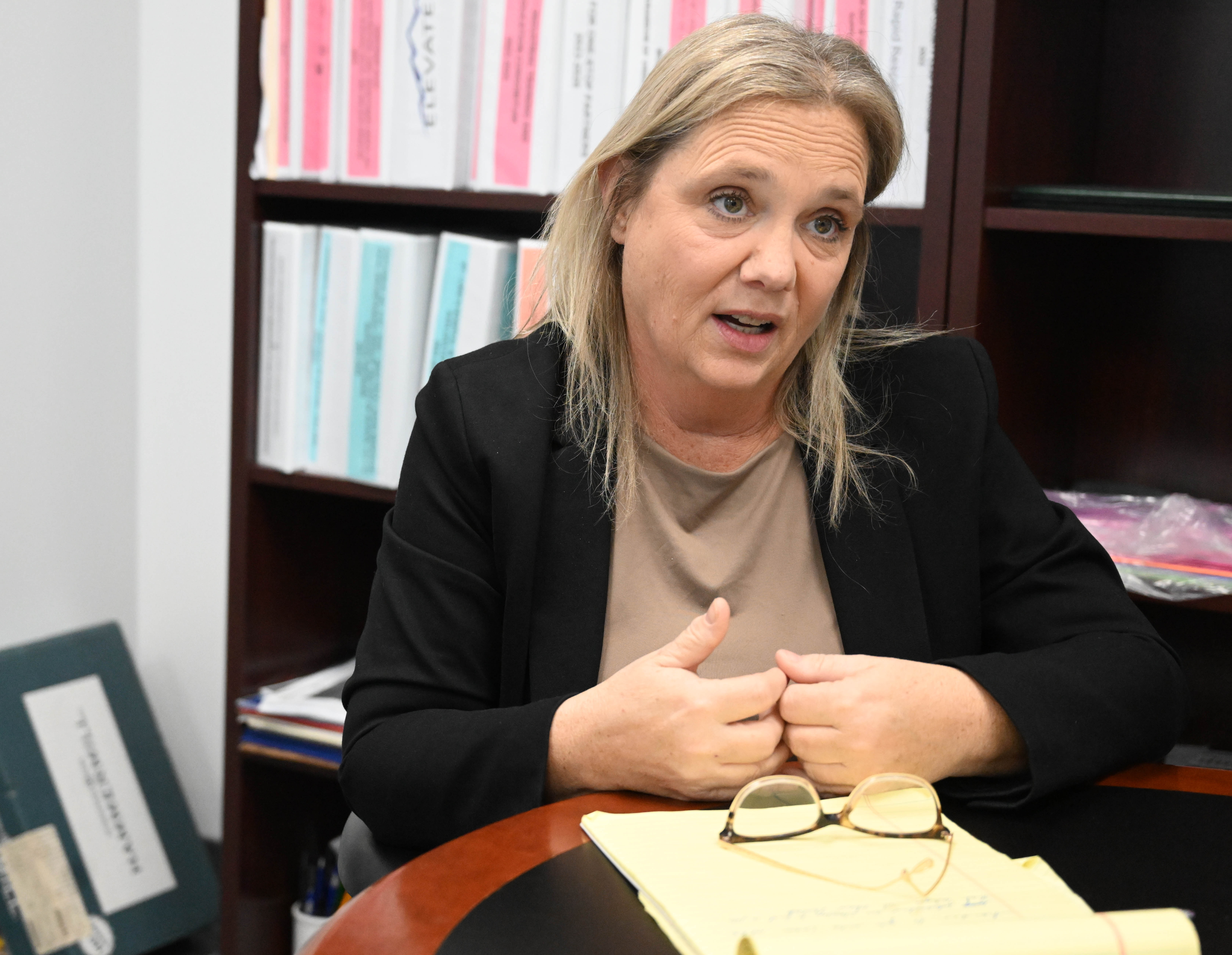
Workforce Board Lehigh Valley’s new executive director, Cathy Rychalsky, speaks in her office Wednesday, Dec. 10, 2025, in Allentown. Rychalsky joined the board in October, replacing longtime leader Nancy Dischinat, who announced her retirement in July and died in November. (Amy Shortell / The Morning Call)
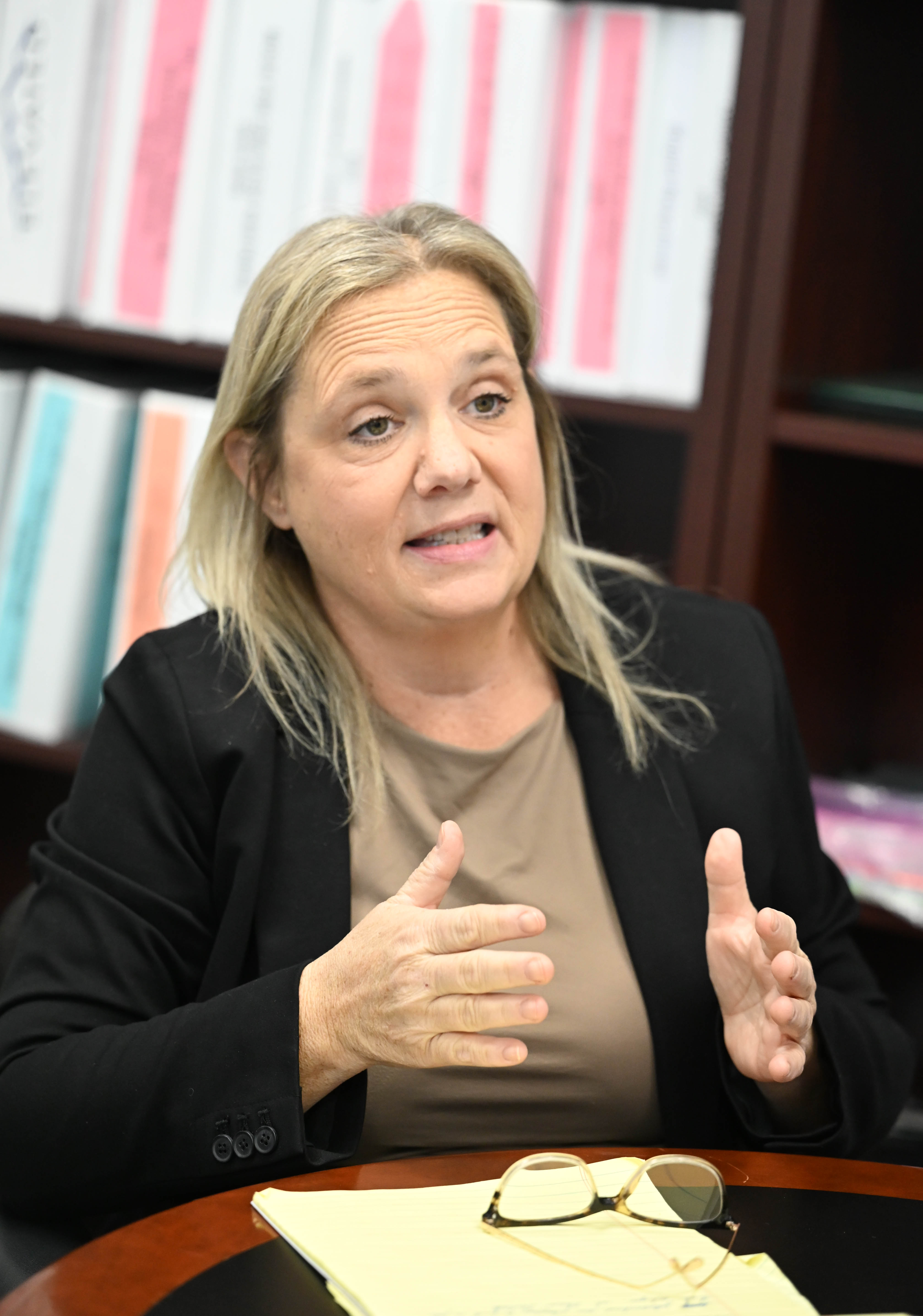
Workforce Board Lehigh Valley’s new executive director, Cathy Rychalsky, speaks in her office Wednesday, Dec. 10, 2025, in Allentown. Rychalsky joined the board in October, replacing longtime leader Nancy Dischinat, who announced her retirement in July and died in November. (Amy Shortell / The Morning Call)
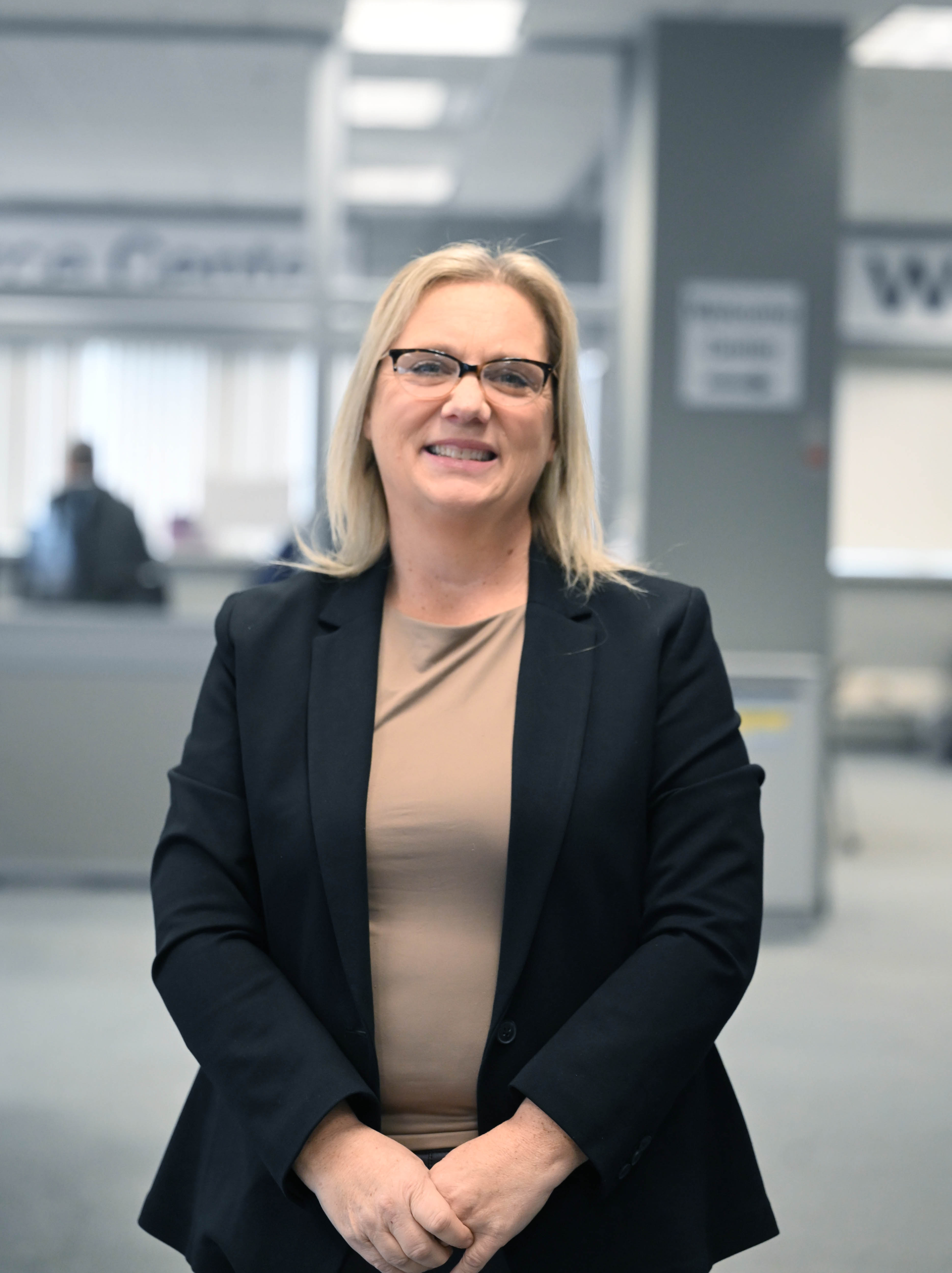
Workforce Board Lehigh Valley’s new executive director, Cathy Rychalsky, stands in the Career Link office Wednesday, Dec. 10, 2025, in Allentown. Rychalsky joined the board in October, replacing longtime leader Nancy Dischinat, who announced her retirement in July and died in November. (Amy Shortell / The Morning Call)
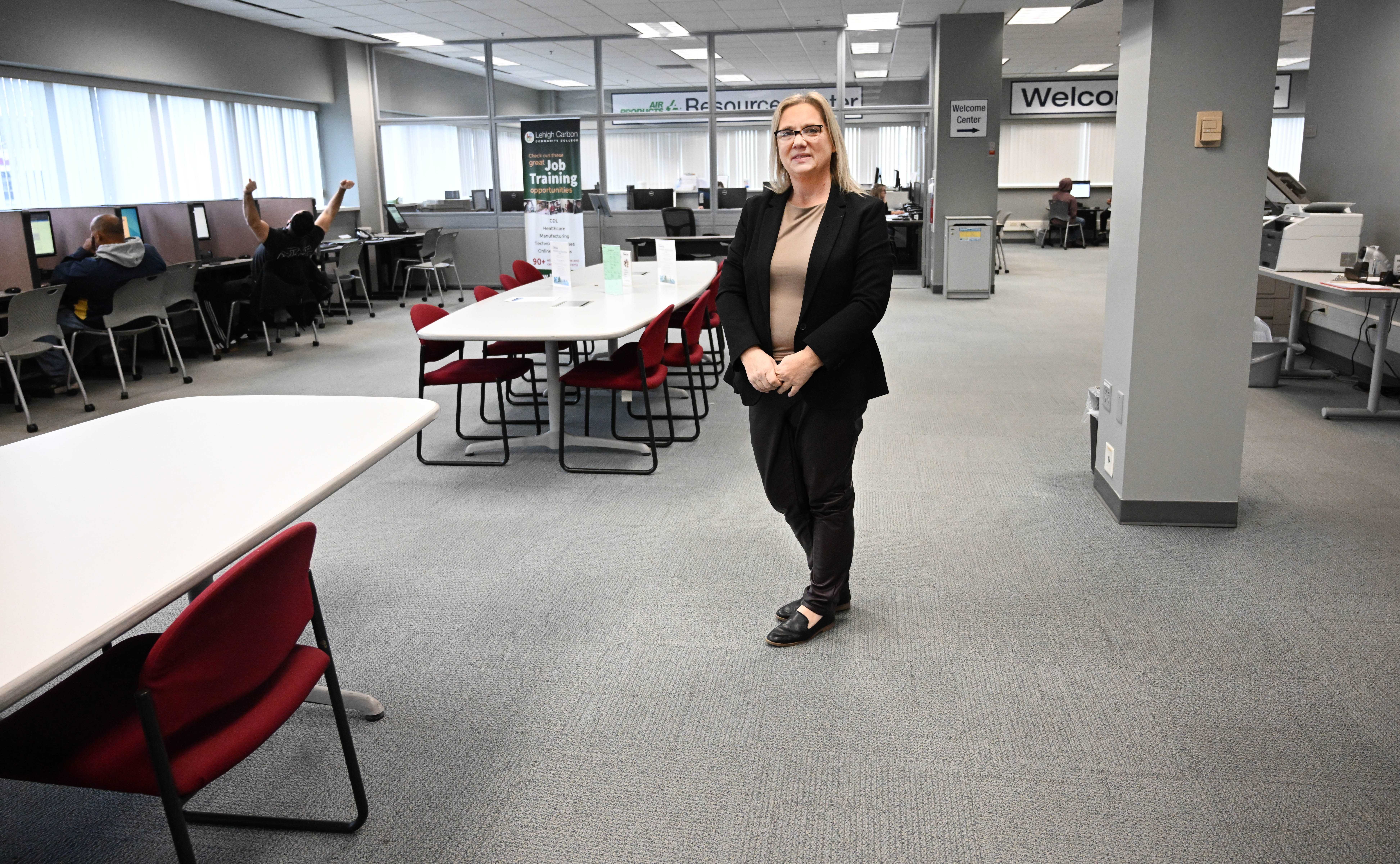
Workforce Board Lehigh Valley’s new executive director, Cathy Rychalsky, stands in the Career Link office Wednesday, Dec. 10, 2025, in Allentown. Rychalsky joined the board in October, replacing longtime leader Nancy Dischinat, who announced her retirement in July and died in November. (Amy Shortell / The Morning Call)
Show Caption
1 of 6
Workforce Board Lehigh Valley’s new executive director, Cathy Rychalsky, stands in the Career Link office Wednesday, Dec. 10, 2025, in Allentown. Rychalsky joined the board in October, replacing longtime leader Nancy Dischinat, who announced her retirement in July and died in November. (Amy Shortell / The Morning Call)
Before coming to the Lehigh Valley, Rychalsky, 52, worked in several social service organizations and in state government, including at the Department of Human Services. Her experience with community action programs includes the Children’s Health Insurance Program and energy conservation.
Most recently, she was in her hometown working for the Lancaster County’s Workforce Development Board. One of her initiatives there was Skillup Lancaster, a program that connected job seekers and employers that was eventually adopted on a statewide basis.
“I truly believe that it was an honor to be able to transition that organization to a very high-functioning board,” said Rychalsky, who has a bachelor’s degree from Elizabethtown College and a master’s from Penn State-Harrisburg.
The Morning Call recently sat down with Rychalsky in her new office at the Lehigh Valley’s PA CareerLink building at 555 Union Blvd. in Allentown.
Why the Lehigh Valley?
Rychalsky grew up in Lancaster County, where her mother still lives, and has a sister in Bucks County, so she is familiar with the Lehigh Valley.
She was also familiar, both professionally and personally, with iconic Workforce Board Lehigh Valley leader Nancy Dischinat, who died in November.
“I wanted to be somewhere where the communities we serve are intentional about the work that’s getting done,” Rychalsky said. “Nancy really built a strong foundation, some strong partnerships, and being able to build upon that foundation in a space where I felt I could connect. That was an important part of it.”
It was a good place to land at this point in her career. She first thought about it after Dischinat, who planned to retire, posted the opening.
“For me, it was about looking at where I was in my career and where do I want to, hopefully, finish my career,” Rychalsky said. “If it’s in workforce development, I want to make sure that the area aligns with who I am as a person. Like, how can I really contribute to the community where I land? That’s kind of what it was all involved in that process of looking at the Lehigh Valley as my next space.”
Lehigh Valley vs. Lancaster
Lancaster County has a diverse economy. Besides a large agricultural component, it has a small entertainment industry. Like the Lehigh Valley, there are strong manufacturing and medical industries.
“From an industry perspective, retail trades is an important market segment, as it is in Lancaster,” Rychalsky said. “Construction, I don’t think is nearly as robust [as Lancaster], although I see it picking up here, which is really cool. You see it when you drive around and go around downtown there. You see the revitalization that kind of occurred already in Lancaster.
“So seeing that happening here is really exciting, getting to see the infusion of investment into parts of the communities,” she said. “I’m excited about it. So from an industry space, agriculture does play a huge part here. I think there’s a lot of overlay in the industries.”
The Valley’s potential
Rychalsky wants to move the Lehigh Valley forward and integrate it into the growing world of artificial intelligence.
“Obviously, it’s the hot ticket,” she said. “As a community we want to make sure we understand what that means. What it means for job seekers and for businesses. And how do we, I think this is really where we’re going to put a lot of attention, is just ensuring that it’s not going to replace people in all aspects of our life, nor should it.
“But getting a true understanding of what it looks like for our communities, for our industries, and for people, because people are afraid they’re going to lose jobs. Some will, but that doesn’t mean new jobs are not going to be created. That gives us an opportunity to teach people new skill sets.
Apprenticeships will also be important. Dischinat helped launch the Industrial Training and Education Consortium of the Lehigh Valley, a first-of-its-kind apprenticeship program that provides industrial skills training and develops a workforce to meet the needs of the Valley’s growing manufacturing sector. It is a partnership of industry, education, government and community organizations to promote careers in advanced manufacturing.
“I want to make sure that our training is aligned with the new skill sets,” Rychalsky said. “I think that’s a really huge opportunity for us. I also think there’s a lot of money that’s going to be invested into apprenticeship and preapprenticeship programs that will give people the opportunity to earn and learn at the same time.
“You’re getting a skill set that you can take with you anywhere. And so that is a huge opportunity for us.”
A tough job market
Rychalsky says she hears from employers about ghosting when job candidates apply for a job then abruptly cut off contact. On the other hand, job candidates have had similar complaints from businesses.
She says that communication is important for both sides.
“I am a firm believer in talking to the people coming into the workforce,” she said. “I think it’s so important that any program you run is relevant to the people you serve, right? I have a chance to talk to people as they’re moving through, maybe they’re visiting, or I’m out at a restaurant and they’re a server and I ask them, like, tell me, like, what do you appreciate about this? What is missing? What would you like to see differently?
“And they hear the same thing. Like, ‘I apply for a job and I don’t hear anything back.’ And so I think it’s important as an employer, as a business representative to make sure that if we’re saying we don’t appreciate that, that we are also not doing the same thing, right? So, from that space is just being really mindful that we’re practicing what we preach.”
She said workers want to be treated as a person and not a number
“One thing I hear from young people is they want to earn a paycheck, but [for employers to] just understand who they are as an individual and what makes them tick,” Rychalsky said, saying one worker told her a story about job where his production was posted on a scoreboard and it noted that he was behind other colleagues after he took a bathroom break.
“It’s important to understand what it is that your employees are looking for and that they are humans, just like you and I,” she said. “So I think there are things that, as we talk to the business community — what does your work look like? What does your culture look like? How does that align with the needs of the people coming into the workforce? I think that’s an important part of it.
Looking ahead
A critical long-range concern is ensuring there are skilled workers ready to take over as many people transition out of the workforce over the next 15 years. As baby boomers retire from the workforce in growing numbers — the so-called silver tsunami — there will be a hole in the job market.
“There are not as many kids being born today, so what does that mean for the long range and how are businesses planning for that?” Rychalsky said. “While people are going to be moving into the Valley, there are a lot of people who are going to be transitioning out from the workforce.
“So is there the back fill to support [the openings] and do their skills align? And if not, how do we make sure we are investing money into programs to connect those skills to the jobs that are here?”
That will be the mission the Workforce Board and CareerLink will be working on in upcoming years.
Taking over from a legend
Rychalsky said Dischinat, who ran the Workforce Board for more than 40 years, was a “force of nature.” She was one of the first people Rychalsky reached out to when she was in charge of the workforce board in Lancaster.
“I wanted to go see where the best things were happening,” she said. “I truly consider this to be an honor to be able to come in behind Nancy.
“She built a really strong foundation. I’m excited to really do some creative things that align with Lehigh Valley and where we’re going as a community in 2026. That’s where you start. And then you build up and we get to do some cool things. So I always appreciated Nancy. Our styles are probably very different, but I just really enjoyed her.”
Outside the office
Outside work, Rychalsky loves going to the beach, as well as reading, solving puzzles, cooking, baking, hiking, paddle boarding and yoga. She also spends time with her family, which includes her husband, three daughters (and a son-in-law) and two sisters.
“I spend as much time with my mom as I can — I lost my dad when he was 59, so I never take time for granted when it comes to spending it with her,” Rychalsky said.
Morning Call reporter Evan Jones can be reached at ejones@mcall.com.