
Hundreds of people have passed through the Pittsburgh Post-Gazette over its 240-year history. Wednesday, owner Block Communications announced they would cease operations in May. For Noah Hiles, a sports enterprise reporter at the Post-Gazette, working at the paper was the fulfillment of a lifelong dream.“I remember my first day working here, coming up the elevator and seeing the Pulitzer Prize our paper won for the Tree of Life shooting coverage,” Hiles said. “This place means something to the city of Pittsburgh. And the city is lesser without it.”Hiles said that at 12:30 p.m. Monday, employees received a companywide email scheduling a Zoom meeting 45 minutes later. That’s when they heard they would soon be out of a job.“There was a face I’d never seen before in a prerecorded video, who delivered some pretty bad news in a two-minute video,” he said.In a statement, Block Communications wrote in part: “Over the past 20 years, Block Communications has lost more than $350 million in cash operating the Post-Gazette. Despite those efforts, the realities facing local journalism make continued cash losses at this scale no longer sustainable.”Eric Deggans, who worked at the Pittsburgh Press and later the Post-Gazette after it bought the Press in the 1990s, said he thinks more could have been done to take care of the paper. “I’ve always felt that the Block family was not always the best steward of the Post-Gazette newspaper,” Deggans said. Deggans is now the Knight Professor of Journalism and Media Ethics at Washington and Lee University and an NPR critic at large. “When you remove all of those people: all those talented journalists and researchers and writers and editors who are creating that great print product, then all of a sudden that sort of the bedrock of news reporting in the city starts to fall away,” he said. “It would be like the Pirates leaving town,” Hiles said. “It would be like the Steelers leaving town. This place has been here longer than those two organizations.”In other cities, journalists have banded together to create their own publications, and nonprofit organizations have stepped in to save local newspapers. Many in Pittsburgh are hopeful that something similar could happen here.
PITTSBURGH —
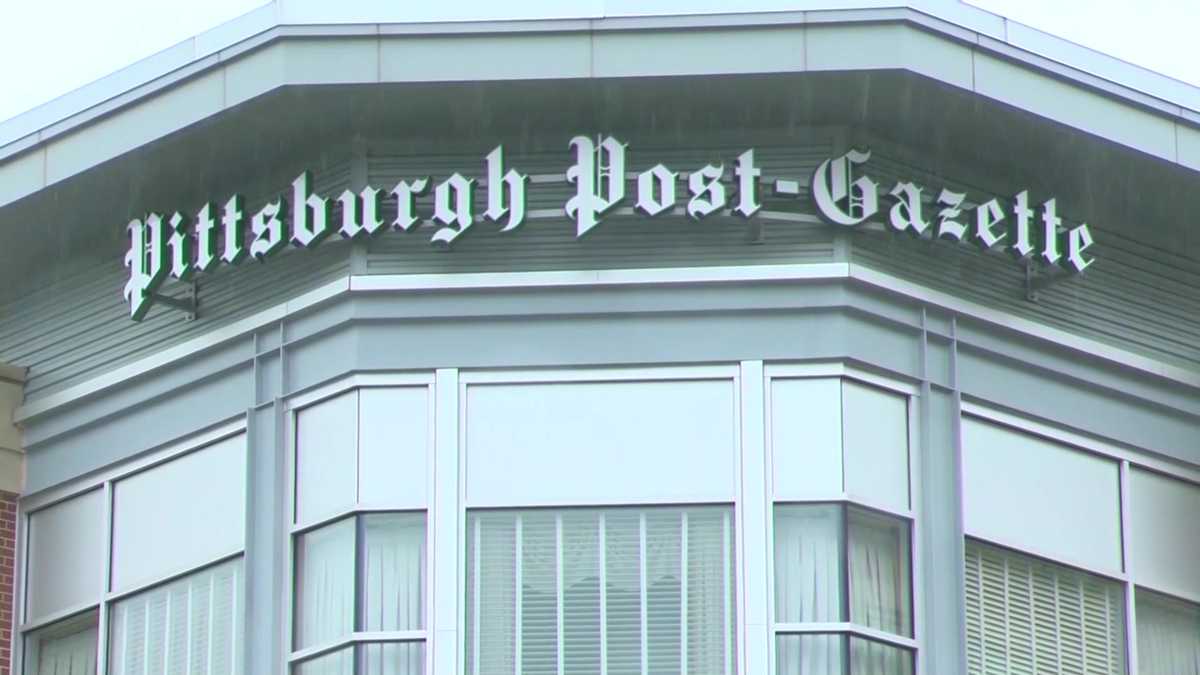
Hundreds of people have passed through the Pittsburgh Post-Gazette over its 240-year history. Wednesday, owner Block Communications announced they would cease operations in May.
For Noah Hiles, a sports enterprise reporter at the Post-Gazette, working at the paper was the fulfillment of a lifelong dream.
“I remember my first day working here, coming up the elevator and seeing the Pulitzer Prize our paper won for the Tree of Life shooting coverage,” Hiles said. “This place means something to the city of Pittsburgh. And the city is lesser without it.”
Hiles said that at 12:30 p.m. Monday, employees received a companywide email scheduling a Zoom meeting 45 minutes later. That’s when they heard they would soon be out of a job.
“There was a face I’d never seen before in a prerecorded video, who delivered some pretty bad news in a two-minute video,” he said.
In a statement, Block Communications wrote in part: “Over the past 20 years, Block Communications has lost more than $350 million in cash operating the Post-Gazette. Despite those efforts, the realities facing local journalism make continued cash losses at this scale no longer sustainable.”
Eric Deggans, who worked at the Pittsburgh Press and later the Post-Gazette after it bought the Press in the 1990s, said he thinks more could have been done to take care of the paper.
“I’ve always felt that the Block family was not always the best steward of the Post-Gazette newspaper,” Deggans said.
Deggans is now the Knight Professor of Journalism and Media Ethics at Washington and Lee University and an NPR critic at large.
“When you remove all of those people: all those talented journalists and researchers and writers and editors who are creating that great print product, then all of a sudden that sort of the bedrock of news reporting in the city starts to fall away,” he said.
“It would be like the Pirates leaving town,” Hiles said. “It would be like the Steelers leaving town. This place has been here longer than those two organizations.”
In other cities, journalists have banded together to create their own publications, and nonprofit organizations have stepped in to save local newspapers. Many in Pittsburgh are hopeful that something similar could happen here.