
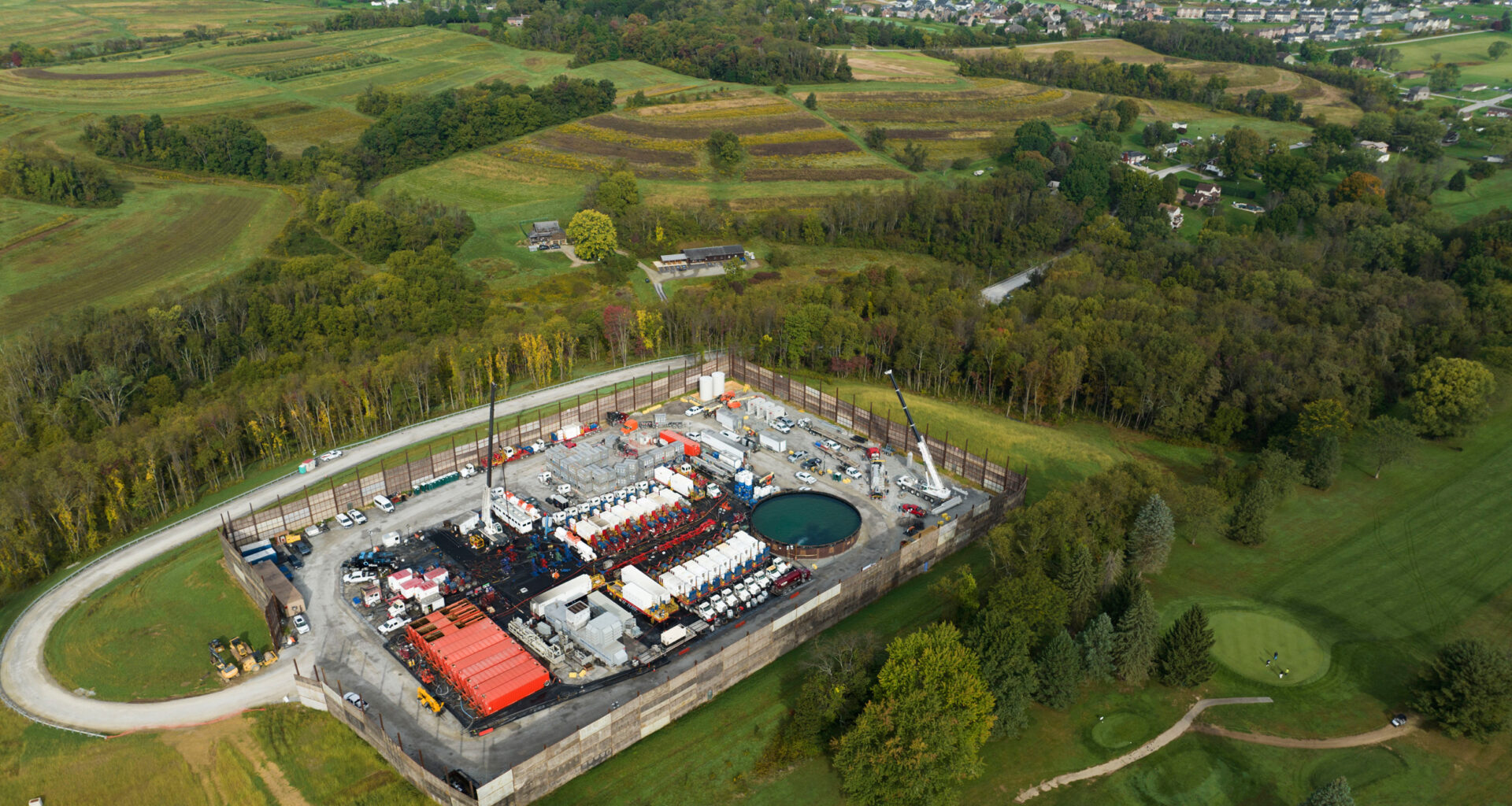
How much toxic oil and gas waste is produced in Pennsylvania every year, and where does it end up? Despite state efforts to track it, there’s no way to know for sure.
That’s one of the takeaways from a 3-part series recently published by Inside Climate News that takes a deep dive into solid waste from the gas industry in Pennsylvania to find out how much waste there is, where it’s being sent and who is paying attention.
Reporter Kiley Bense spoke with The Allegheny Front’s Julie Grant about what she and her colleagues found: lax oversight, increased radioactivity in frack waste and evidence of water contamination.
Listen to their conversation
https://s3.us-east-1.amazonaws.com/media.alleghenyfront.org/010926_FrackWaste_Kiley_2way.mp3
Julie Grant: What is this material [and] what does it contain?
Kiley Bense: Solid waste that’s created from fracking can cover a pretty wide range of materials, including things like drill cuttings. We’re talking about rocks. Some of this stuff is contaminated by chemicals and by radioactive elements that are coming from deep underground. This is one of the reasons that it can be contaminated with things like heavy metals and radioactive elements like radium.
Investigation: The fracking industry’s waste problem
Julie Grant: How much of this waste is produced by fracking companies and other drillers in Pennsylvania?
Kiley Bense: We found that over the past eight years, there have been millions of tons of this waste being produced because DEP, the state Department of Environmental Protection in Pennsylvania, is very understaffed. They don’t have the resources to do regular audits of these numbers. And so while we can give kind of a ballpark figure, we can’t say definitively how much the waste is.
Julie Grant: In your investigation, what did you uncover about the state’s efforts to track where this waste is going?
Kiley Bense: It was one of those situations where the more you learn about it, the less you feel like you know [laughs]. The state has a number of different ways of tracking the waste. So, one is this database that operators submit their own numbers to; it’s being updated all the time because operators submit monthly.
There’s not really anybody looking at the big picture and making sure that all the numbers correspond to each other and make sense.
But then there are also a number of other databases and programs that are doing some parts of tracking this waste. One of my sources referred to this as a “logistical mess.” It’s unclear where and how each piece of waste is being tracked because we have different departments within the Department of Environmental Protection tracking the waste. There’s not really anybody looking at the big picture and making sure that all the numbers correspond to each other and make sense.
Julie Grant: Why is it important, do you think, to track [solid waste from fracking]?
Kiley Bense: When there’s a spill or a leak or something goes wrong at a well pad or we have an instance of like illegal dumping, it’s a lot harder to figure out where that waste came from, who might be doing it, to enforce regulations around those things if you don’t know what the waste is or where it came from or if you have accurate numbers to compare these things to.
Julie Grant: You report that more information is coming out about the radioactivity of this waste. Can you talk about that?
Kiley Bense: I talked to scientists at the University of Pittsburgh who have done research, new research using DEP records, where they found that the radioactivity in the fracking waste that’s being produced over the last few years is much more radioactive than the DEP’s earlier numbers. It’s also much more radioactive than numbers that were used by the federal government in 2011.
They found that the radioactivity in the fracking waste that’s being produced over the last few years is much more radioactive than the DEP’s earlier numbers.
I think this is important because a lot of the state’s positions, or how they’re thinking about regulating the waste, is based on those older numbers, that older data. And now we have new information that the waste might be a lot more radioactive than we previously thought.
So we might want to rethink how we are regulating it. We’re going to make sure that workers are safe, for example, because they’re the ones who would be most exposed to it. And it’s just really crucial information to have when you’re thinking about how do we handle the waste.
Julie Grant: You also talk about the radioactive monitors going off when trucks containing oil and gas waste are coming into landfills. Can you talk about how often that’s happening and what we should take from that?
Kiley Bense: These are special alarms that are at the entrances to landfills; they go off when the truckload exceeds a certain amount of radioactivity. In 2023, alarms at landfills in Pennsylvania went off more than 500 times because of oil and gas waste. Pennsylvania actually is kind of ahead of other states on this. Like we have stricter regulations than other states do for our landfills in this particular instance. And so that’s useful for giving us some data about what type of waste is coming into the landfills and how radioactive it is.
In 2023, [radiation] alarms at landfills in Pennsylvania went off more than 500 times because of oil and gas waste.
Read More
Julie Grant: And you spoke with some activists who have been watching waterways near the Westmoreland Sanitary Landfill [30 miles south of Pittsburgh], where there have been some problems. What are the dangers here?
Kiley Bense: The people who have been really watching the Westmoreland landfill in Belle Vernon and are really concerned about water contamination. There have been a number of violations and issues at that landfill over the years. It’s also a landfill that has taken a lot of oil and gas waste over the years, and residents nearby have complained about odors or just impacts of that waste they’ve noticed from living nearby.
Activists now are visiting sites downstream from the landfill regularly to conduct testing and to check to see if there’s any evidence that contaminated water from the landfills could be getting into public waterways. It wouldn’t be the first time.
In some cases it seems likely that that [water] contamination [from landfills] is connected to oil and gas waste because what they’ve found is radium, which is a common contaminant in oil and gas waste.
In my investigation, I looked at all of the landfills across Pennsylvania that take oil and gas waste, and then I also looked at records, federal records for the waterways near those landfills. There is evidence that in some cases, there’s contamination happening from the landfills into the waterways. In some cases it seems likely that that contamination is connected to oil and gas waste because what they’ve found is radium, which is a common contaminant in oil and gas waste.
Julie Grant: One thing you mentioned in one of your stories was that there are a lot of eyes now on that one landfill, but there are something like 20 other landfills in the state that are accepting oil and gas waste that maybe don’t have as many people watching.
Kiley Bense: I think this is a really critical point. So there are at least 22 other landfills that are currently accepting oil and gas waste. There may be others that accepted it in the past, like before the period of time that we looked at.
Most of them do not have anywhere near the level of scrutiny that the Westmoreland landfill has, partly because they tend to be in rural areas. There just aren’t that many people around. And people, they just don’t know that this waste is coming into the landfill in such large volumes. If nobody’s doing regular testing of the waterways near the landfill, people just don’t know.
Julie Grant: I think you were looking into this for a number of months. Did anything really surprise you?
Kiley Bense: I think I was most surprised by the numbers that the new research from the University of Pittsburgh found in terms of how radioactive the waste was. [It] was much, much higher than previous estimates. And there’s just huge implications for those numbers. It really requires further research and study, and also follow-up from our government about what they’re doing to make sure that, you know, not just over the short term, over the long term, because we were talking about radioactive waste.
What are the long-term potential consequences, and are we doing enough to protect the environment and also public health?
What does it mean that we are producing this huge volume of waste every year, [and] that much of it is radioactive? You know, what are the long-term potential consequences, and are we doing enough to protect the environment and also public health?
A new book takes on the dangers of radioactivity in the oil and gas industry