
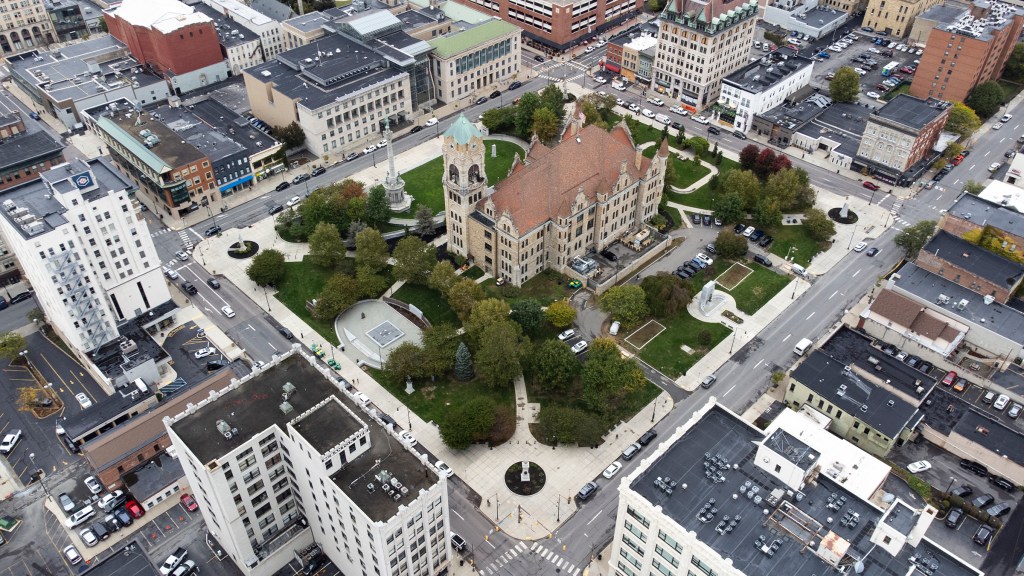
The year ahead has the potential to shape the future of Northeast Pennsylvania politically, physically, economically and otherwise.
With that in mind, here are some of the major events and storylines to keep an eye on in 2026:
Data center development
A flood of proposals to build artificial intelligence data centers in the region represented arguably the most significant and controversial local trend of the past year, with the proposed developments dominating headlines in 2025.
That seems likely to be the case this year, too.
Entering 2026, Lackawanna and Luzerne counties had received proposals to construct over 100 data center buildings across more than a dozen campuses as developers and tech giants look to cash in on the rapidly growing industry. That number has and will continue to fluctuate as plans are refined, but the region has clearly emerged as a data center hot spot, generating fierce opposition in the process.
What started last year as concept plans for data center projects will inch closer to materializing in 2026 as developers navigate the regulatory processes needed to move forward with construction.
While initial proposals often provide minimal information beyond basic site plans, data center developers will be required to divulge additional information as they seek approvals from local governments and state environmental regulators, including revealing the significant amounts of electricity required to fuel them and the vast amounts of water needed to cool their computers. The developments will require expensive investments by data centers into water and electric infrastructure, paying for the improvements to supply their sprawling campuses. At the same time, utilities like Pennsylvania American Water and PPL Electric Utilities must work with data centers to source the water and power.
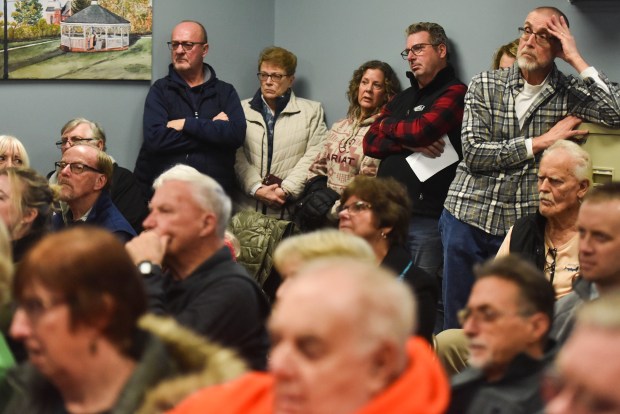 Borough residents listen to the meeting concerning data centers at the Archbald Borough Building in Archbald Monday, November 24, 2025. (SEAN MCKEAG / STAFF PHOTOGRAPHER)
Faced with the prospect of data centers in their backyards, residents throughout Northeast Pennsylvania have packed local meetings to share their concerns and voice their opposition — a trend that will continue into 2026 as developers attend mandatory public hearings.
Data center opponents fear the impacts the developments will have on water, electricity and the environment, worrying about noise, emissions from backup generators and the overall impact on their quality of life. At the same time, the industry promises significant tax revenue and jobs, both in building and operating the facilities.
Midterm race in the 8th
The 2026 midterm elections will determine which party controls the House of Representatives for the last two years of the second Trump administration, and whether first-term Republican U.S. Rep. Rob Bresnahan can hold the 8th Congressional District seat he narrowly won in 2024.
Bresnahan’s defeat of six-term incumbent Democratic U.S. Rep. Matt Cartwright helped the GOP hold a slim House majority it used last year to pass Trump’s One Big Beautiful Bill Act and other elements of his legislative agenda. His reelection in the 8th District would bolster Republicans’ chances of holding the House, maintaining unified control of Congress and breaking the “midterm curse” — the tendency for the incumbent president’s party to lose congressional seats during the midterms.
 Scranton Mayor Paige Gebhardt Cognetti and U.S. Rob Bresnahan, R-8, Dallas. (TIMES-TRIBUNE FILE)
Democratic primary voters will decide in May who will have the opportunity to take on Bresnahan, with Scranton Mayor Paige Gebhardt Cognetti and self-described “pro-life Democrat” Francis McHale of Scranton having already launched their congressional campaigns. Other potential Democratic candidates might still emerge.
Should Cognetti secure the Democratic nomination and ultimately unseat Bresnahan it would mark her second November election victory in as many years, albeit with higher stakes. Cognetti sailed to reelection as Scranton’s mayor in 2025 and began her seventh year as mayor this month.
The 8th District includes all of Lackawanna, Wayne and Pike counties and parts of Luzerne and Monroe counties.
As of Thursday, the nonpartisan Cook Political Report’s House Race Ratings, which assess the competitiveness of all 435 House races, listed the race as leaning Republican. Races that lean one way or another are competitive, but with one party or the other having an advantage.
CPR listed Republican U.S. Rep. Dan Meuser’s race in the 9th Congressional District as “solid Republican,” meaning it’s not considered competitive and not likely to be closely contested. Democrats Rachel Wallace of Schuylkill County, Daniel Byron of Lycoming County and Jenn Brothers of Susquehanna County seek the Democratic nomination in the May primary for the chance to challenge Meuser in November.
Commonwealth Health’s hospitals
Last year ended with the nonprofit Tenor Health Foundation’s acquisition of Commonwealth Health’s Regional Hospital of Scranton, its Moses Taylor Hospital campus and Wilkes-Barre General Hospital still pending, pushing the potential ownership change into 2026.
Hospital officials advised staff in late December that Tenor and the Pennsylvania Department of Health were still working to finalize approvals necessary for the ownership transition, with the Health Department noting in a subsequent statement that it is “committed to ensuring patient safety and responsible hospital ownership as part of its Change-in-Ownership review” of the Commonwealth Health facilities.
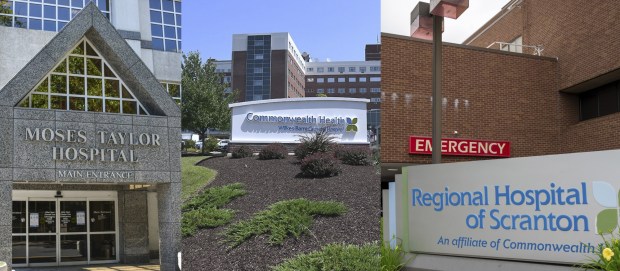 Tenor Health Foundation signed an agreement to acquire Commonwealth Health’s hospitals in Scranton and Wilkes-Barre, as well as associated clinics and outpatient centers. (FILE)
“The Department continues to work with Tenor Health Foundation on its applications to operate hospitals in Northeastern Pennsylvania,” Health Department spokesman Barry Ciccocioppo said Dec. 31. “However, at this time, the Department does not have all the information necessary to complete its review of Tenor’s application. The Department is waiting for Tenor to submit requested information.”
The department provided an update late Thursday reiterating its commitment to ensuring patient safety and responsible ownership while noting it “has received Tenor Health Foundation’s application to acquire the hospitals currently owned by Commonwealth Health Systems in Scranton and Wilkes-Barre.”
“The Department continues to review the change-in-ownership (CHOW) application,” it said.
But the lack of a resolution is frustrating health care workers and others who fear the potential collapse of the Tenor deal could lead to the closures of both Regional and Moses Taylor, Commonwealth’s financially struggling Scranton hospitals. Concern about the uncertain future of those facilities motivated a concerted, multifront push last year to save them after their sale to another nonprofit fell through in late 2024.
For those who see the Tenor transaction as a potential lifeline, the lack of closure is unsettling.
“Any disruption, delay, or uncertainty surrounding ownership has real consequences for the patients, families, and communities who rely on our hospitals, and for those of us who provide care every day,” Regional Hospital workers and union leaders wrote in a recent letter to the state Health Department. “While we recognize the Department’s responsibility to ensure compliance, safety, and regulatory integrity, we respectfully urge that those considerations be balanced with the urgent need for stability, transparency, and continuity of care.”
When in 2026 the transition to Tenor ownership might happen, and what operational or other changes Tenor might make as the new owner, remain unclear. Hospital workers eager for stability hope for favorable developments sooner than later.
“The Pennsylvania Department of Health has not yet concluded its work on the necessary approvals for the ownership transition of Commonwealth Health to Tenor Health, which is why the transaction has been delayed,” Community Health Systems Inc., Commonwealth’s Tennessee-based parent company, said in a statement. “We hope the reviews will be completed soon, but we don’t currently know how long this process will take.”
Tracking train project progress
The long-sought restoration of passenger rail service between Scranton and New York City remains at least a few years from fruition, but stakeholders working to advance the major transportation and economic development project hope for continued progress on the train front in 2026.
They’ve enjoyed considerable progress to this point, with the proposed Scranton-to-NYC project being one of the first in the nation to advance to the second step of the three-step federal Corridor Identification and Development Program designed to identify new, viable passenger train routes. Step two includes the completion of a Service Development Plan for the proposed route and serves as a precursor to the third step, which could deliver potentially hundreds of millions of dollars for rail construction and related work.
The project as proposed would see Amtrak passenger trains run between Scranton and Manhattan’s Penn Station with stops in Mount Pocono, East Stroudsburg, Blairstown, Dover, Morristown, Montclair and Newark. It would mark the return of passenger rail service between Scranton and NYC for the first time since 1970 and generate $84 million in new economic activity annually, per an Amtrak study released in March 2023.
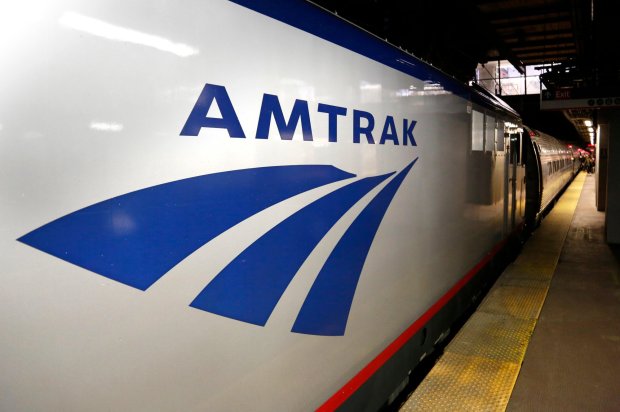 An Amtrak train prepares to leave New York’s Penn Station in May 2017. (Associated Press File)
Local support for the project has been bipartisan, with former Democratic U.S. Rep. Matt Cartwright having served as a chief advocate in Washington. Republican U.S. Rep. Rob Bresnahan, who unseated Cartwright in 2024, has continued to support it.
Larry Malski, president of the Pennsylvania Northeast Regional Railroad Authority and another of the rail project’s chief advocates, said the authority, the state Department of Transportation and other partners are working to complete, submit and secure approval for the Service Development Plan. Whether they’ll complete that process this year remains to be seen.
“That’s what we’re working on … with the provision that even once we get it submitted it may come back with the need for revisions and things like that, so it could easily go into next year,” Malski said.
He described the third step in the Corridor ID Program, which project stakeholders hope to advance to next, as the “gateway to the big funding.”
“That’s kind of your ticket to get the funding you need to really build the thing,” Malski said. “That’s the key.”
Step three includes additional project development work — engineering, environmental reviews and the preparation of bid documents, budgets and timelines, among other examples — to prepare the proposed passenger rail corridor for construction and eventual service. It’s a prerequisite to accessing funding earmarked for such projects.
Malski stressed the proposed corridor likely won’t be ready to run Amtrak trains for at least several years, but noted it is one of just four in the country to make it this far.
“All we can do is do the best we can, and we kind of feel that that’s what we’re doing,” he said.
Scranton streetscapes, park improvements
Sweeping changes to downtown Scranton streetscapes that began last year will continue in 2026.
In October, Scranton City Council adopted three ordinances from Mayor Paige Gebhardt Cognetti underlying changes that eventually will include replacing some traffic lights with stop signs and reverting some one-way streets to two-way. Other aspects will include narrowing vehicle travel lanes and adding curb bump-outs at intersections to improve pedestrian safety; and in certain spots adding bike lanes and parking spaces.
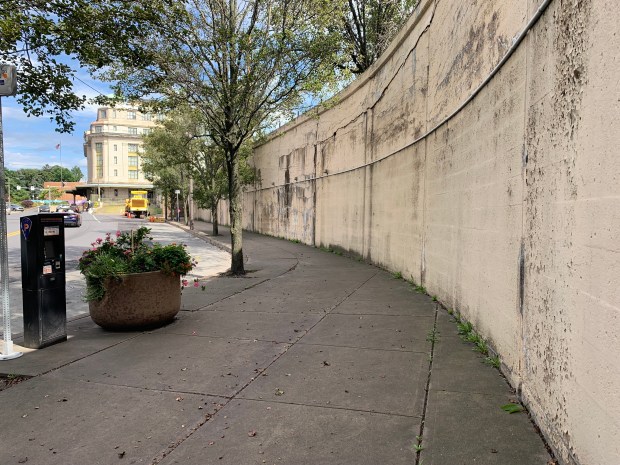 A circa-1908 retaining wall along Lackawanna Avenue near the Radisson Lackawanna Station Hotel in downtown Scranton on Tuesday, Aug. 19, 2025. A Scranton streetscape project will repair the 120-foot-long wall. (JIM LOCKWOOD / STAFF PHOTO)
The first streetscape project, set in motion last summer, involves repair of a 120-foot-long retaining wall dating to 1908 along Lackawanna Avenue, near the historic Radisson at Lackawanna Station hotel. The “Lackawanna Avenue Streetscape project” will reinforce the approximately 15-foot-tall, curved retaining wall spanning the block between the Radisson and the Station Center building at 600 Lackawanna Ave. Work on that retaining wall got underway recently. Other work in this stretch will include: repairing a smaller, shorter retaining wall near a small bus-stop shelter where Jefferson Avenue meets Lackawanna Avenue; replacing sidewalks and curbs on both sides of the streets, from the Biden Expressway and around the bend to the intersection of Adams and Cedar avenues; installing period lighting; and planting trees.
A smaller project done in the fall involved removal of the concrete median in the 500 block of Lackawanna Avenue and creation of several parking spaces on the odd-numbered side of that street.
According to a city announcement last month, streetscape projects ahead include:
• Wyoming Avenue: from Biden to Linden streets, construction of sidewalks and curbs, installation of accessible ramps and period lighting, landscape improvements and sidewalk vault improvements.
• Linden Street and North Washington Avenue: including Adams Avenue between Biden and Linden streets and the intersection of Linden Street and Adams Avenue; and North Washington Avenue from Linden to Vine streets; new sidewalks and period lighting, landscape improvements, new communication duct banks, and traffic signal and sidewalk vault improvements.
• Adams Avenue: from Linden to Mulberry streets; and on Mulberry Street from Adams to Jefferson avenues; and on Jefferson Avenue from Mulberry to Linden streets; construction of new communication duct banks; curbs and sidewalks; new period lighting; and improvements to traffic signals, sidewalk vaults and landscaping.
“Whether you’re in a vehicle or on foot, we are serious about making Scranton safer for everyone,” Cognetti said in the announcement. “Council’s approval of our streetscape legislation clears the way for many projects to begin. We’re asking everyone for their patience traveling downtown as we work to improve our streets, sidewalks, lighting and more.”
The estimated cost of Scranton’s downtown streetscape projects is $15.3 million. Projects are supported by $10.4 million in federal American Rescue Plan Act funds, $4.1 million from multiple grant sources, $815,000 in state Community Development Block Grant funds and $29,409 in city funds.
The city in October initially referenced a $27.3 million figure for streetscape projects, but later clarified that $12 million of that amount included broader street paving, replacement of street signs, and crosswalk and school-zone painting done over several years under the Cognetti administration.
Meanwhile, Scranton’s ongoing improvements in parks and recreation sites also will continue this year, including:
• Nay Aug Park’s pool drought will end this year with the opening of a new activity pool that was completed last fall. Pickleball and multi-courts are under construction next to the pool complex.
• Creation of the city’s second splash pad park continues with project completion expected in late spring and ready for the summer season of 2026. This conversion of the former Penn Ridge pool site on Capouse Avenue in Pine Brook into a splash park and playground called Capouse Avenue Park began last summer. Recent work has involved excavation, installation of playground apparatus and construction of a pump house.

Work on a large retaining wall along Lackawanna Avenue in downtown Scranton on Tuesday, Jan. 6, 2026. (JIM LOCKWOOD / STAFF PHOTO)
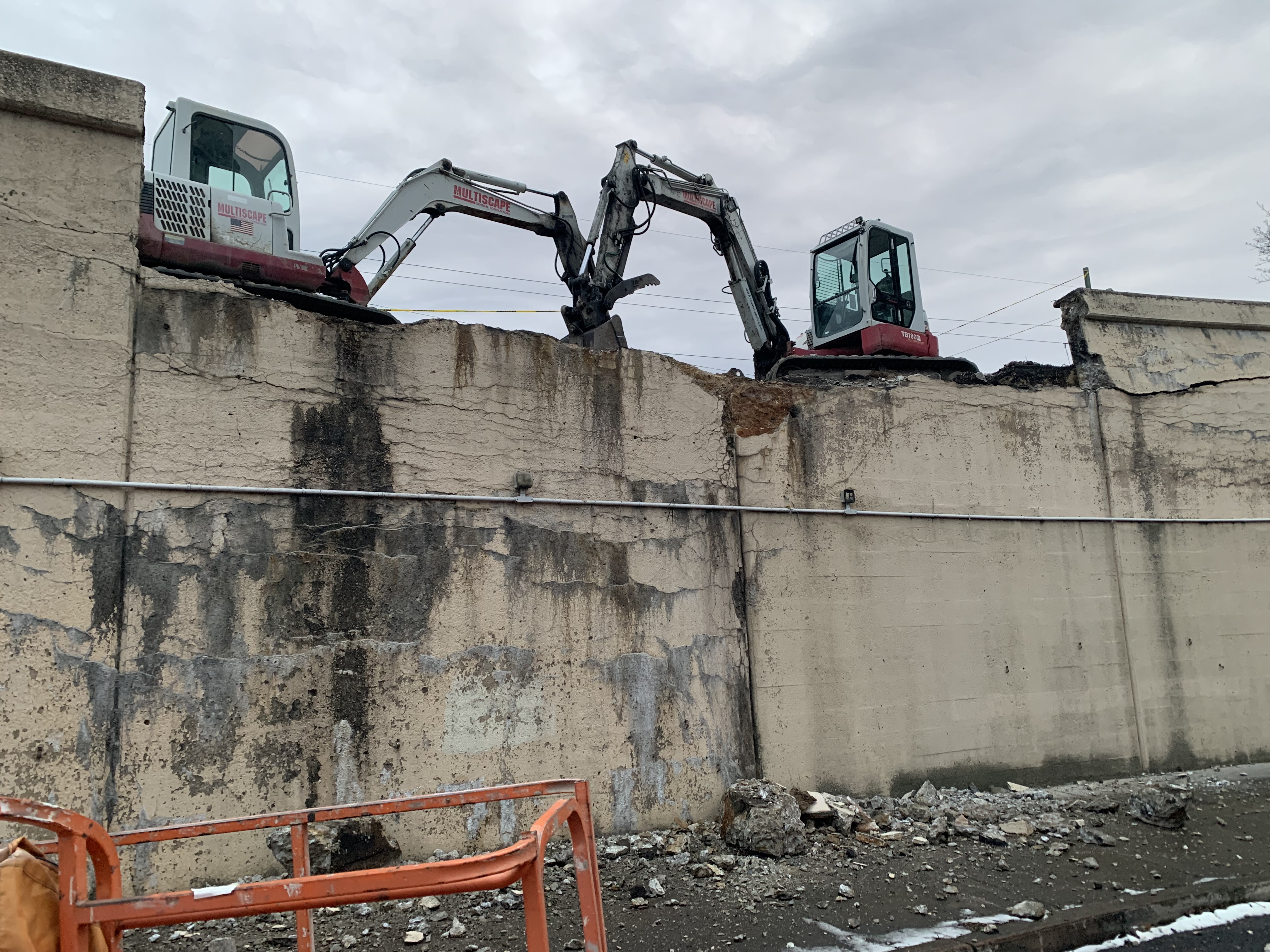
Work on a large retaining wall along Lackawanna Avenue in downtown Scranton on Tuesday, Jan. 6, 2026. (JIM LOCKWOOD / STAFF PHOTO)
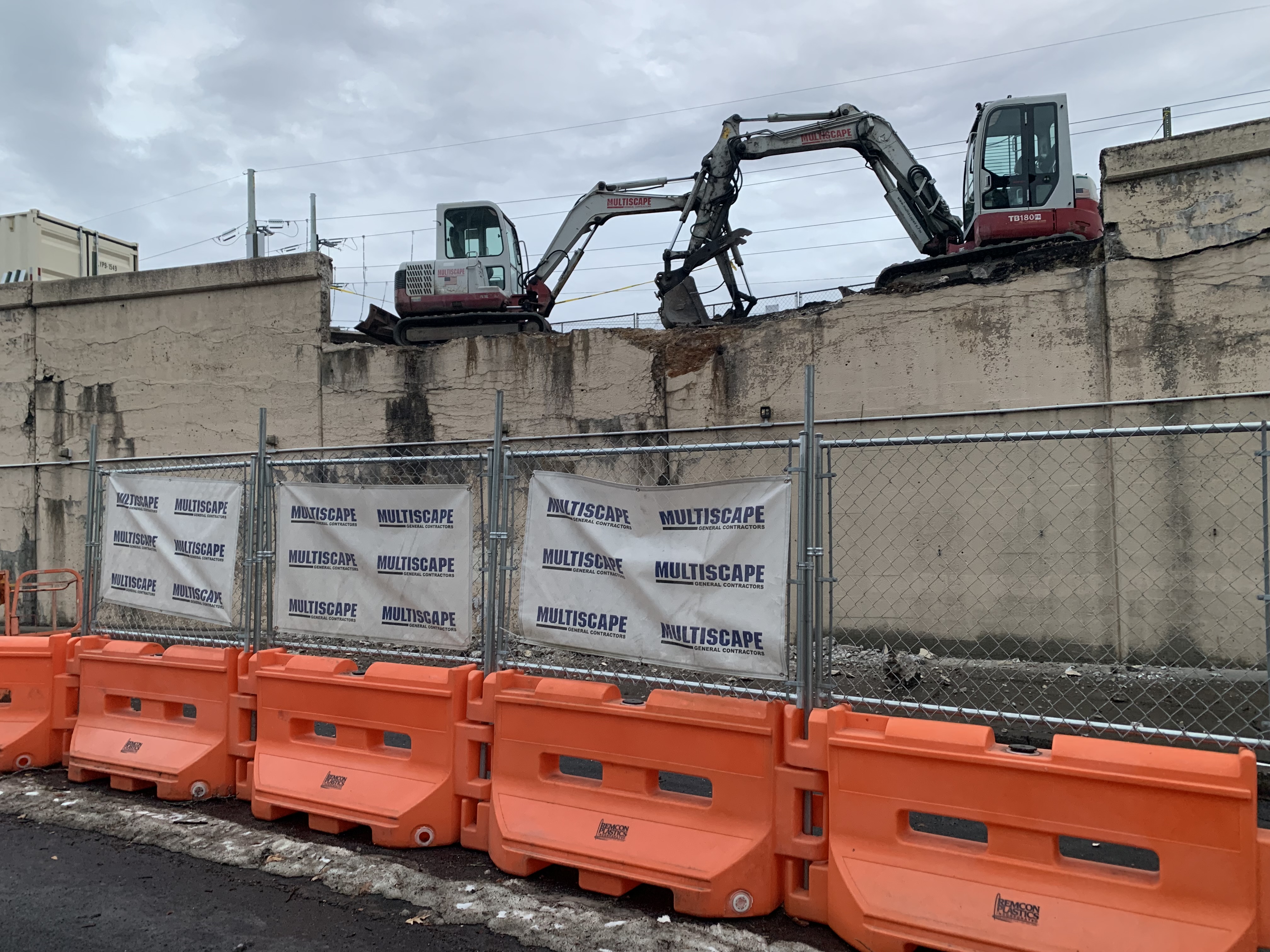
Work on a large retaining wall along Lackawanna Avenue in downtown Scranton on Tuesday, Jan. 6, 2026. (JIM LOCKWOOD / STAFF PHOTO)
Show Caption
1 of 3
Work on a large retaining wall along Lackawanna Avenue in downtown Scranton on Tuesday, Jan. 6, 2026. (JIM LOCKWOOD / STAFF PHOTO)