
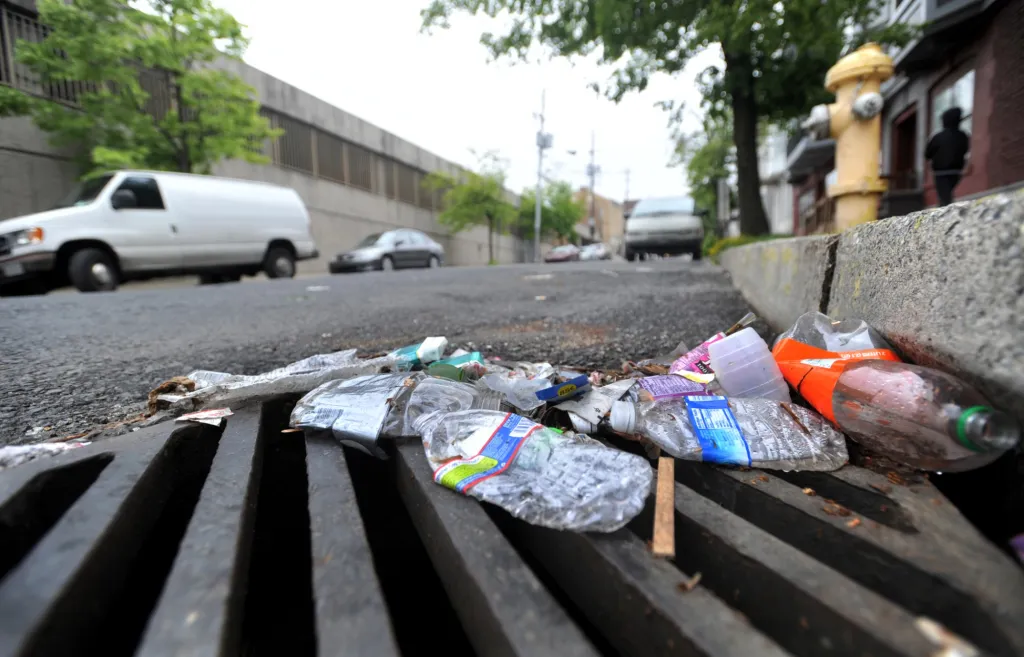
Pennsylvania roads are lined with garbage
Having traveled south to visit family, the drive from Pennsylvania required traveling through Maryland, West Virginia, Virginia, North Carolina and South Carolina. Road surface conditions were acceptable through all states.
What was not acceptable was every state but one had roads that were clean and free of trash. Pennsylvania roads from Easton to the Interstate 81 border with Maryland are littered with junk and common household trash.
Elected officials from both sides of the aisle travel the state. Can they be oblivious to the garbage? Is it not sexy enough or perhaps not enough of a headline grabbing issue to merit action? Perhaps a call to their counterparts in the aforementioned states would be beneficial as to how they achieve keeping roads clean.
A reasonable person would conclude that with the gas tax and various other taxes we pay and if said monies were managed competently there would be funds available to keep our roads clean.
This is not a partisan issue but one that requires pride, common sense and a desire to serve constituents.
Mark Porcaro
Palmer Township
Attack on Venezuela raises questions
What has Venezuela done to the United States? Why are we bullying a country that has no nuclear weapons and supports nuclear disarmament? Is this a distraction from the Epstein files release? Why are we harassing a country that, according to counter-narcotics experts cited on a BBC News site on Jan. 3, “is a relatively minor player in global drug trafficking, acting as a transit country through which drugs produced elsewhere are smuggled”? Is this a grab for control of Venezuelan oil reserves? Whatever else “this” is, it is MAGA gone wrong.
Beverly Springer
Emmaus
Threatening someone over politics is un-American
My home state of Indiana has been under pressure to do early redistricting. Legislators who voted against this measure have received death threats, bombing threats to themselves and their families, as well as “SWAT calls.”
I see this as un-American. Such behavior is most apt to be seen in an authoritarian regime. In the America I love, we settle our differences at the voting booth, not with threats and assassinations.
Indiana has been called the Mississippi of the north. If behavior like this continues, this moniker will ring true. As a native Hoosier, I hope it stops right now.
Martha Fox
South Whitehall Township
We need ethical members of Congress
On Nov. 22, 1963, I was sitting in seventh grade when the teacher announced President Kennedy had been shot. We were sent home early. The events surrounding the assassination were unbelievable.
On Jan. 6, 2021, I was driving my car when my girlfriend called to ask if I was watching television. I rushed home. What I witnessed that day was unbelievable.
Now, after reading special counsel Jack Smith’s testimony to Congress about the Jan. 6 attack on the Capitol, it’s unbelievable to this Army Reserve veteran that Democratic and Republican politicians — who witnessed the same violence I saw that day — were unsuccessful in convicting Donald Trump for involvement in that incident.
Trump’s continuing malfeasance can only be stopped when voters elect ethical Democrats. And, elect ethical Republicans, too … if they still exist.
Reggie Regrut
Phillipsburg
To fight illegal drug use reduce the demand
Focusing on reducing the demand for illegal drugs in the United States is a more effective approach rather than spending massive resources on stopping their supply, including waging wars with other countries. The business of illicit drugs is highly lucrative, which is supported mainly by their strong demand. As a result, drugs will continue to enter the country despite strict border controls and law enforcement efforts. History has shown that traffickers adapt quickly, they find new routes and methods that make supply-focused strategies more costly and often ineffective.
In contrast, reducing demand addresses the root cause of the problem. Investment in education, prevention programs, mental health services and addiction treatment can lower drug use over time and help individuals make healthier choices. When fewer people seek drugs, the illegal market naturally shrinks, reducing profits for criminal organizations. Additionally, demand-reduction strategies can strengthen communities by lowering crime rates, improving public health and reducing the strain on the justice system.
Overall, targeting demand creates long-term, sustainable change, while supply-only approaches offer limited and temporary results.
Mahesh Vyas
Hanover Township, Northampton County
Venezuela action a foreign policy mistake
The “spectacular” success of Operation Absolute Resolve is a dangerous illusion. While the capture of Nicolas Maduro may satisfy a short-term desire for accountability, the administration’s plan to “run the country” until a “judicious transition” is a textbook recipe for a decade-long quagmire.
We have seen this script before in Baghdad and Kabul. Decapitating a regime does not dismantle the underlying power structures; it merely shatters them into a thousand violent, unpredictable pieces. By bypassing Congress and flouting international law, we have not liberated Venezuela but occupied it, handing a massive propaganda victory to every Chavista militia member and colectivo now pivoting toward an asymmetric insurgency.
Furthermore, this unilateral action has alienated regional partners and traditional allies, turning a humanitarian crisis into a geopolitical tinderbox. If we believe the U.S. can simply fix a complex nation through sheer military force and oil-sector management, we have learned nothing from the last 20 years of foreign policy failures. We are trading a centralized dictator for decentralized chaos, ensuring that Venezuela remains ungovernable while American prestige sinks into the Caribbean. It is not a victory; it is a predictable, avoidable blunder.
Donald Cease
Allentown
The Morning Call publishes letters from readers online and in print several times a week. Submit a letter to the editor at letters@mcall.com. The views expressed in this piece are those of its individual author(s), and should not be interpreted as reflecting the views of this publication.