
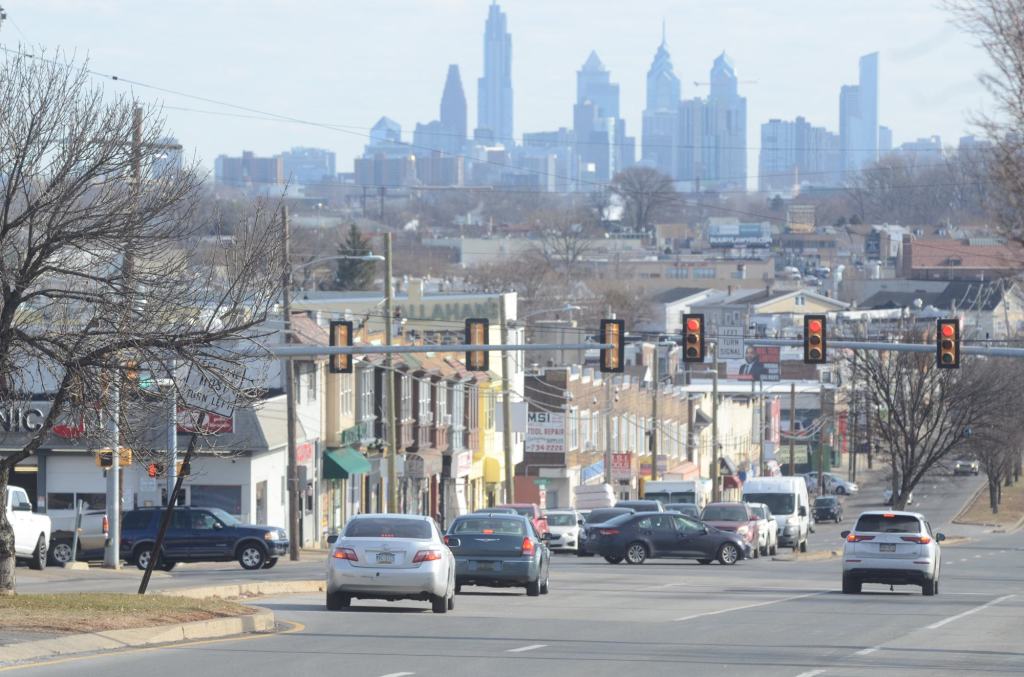
What are the trends Delaware County police anticipate for 2026?
The Daily Times polled various police chiefs and answers ranged from increased use of drones, including on initial dispatches, as well as regional cooperation with events surrounding the nation’s 250th celebrations.
In Marple Township, Chief Brandon Graeff said he wants to deepen his knowledge and understanding into how artificial intelligence can be implemented into policing.
“From complementing officers’ daily activities to monitoring crime trends/criminal behaviors, I believe AI will play a large role in our profession,” Graeff said.
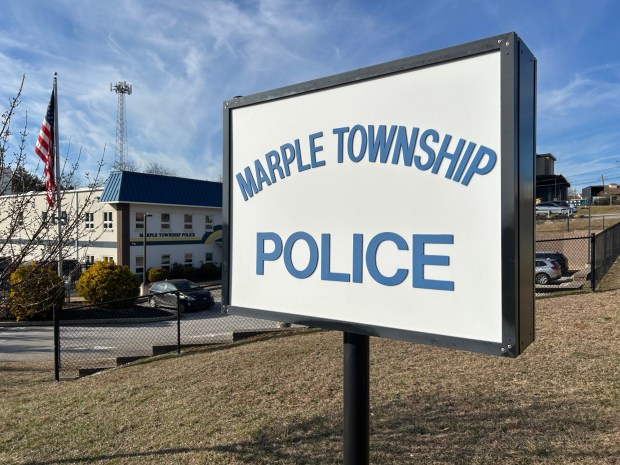 Marple police. (PETE BANNAN-DAILY TIMES)
Graeff said he doesn’t want to replace the human component of officers interacting with the public, but to increase their efficiency.
“The benefit to the public will be exponential,” he said.
Graeff said he will continue to provide my officers with the best tools and equipment he can in order to support what they do within the community and with the support of the township manager, Larry Gentile.
In Nether Providence, Chief of Police David Splain said the coming year will be defined by preparation, coordination, and adaptability, particularly as the area prepares for numerous events surrounding nation’s 250th birthday.
Splain said there is an increased emphasis on regional planning and inter-agency collaboration with the recognition that public safety during major events depends as much on planning and communication as on enforcement.
 Nether Providence Police Station. (PETE BANNAN-DAILY TIMES)
“Suburban departments are working more closely with county, state, and federal partners to ensure consistent operational standards, communications interoperability, and coordinated response plans for large-scale events that will draw visitors well beyond municipal borders,” Splain said. “Even departments that do not host signature events directly will play a supporting role through traffic management, mutual aid, and contingency planning.”
Splain believe staffing and retention also remain a central focus.
“Departments are prioritizing experience, training, and officer wellness to ensure they can meet heightened operational demands without sacrificing day-to-day service,” he said. “In suburban communities, residents expect officers to be both highly professional and highly visible, especially during periods of increased activity and regional attention.

Technology continues to play an essential role as a force multiplier to improve situational awareness and allow departments to respond efficiently without overextending personnel, the chief said.
“In 2026, suburban departments are increasingly relying on real-time information sharing, video and digital evidence systems, and data-driven deployment to manage special events while maintaining routine patrol and investigative functions,” Splain said.
“Overall, suburban policing in 2026 is about readiness: balancing everyday community policing responsibilities with the ability to support large-scale regional events, all while maintaining public trust and operational professionalism,” Splain said.
In East Lansdowne, Chief James Cadden said his department is focusing on “procedural justice” along with achieving PLEAC Accreditation certification.
Procedural justice focuses on the way police and other legal authorities interact with the public and how the characteristics of those interactions shape the public’s views of the police, their willingness to obey the law, cooperation with the police, according to the Justice Department.
“Embracing the philosophy of ‘Procedural Justice’ in all aspects of police service is my overall goal,” Cadden said.
His department has seen a complete modernization and replacement of equipment and service gear, including uniforms, badges, emblems, service weapons, non-lethal weapons and they are looking to more than double training for frontline officers and command staff alike.
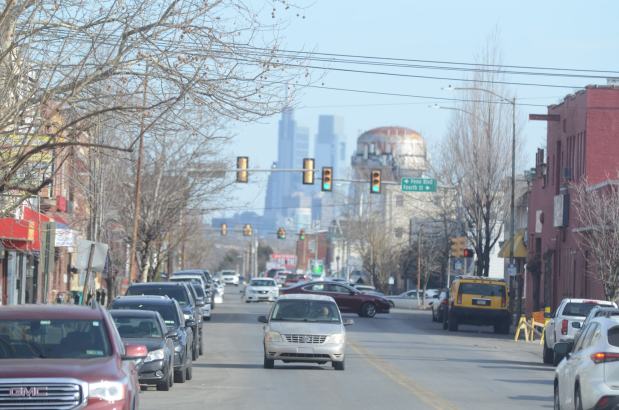 Baltimore Avenue in East Lansdowne. (PETE BANNAN-DAILY TIMES)
East Lansdowne expects to create two additional supervisory ranks to increase supervision & oversight and also to provide resources and guidance to the patrol officers.
Cadden said his department’s greatest strength is what some see as the greatest weakness, their size.
With a small department there is not a need for a community relations officer or an “outreach” plan, that is the way it is in his department.
“Every officer in the department can tell you the first name of someone who lives in most residences in our town,” Cadden said.
He said most residents can at the very least recognize the faces of, or even tell you the names, of officers.
“There is a connection and an understanding with those whom we serve and its benefits are more than I can describe here, but is a big part of why, after 35 years I still have not retired,” Cadden said.
In Prospect Park Police Officers will begin using body cameras and the department is also investigating professional certification, said Chief Dave Madonna.
“In 2026 our focus will be to blend the best of traditional, relationship-based policing with modern tools and training,” Madonna said. We will be implementing our first body-worn camera program in the early stages of this year and we will expand our active-shooter preparedness to ensure both transparency and readiness.”
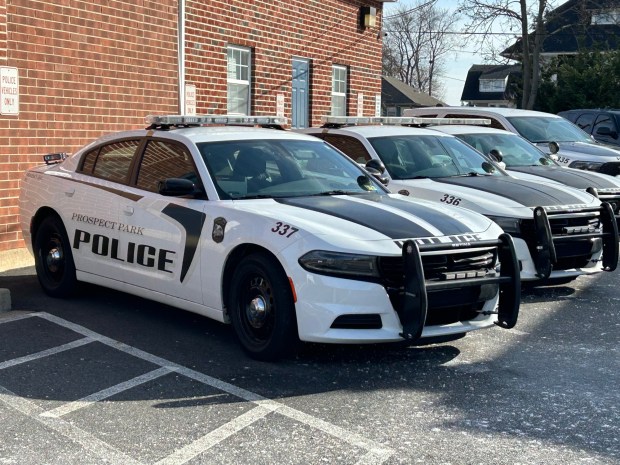 Prospect Park Police. (PETE BANNAN-DAILY TIMES)
Madonna said his department, like many, continues to navigate staffing challenges, but their commitment to providing “high-quality police service to the community remains unwavering.”
At some point, Prospect Park would like to explore the formal accreditation process to further strengthen policies, training standards and accountability.
In Darby, Chief Joseph Gabe said his department saw increased staffing at the end of 2025 and now it is also bringing in new technology, including a drone and public security cameras.
Darby was able to hire two additional officers and now has 22 full-time police officers and four part-time police officers.
He credited strong communication and collaboration with our elected officials, who firmly believe in the importance of public safety.
“For a small borough like Darby, this speaks volumes about what can be accomplished when police leadership and elected officials work together to do what is right for the community,” Gabe said. “I believe that as we move into 2026, this continued teamwork will further benefit our residents.”
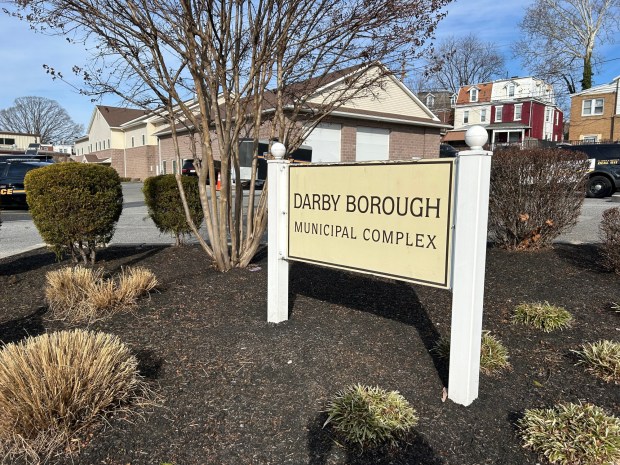 Darby Borough Municipal Complex. (PETE BANNAN-DAILY TIMES)
Gabe said two state grants that fund technology will have a significant impact on his department, which has a high call volume. One grant funds the purchase of drones, training for departmental drone pilots, and police vehicles. The second grant allow will allow the borough to install live cameras throughout the community to enhance public safety efforts.
“I believe the combination of increased staffing, the use of drones, and the implementation of borough-wide live camera systems will play a major role in helping to keep crime down,” Gabe said. “While there will always be crime, the Darby Borough Police Department remains committed, as it always has been, to protecting the citizens of our community.”
In Upper Darby, police Superintendent Timothy Bernhardt said his department will continue the same approach used in 2025, “focusing on data-driven policing, strong community partnerships, and technology to enhance public safety and support our officers.”
Bernhardt said working with Mayor Ed Brown, the administration and council, the department has invested in systems that allow the department to analyze calls for service, high-call locations, repeat problem areas, and seasonal trends.
“This information allows us to deploy officers where and when they are needed most, using resources efficiently rather than increasing patrols across all areas,” Bernhardt said. “Data is used to connect residents and locations with the right township services.”
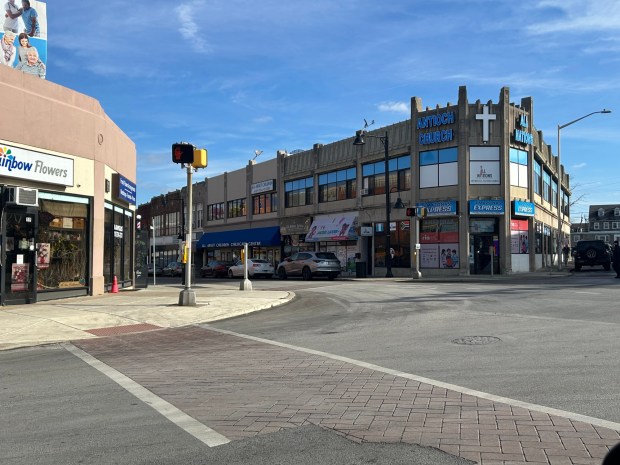 Garrett Road in Upper Darby. (PETE BANNAN-DAILY TIMES)
Issues like property problems or code violations are referred to Licenses and Inspections, so they are handled by the correct department instead of only by the police.
Bernhardt said that technology allows police to direct other services, such as social services, to people who may need extra support.
In Upper Darby specialty units are an important part of their strategy.
Highway Patrol and Traffic Enforcement units focus on areas with higher crash rates and frequent speeding complaints. These units operate independently of patrol shifts and can concentrate on problem areas and improve traffic safety.
 Upper Darby police. (PETE BANNAN-DAILY TIMES)
Bernhardt said community policing will remain a priority in 2026. The Community Affairs Unit will continue building relationships through programs such as TAPS in public and parochial schools and the Upper Darby Police Explorer Program, strengthening connections with youth, families, and the community.
Mental health response continues to grow as a focus and has shown positive results, the superintendent said.
“Our mental health program equips officers with additional tools and includes trained professionals responding alongside officers to de-escalate situations and connect individuals with services.”
The program will continue to expand.
Technology will remain a key component in Upper Darby. The department will continue using drones to improve officer safety and situational awareness by providing real-time information during serious incidents.
Bernhardt said their goal is to strategically place drones throughout the township so they can be deployed simultaneously with patrol units in response to 911 calls.
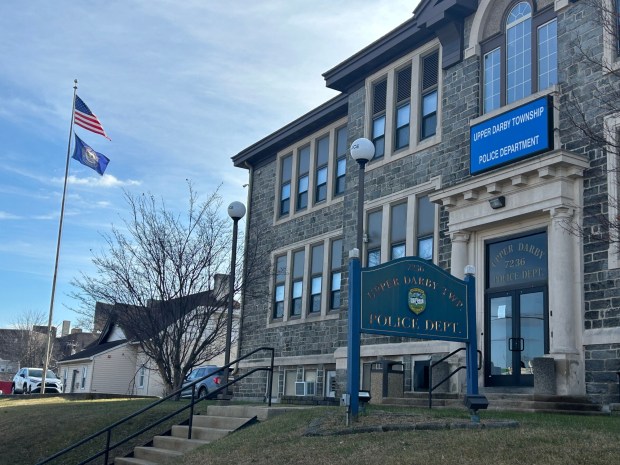 Upper Darby police station. (PETE BANNAN-DAILY TIMES)
Bernhardt said the department continues to emphasize professional development for officers, supervisors, and command staff through ongoing training and education.
“This commitment ensures our personnel remain well trained, prepared, and capable of meeting the needs of both the department and the community.”
Officer wellness remains a priority in the department with the Critical Incident Stress Management program supporting officers experiencing job-related stress.
“As policing evolves, our focus remains on prevention, teamwork, officer well-being, and earning the trust of the community,” Bernhardt said. “Through continued use of data, technology, community partnerships, and strategic investment, the Upper Darby Police Department will remain proactive and prepared to serve the community in 2026 and beyond.”
In Yeadon, Chief Henry J. Giammarco Jr. said his department is on the verge of becoming accredited, which he said is a significant milestone for both the department and the community.
The department is scheduled to meet with the accreditation board on Jan. 22 and that achieving that goal reflects the force’s “commitment to accountability, transparency, and best practices in law enforcement.”
Giammarco said from an broader view, there has been a nationwide decrease in violent crime, “which is encouraging.”
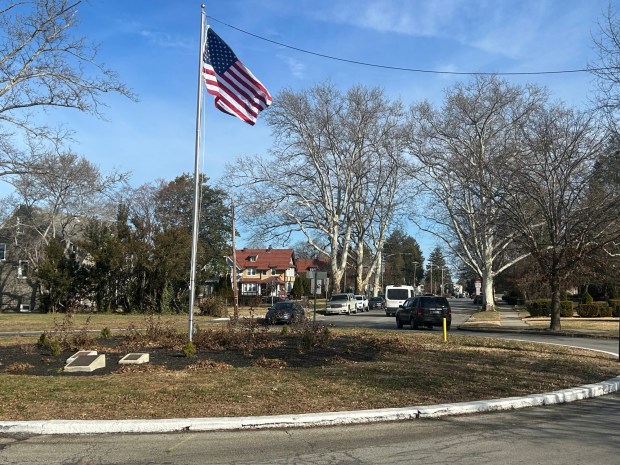 The circle at Longacre Boulevard and Cypress Street in Yeadon. (PETE BANNAN-DAILY TIMES)
“We are hopeful this trend continues into the coming year and are positioning our department to proactively support this progress at the local level,” Giammarco said. “As violent crime declines, our focus will increasingly center on quality-of-life issues. These concerns matter deeply to residents, businesses, and visitors, and addressing them directly helps strengthen community trust and overall safety.”
Giammarco said a key priority for the department is continuing to build strong relationships with community members. Positive engagement, open communication, and mutual respect are essential to effective policing.
“We remain committed to strengthening these partnerships across all segments of the community,” he said.
Giammarco said residents and guests deserve to feel safe, supported, and respected and to that end, the department will continue to enforce traffic laws, address nuisance and quality-of-life concerns, and provide the highest possible level of service to the Yeadon community and those visiting our borough.
In Eddystone, Police Chief Edward Mokshefsky said the trend for 2026 will be to continue with accreditation and coming up with better recruitment strategies.
“Every department is having trouble with staffing,” he said.
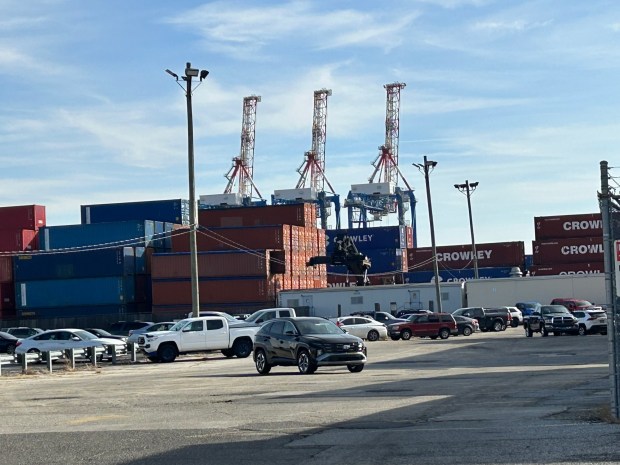 Penn Terminals in Eddystone. (PETE BANNAN-DAILY TIMES)
The chief said Eddystone expects to start the Civil Service process to hire one additional officer to add to a 13-member department.