
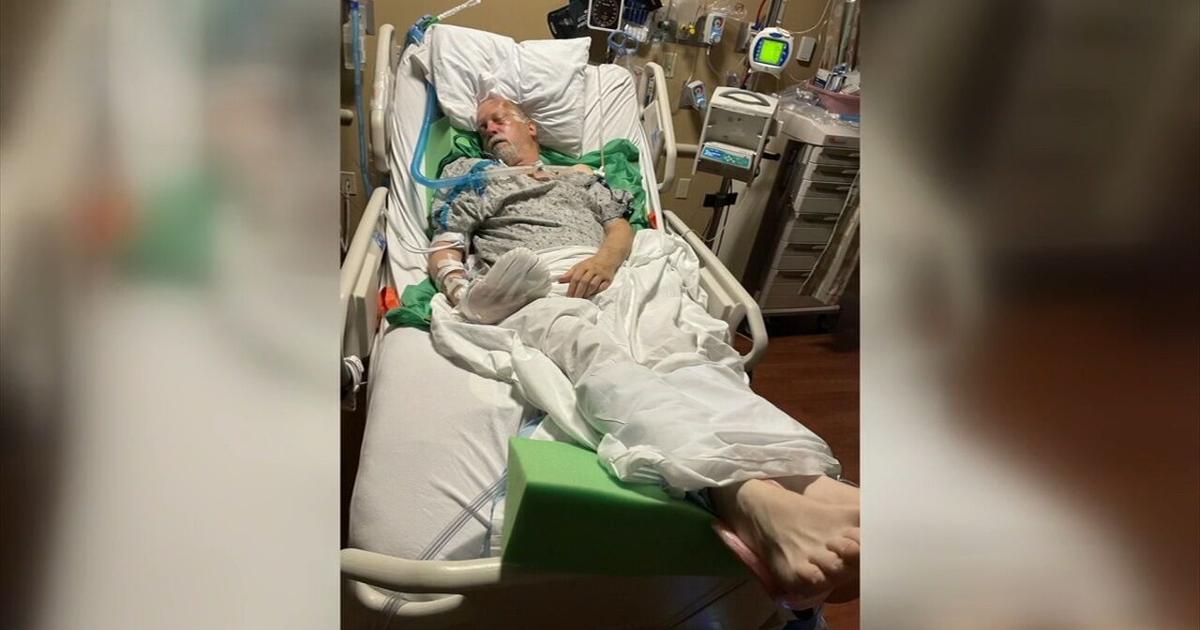
ALLENTOWN, Pa. – Allentown’s Toyna and Matthew Arnold have been married for 8 years, 2026 already brought the couple radical change.
“He just makes me smile, and he makes me laugh,” Toyna Arnold said about her husband Matthew.
“On January 1, what happened with your health care?” 69 News reporter Bo Koltnow asked Arnold.
“I had to take him off of my policy,” she said, referring to her husband.
As Affordable Care Act Subsidies expired, Toyna, who works 50 hours a week in a group home for the intellectually disabled, says the cost of keeping Matthew, who lost his job, on her health care, is now an extra $700 a month. The total is more than her salary.
“That’s the last thing I wanted to do. He had issues that he needs to see a doctor,” Toyna said.
Matthew is blind in one eye, and injections are keeping his sight in the other. Without health coverage, they say that clinical cost is unaffordable, and he’ll go blind without them.
“It’s sad, because I was raised to believe that that’s what you did. You go to work, you got health insurance through your work, and you just go through life. And that’s not life. Now that’s taken,” Toyna said.
Tonya is now contemplating divorce, as then Matthew could qualify for benefits. For those who say it’s a complicated political issue, Tonya responds, “It’s not complicated. Everybody – the people that are arguing and making these choices – they don’t have to worry about health insurance.”
Northampton County high school sweethearts Wendy and Mike Hujsa, married 39 years, are now retired.
The retirement is forced for Mike, who was a machinist for 41 years. He suffered a traumatic brain injury a few years ago after he fell when his ladder buckled. He spent 3 weeks in a coma, ultimately losing his job and health coverage.
“We saved for a rainy day. We didn’t save for a monsoon or a tsunami,” they said of their current health care costs.
They’re facing a financial storm as their Pennie plan, Pennsylvania’s state-run health care system, increased from around $400 per month, to $1,019, for the same plan.
With Mike still in need of consistent care they opted for a reduced version, still nearly double their 2025 cost, now with a $1,700 deductible.
“What is your take on just the way health care is right now in this country?” Bo Koltnow asked.
“Out of control. I don’t think it needs to be the way it is,” the couple said.
“The reason we put these enhanced tax credits in place was because during the pandemic, we recognize the importance of people being covered,” said Anthony Wright.
But millions may now not be, says Anthony Wright, Executive Director of Families USA. It’s a 45-year-old, non-partisan national consumer advocacy on group health care issues.
Wright says upwards of 20 million Americans are seeing massive spikes in monthly costs, possibly kicking 5 million people off of health care and ultimately rising rates for all.
“This is not something that’s happening organically. This is a policy choice by Congress not to extend these tax credits, and as a result, people are paying more and getting less,” Wright said.