
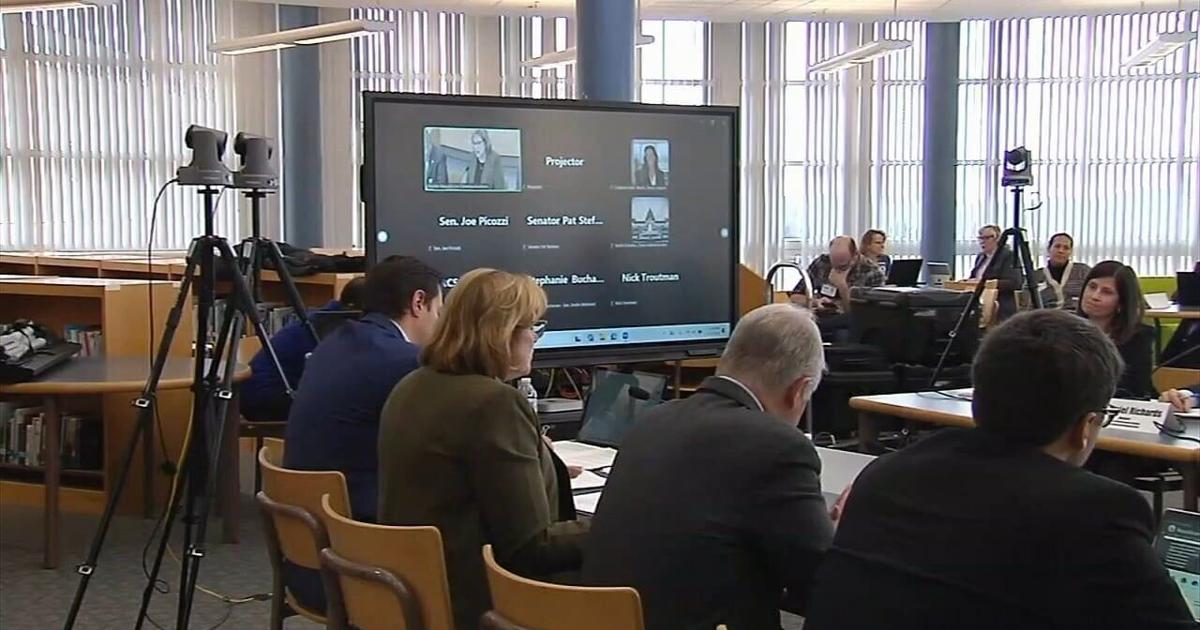
AMITY TWP, Pa. – Inside the Daniel Boone Area Middle School library, state lawmakers and educators spent the afternoon talking about one thing that affects every subject in school: reading.
The Pennsylvania Senate Majority Policy Committee held the public hearing to examine literacy rates across the state and a teaching method known as structured literacy.
Structured literacy, sometimes called phonics-based learning, focuses on helping students understand letters, sounds, fluency, and how words work together.
Ashley Chambers, Senior Vice President of Community Impact at United Way of Berks County, says the approach helps build a strong foundation for reading.
“Structured literacy, or sometimes individuals will talk about phonics-based learning, is really helping the students to understand their letters, understand the sounds, understand fluency. So then, that can help build onto comprehension,” Chambers said.
Chambers says Berks County has already been investing in early reading for years through its Ready, Set, Read initiative.
“We’re really excited to see what happens from the state in terms of helping to support reading literacy improvement,” Chambers said. “We know here in Berks County we have our Ready, Set, Read initiative that we’ve been working on for over a decade, really trying to move the needle on third grade literacy and really helping the future of our students in this community.”
Lawmakers say too many students are falling behind, making it critical to learn from programs that are already showing success.
Another group sharing its work at the hearing was the Literacy Council of Reading-Berks, which supports both children and adults struggling with reading.
Ryan Breisch with the Literacy Council says literacy today goes beyond just books.
“In 2026, one of the biggest things is not just to be able to read, but also to be able to navigate technology so that they can be competitive in the job market and also be able to function in society,” Breisch said.
Lawmakers say the testimony from educators, nonprofit leaders, and school districts will help guide future education policy and funding decisions as the state looks for ways to strengthen reading outcomes for students across Pennsylvania.